Blog, Perspectives
October 2, 2026
Build Your Own Banking: From Big Ideas to Hyper-Personalized Digital Experiences
Inside Alkami’s 2026 Hackathon, where human creativity, AI, and a ticking clock turned big ideas int...
San Diego, you delivered the sunshine, the energy, and the big ideas at Alkami Co:lab 2026! From ocean views to bold conversations, this year’s conference brought together forward-thinking financial institutions ready to shape what’s next. Now, let’s rewind and dive into the moments that made the biggest splash!
Across Business & Commercial Banking sessions, attendees explored how to better capture growth by aligning digital experiences, payments, and treasury services with the real needs of businesses. Discussions focused on turning existing business banking solutions into revenue, while also modernizing payments and strengthening fraud controls. The sessions reinforced that financial institutions that connect strategy, technology, and internal teams are best positioned to deepen relationships and compete more effectively.
In this recap, we’re breaking down the standout insights, strategies, and real-world perspectives shared by Alkami customers and industry leaders — so you can take what was discussed and put it into motion.
In this session, Jim Marous of the Digital Banking Report and Banking Transformed Podcast, Darius Wise of Red Rocks Credit Union, and Todd Lindsey of Heartland Bank and Trust Company unpacked the findings from Alkami’s 2026 Update to the Business Banking Digital Maturity Model — showing how user experience, employee productivity, and culture separate cautious followers from the most mature financial institutions.
Diving into the latest research, this session emphasized how digital account opening is now table stakes. Leaders distinguish themselves by reimagining onboarding and servicing with speed and a digital-first mindset for business and commercial clients. They invest in automated fraud prevention, and elevate employee experience with integrated tools and targeted training.
The discussion uncovered how the most mature financial institutions have already implemented or are piloting artificial intelligence (AI) agents built on rich, complete client data. Meanwhile, others are still getting their feet wet — reinforcing that data readiness is foundational for AI readiness. Apply these insights to your growth strategy by benchmarking your financial institution against industry peers and mapping your path forward. Take the assessment.
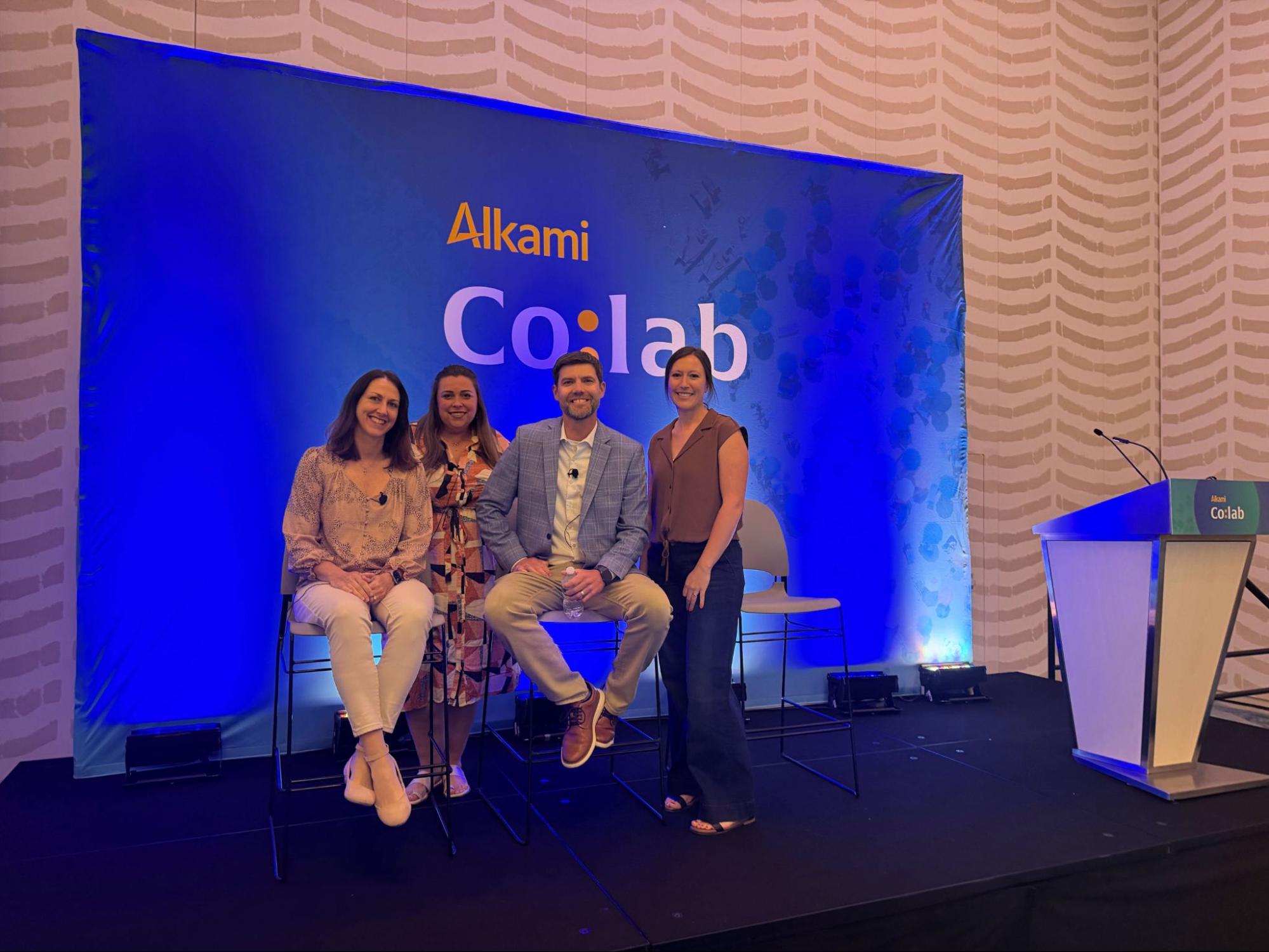
In this session, Kristen Bryce of Alkami, moderated a practical discussion with Christine Barry of Datos Insights, Cassandra Tucker of ABNB Federal Credit Union, and Craig Dose of Bridgewater Bank on where financial institutions are still “leaving money on the table” in business banking solutions. Many banks and credit unions are still trying to serve small businesses with the wrong digital experience. The panel described how small businesses often sit between consumer banking solutions that lack needed controls and commercial banking platforms that are too complex or costly. That gap is pushing more businesses toward megabanks and fintechs because regional and community financial institutions often lack the right platform, packaging, and digital convenience.
The strongest insight from the discussion was that revenue growth in business banking does not depend on inventing new products so much as it depends on better positioning, packaging, and adoption of services financial institutions may already have. Christine shared research showing that small businesses are willing to pay for tools that solve real problems, especially around payments, fraud protection, and efficiency, while Cassandra and Craig reinforced that financial institutions often underprice or under-promote high-value services such as Positive Pay, ACH, wires, analytics, and instant payments.
Adoption rises when these services are explained in terms of outcomes:
Just as important, the group highlighted that business owners, particularly millennials, expect a clean, unified, always-available experience. They need money movement, insights, cash flow tools, and account access to live in one place.
For banking leaders, start by identifying whether your business clients are on the right platform, then audit which treasury and payment services are being under-sold, underused, or never offered at all. Revisit your pricing strategy with confidence, using value-based packaging tied to business personas rather than a one-size-fits-all model. Just as critically, break down internal silos between lending, treasury, operations, and digital teams so treasury conversations begin at onboarding rather than after a missed opportunity. Financial institutions that train frontline and relationship teams to diagnose business pain points, proactively recommend relevant services, and follow up based on real usage patterns will be best positioned to deepen relationships, grow fee income, and compete more effectively for business wallet share.
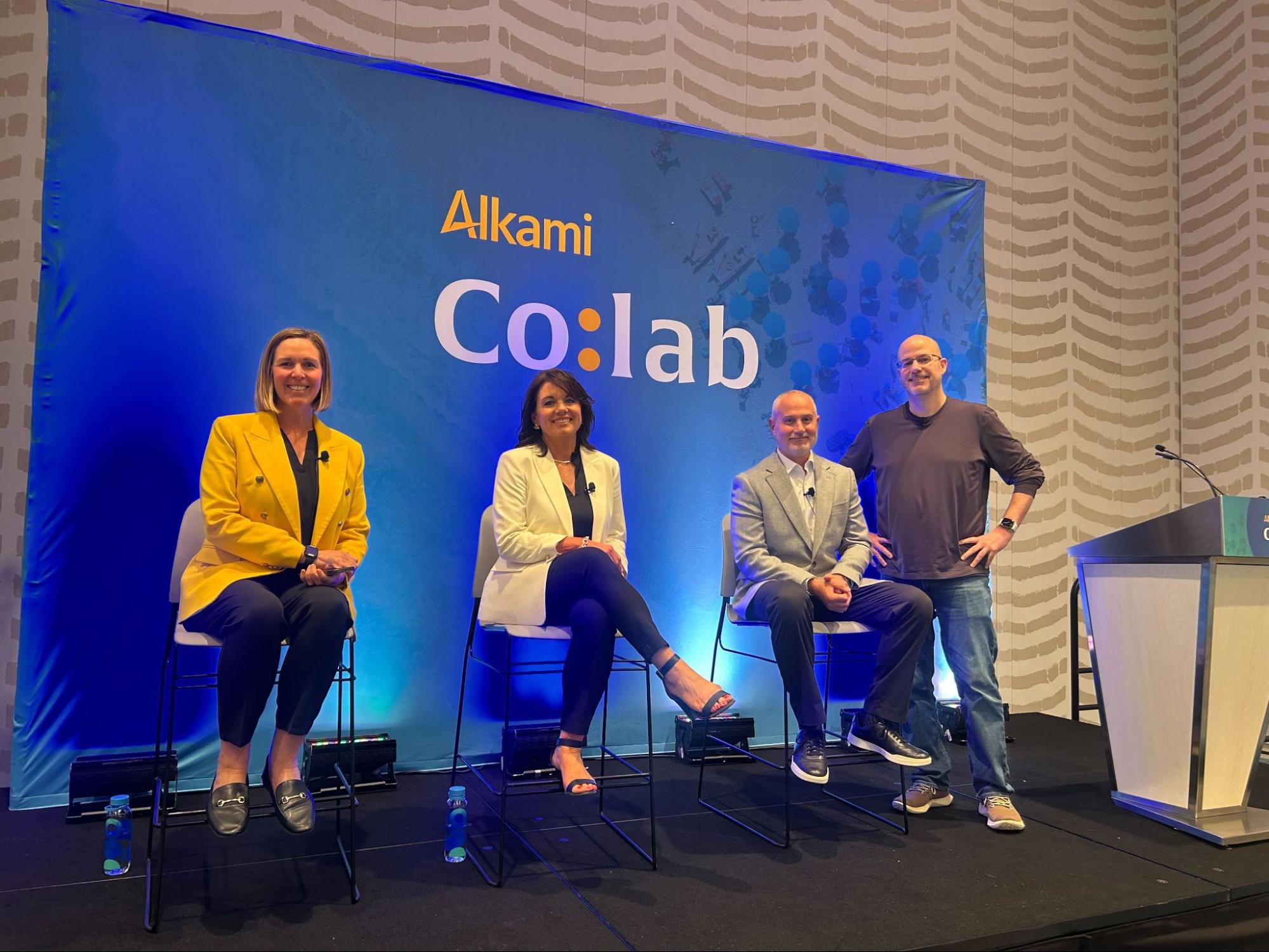
In this session, Taylor Adkins of Alkami, led a discussion with Teri Wagner of First Fidelity Bank, Molly Jones of SRP Federal Credit Union, and Frank Ferriola of SolomonEdwards on the operational and strategic realities shaping business banking today. Business clients expect faster, simpler, more connected banking experiences, yet many banks and credit unions are still constrained by fragmented processes, legacy workflows, and internal handoff gaps. Growth in business banking now depends on how effectively financial institutions deliver those capabilities through the right people, systems, and client experience.
A major theme throughout the conversation was that financial institutions often underestimate how much value is trapped inside their existing treasury, payments, and service infrastructure. Businesses are willing to deepen relationships when financial institutions remove friction, connect services to real operational needs, and make complex capabilities easier to use. Rather than treating treasury services, onboarding, fraud tools, payment options, and digital access as separate conversations, the speakers emphasized the importance of presenting them as part of a cohesive business banking strategy. That means understanding the specific workflows of each business, identifying where manual effort or risk is slowing them down, and then packaging services in a way that clearly improves speed, control, visibility, and day-to-day efficiency.
Examine where your business banking experience still feels disconnected, whether in onboarding, treasury adoption, support, pricing, or relationship ownership, and treat those breakdowns as revenue and retention issues. The panel’s insights point to a clear path forward: simplify the client experience, train teams to lead with business outcomes, and proactively connect businesses to the tools that solve immediate pain points.
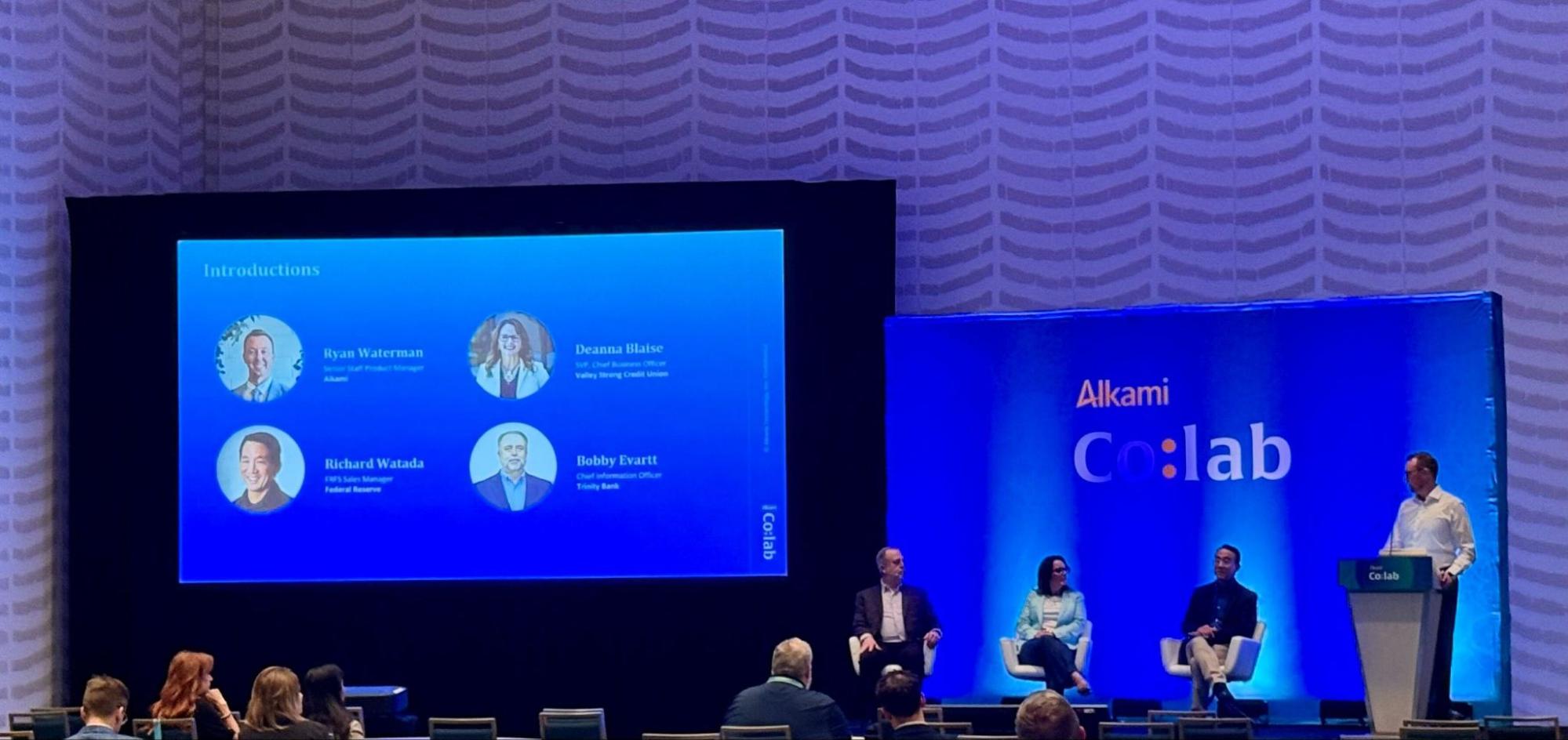
In this session, Ryan Waterman of Alkami, moderated a discussion with Deanna Blaise of Valley Strong Credit Union, Bobby Evartt of Trinity Bank, and Richard Watada of the Federal Reserve on what it takes to modernize business payments for long-term growth. Payment modernization is a strategic effort to align capabilities with the needs of businesses today, while also preparing for how those needs will evolve in the future. Throughout the discussion, the panel emphasized that financial institutions must think beyond the product itself and focus on the broader goals of user experience, scalability, operational readiness, and long-term relevance.
Demand for faster payments cannot be measured only by direct customer or member requests. The panel pointed to broader behavior shifts, from small businesses using consumer-style payment experiences to rising expectations around speed, convenience, and fraud protection. Deanna and Bobby both stressed that financial institutions need to understand their client base deeply before making investment decisions, especially given the different expectations of commercial clients versus smaller businesses. Richard added that success in instant payments depends on understanding both current and future client needs, then selecting partners and deployment models accordingly.
Rather than trying to modernize everything at once, start with a plan grounded in business strategy, resource realities, and user experience. Products should support the financial institution’s “why,” not become the “why” themselves. Here’s three steps to get started:
In this session, Peter Andon of Alkami, moderated a practical conversation with Jessica Pinkston of Cornerstone Advisors, Kyle Guest of Mountain America Credit Union, and Matthew Bleecker of Tradition Capital Bank on how financial institutions can turn treasury tools into sales wins. The panel emphasized that treasury services help financial institutions win operating accounts, deepen deposit relationships, support lending growth, and create the kind of “sticky” business relationships that are far harder for competitors to displace.
What stood out most was how consistently the panel pushed back on the idea that success comes from selling the newest feature. Instead, they argued that the winning formula is solving basic business needs extremely well: helping businesses send money, receive money, protect funds, and access information in a simple, dependable way. Jessica stressed that financial institutions often overcomplicate treasury by leading with product lists instead of business problems. Kyle and Matthew agreed the strongest-performing services are still the fundamentals, including ACH origination, remote deposit capture, positive pay, card solutions, and accounting system integrations like QuickBooks. Treasury growth depends on intentional execution behind the scenes: the right organizational structure, clear ownership between sales and service teams, strong onboarding, smart use of data, and pricing strategies that match the size of the business. Smaller businesses may need simple bundled pricing they can budget for, while larger companies expect analysis-based pricing and more tailored conversations.
Stop treating treasury as a side offering and start treating it as a strategic business line that requires investment. That means hiring and training skilled treasury sales talent, building onboarding and support models that reduce friction, using data to identify growth drivers and cross-sell opportunities, and equipping teams to lead consultative conversations that focus on solving pain points rather than pitching features.
In this session, Elias Lopez and Brad Cranford of Alkami walked attendees through what is new in Alkami’s Business & Commercial Banking solution, focusing on payments innovation and built-in protection. From ISO 20022 wire readiness and recurring wire enhancements to multi-transaction approvers, account search, tagging, confirmations, and notifications, the session showed a platform evolving to better serve the operational realities of business banking.
The future of business and commercial banking will be shaped by how well financial institutions connect faster payments and smarter security. Elias outlined how Alkami is advancing support for instant payments, including receive capabilities, me-to-me send functionality, and ongoing investment in broader send use cases for peer-to-peer (P2P), business-to-consumer (B2C), and business-to-business (B2B) scenarios over RTP® and FedNow. He also explored emerging opportunities in cross-border payments, while being candid about the market, regulatory, and infrastructure hurdles that still remain. Just as notable was the discussion around payment tokenization, which framed tokenization as a way to make payment data exchange safer, more standardized, and potentially more useful for fraud monitoring across financial institutions and platforms.
The clearest call to action came from the fraud and risk side of the conversation. Brad described a roadmap that includes stronger authentication options. These options include push-based multi-factor authentication (MFA), passkeys, OpenID Connect-based identity integration, expanded Enterprise Resource Planning (ERP) connectivity and non-monetary approval workflows for sensitive changes. But the deeper insight was the move toward more dynamic, risk-aware entitlements, where approvals, payment limits, and authentication requirements can shift based on signals like device, location, transaction behavior, bot risk, and account activity. That approach represents a meaningful shift from static controls to adaptive protection.
Now is the time to evaluate whether your business banking strategy is modernizing payments and fraud controls together. Financial institutions that treat these as one connected discipline will be better positioned to deliver speed without sacrificing trust, and innovation without adding unmanaged risk.
This guided session focused on designing thoughtfully segmented banking packages in the Alkami Digital Banking Platform. By working from realistic user scenarios and configuring limits, entitlements and risk, teams learned how to turn ideas into concrete packages that tightly align experience, controls, and growth goals.
This session featured Fern Williams from Alkami, guiding cross-functional teams through a live challenge to build banking packages in the Alkami Digital Banking Platform. Participants worked with clearly defined retail and commercial personas, ranging from everyday consumer needs to complex treasury clients. They configured packages by selecting the right widgets, entitlements, security permissions, and transaction limits, then presenting and defending their decisions.
Banking leaders walked away with a practical blueprint for disciplined product design:
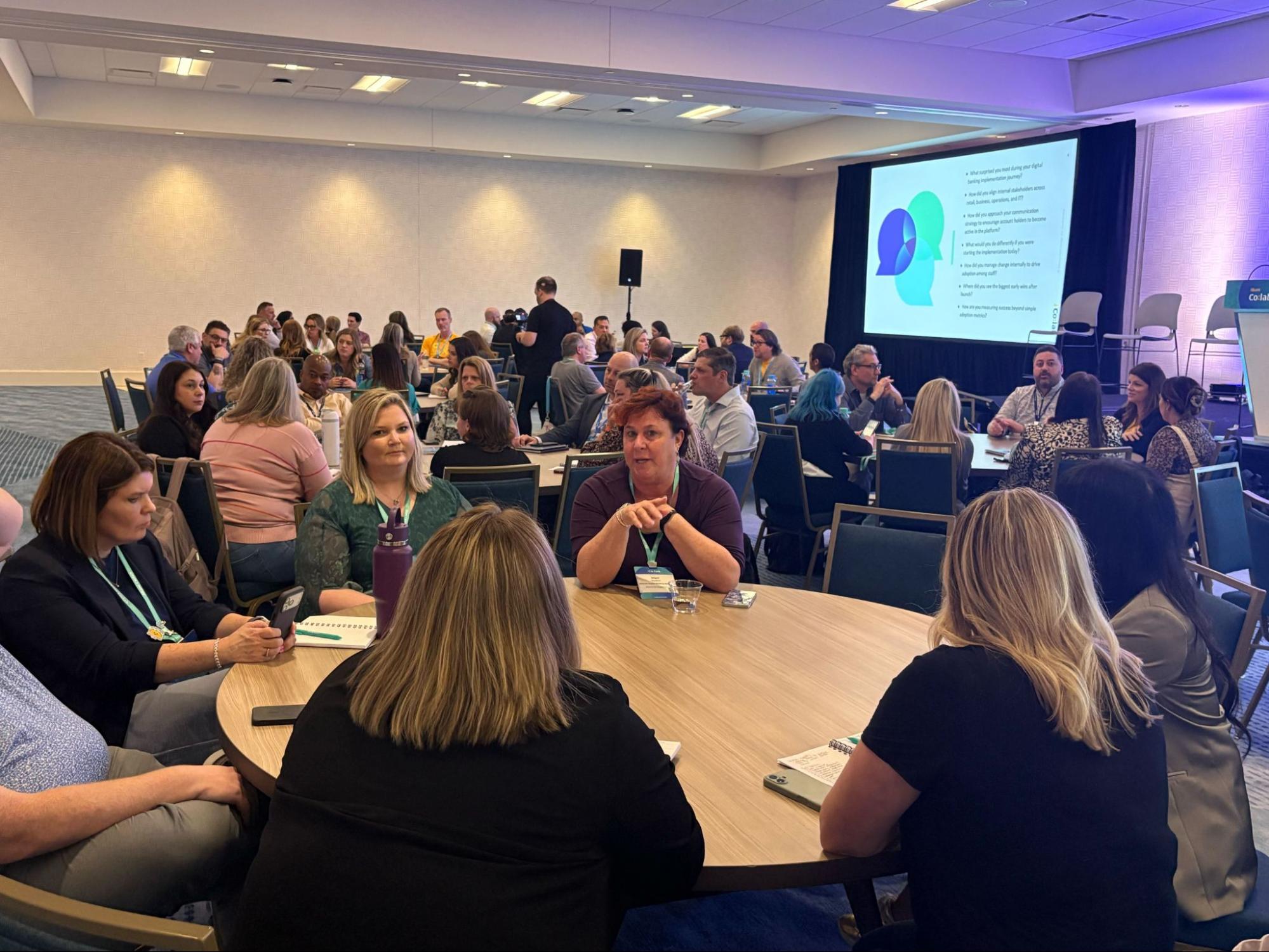
In this roundtable on Digital Banking Implementation for Business & Retail, financial institutions were invited to explore the full lifecycle of implementation, from internal alignment and communication strategies to post-launch measurement and optimization. The discussion centered on key questions, such as how to coordinate across retail, business, operations, and IT, how to drive customer activation and staff adoption, and what lessons learned could improve future implementations. It also encouraged leaders to think beyond initial rollout, focusing on how to measure success through engagement, efficiency, and long-term relationship growth rather than simple adoption metrics, reinforcing that digital banking implementation is an ongoing, strategic effort rather than a one-time project.