Blog, Strategies
October 15, 2026
Proactive Fraud Prevention in Digital Banking Solutions
Fraud prevention starts before the transaction October is Cybersecurity Awareness Month and we’re co...
Three days of sessions and side conversations. Two panels. And it is increasingly clear: artificial intelligence in banking (AI) is a reality. Whether as a defensive move, or as a forward-looking strategy play. And those that have figured out the ‘how’ are slowly pulling away.
The headline announcement of Alkami Co:lab is the Alkami Code Studio—an AI-powered coding assistant currently in limited beta—that aims to help developers build, extend, and deploy bank-grade compliant solutions on the Alkami Platform. Because Code Studio runs on closed-loop large language models (LLMs) operating within Alkami’s secure infrastructure, the customer code stays inside the Alkami ecosystem, without the risk of leaking out to a public model.
This presents a huge opportunity for smaller financial institutions that cannot afford the megabank engineering benches. Tools such as Code Studio enable them to gain the speed-to-market necessary to compete in the digital world, while maintaining the governance, security, and control crucial for the financial services industry.
The interesting thing is that neobanks, especially those outside the U.S., have been driving the AI fraud prevention story for a while now. As bad actors move at machine speed and ramp up their efforts using AI to exploit their targets, financial institutions can no longer afford to rely on rules-based systems to play catch-up: They need an upgrade as well. The technology and the timing are both ripe for organizations to shift from point-in-time checks to leveraging real-time, cross-channel behavioral signals to establish true resilience.
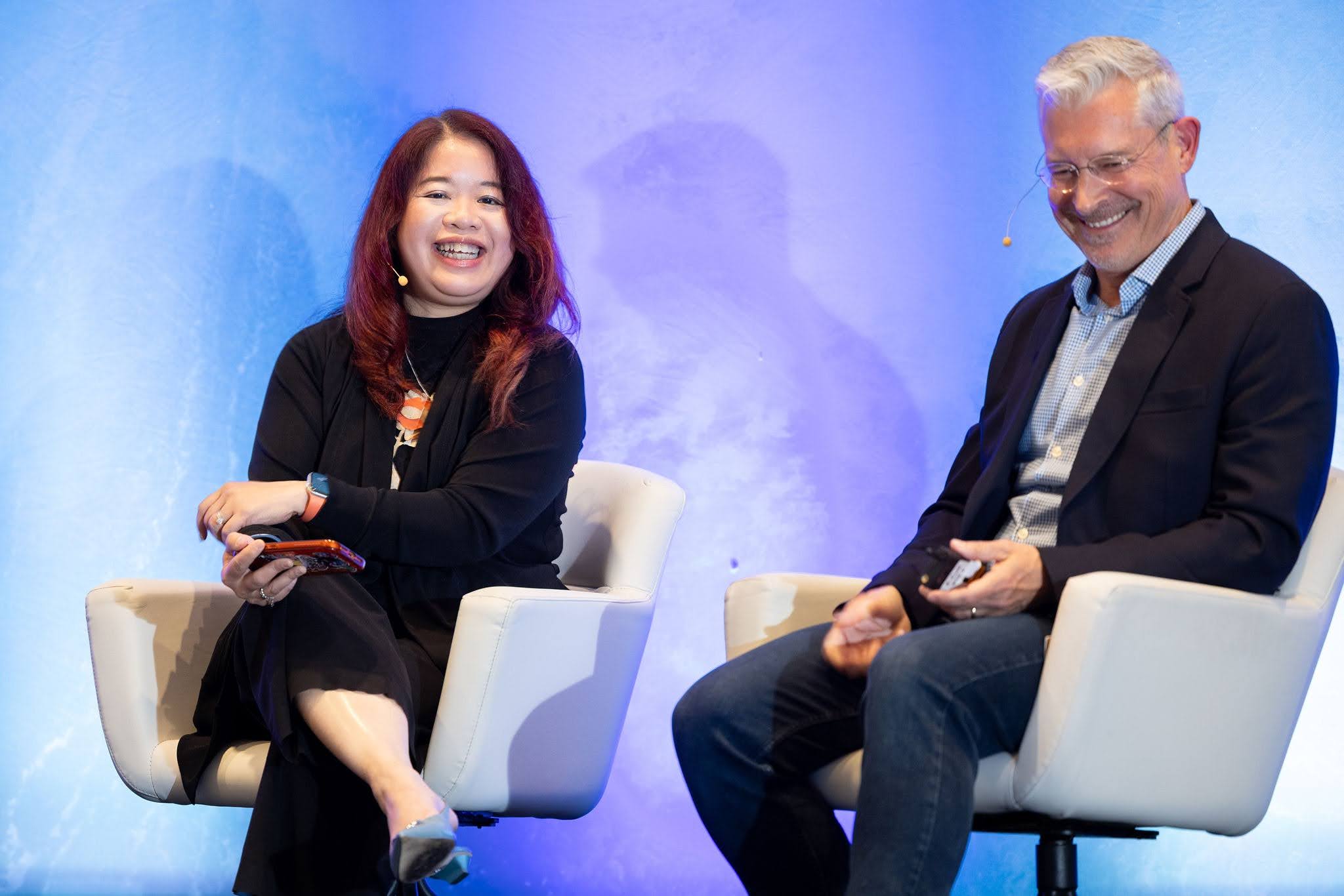
I had the privilege of sharing the stage with Doug Linebarger, Chief Legal Officer at Alkami, and Willis Chang, Digital Transformation Officer at Kinecta Federal Credit Union, to talk about how financial institutions are leveraging AI to fight fraud. What we shared with our audience further detailed that with technology being front and center of everything that we do, financial institutions must learn to evolve from playing defense to building resilience.
Emily Wenzlaff captured this transition in her recent blog post for Alkami, where she highlighted the need to move beyond transaction monitoring toward anticipating risks, and the delicate balance between asset protection and seamless user experience:
"Phishing attempts now read like polished communications, and deepfakes are removing the last visual cues that once signaled risk. In response, financial institutions are applying AI to go deeper, analyzing patterns, behaviors, and anomalies that reveal intent. This is where behavioral biometrics is gaining traction. By evaluating how a user types, swipes, or holds a device, banks and credit unions can detect inconsistencies that credentials alone won’t catch."
— Emily Wenzlaff
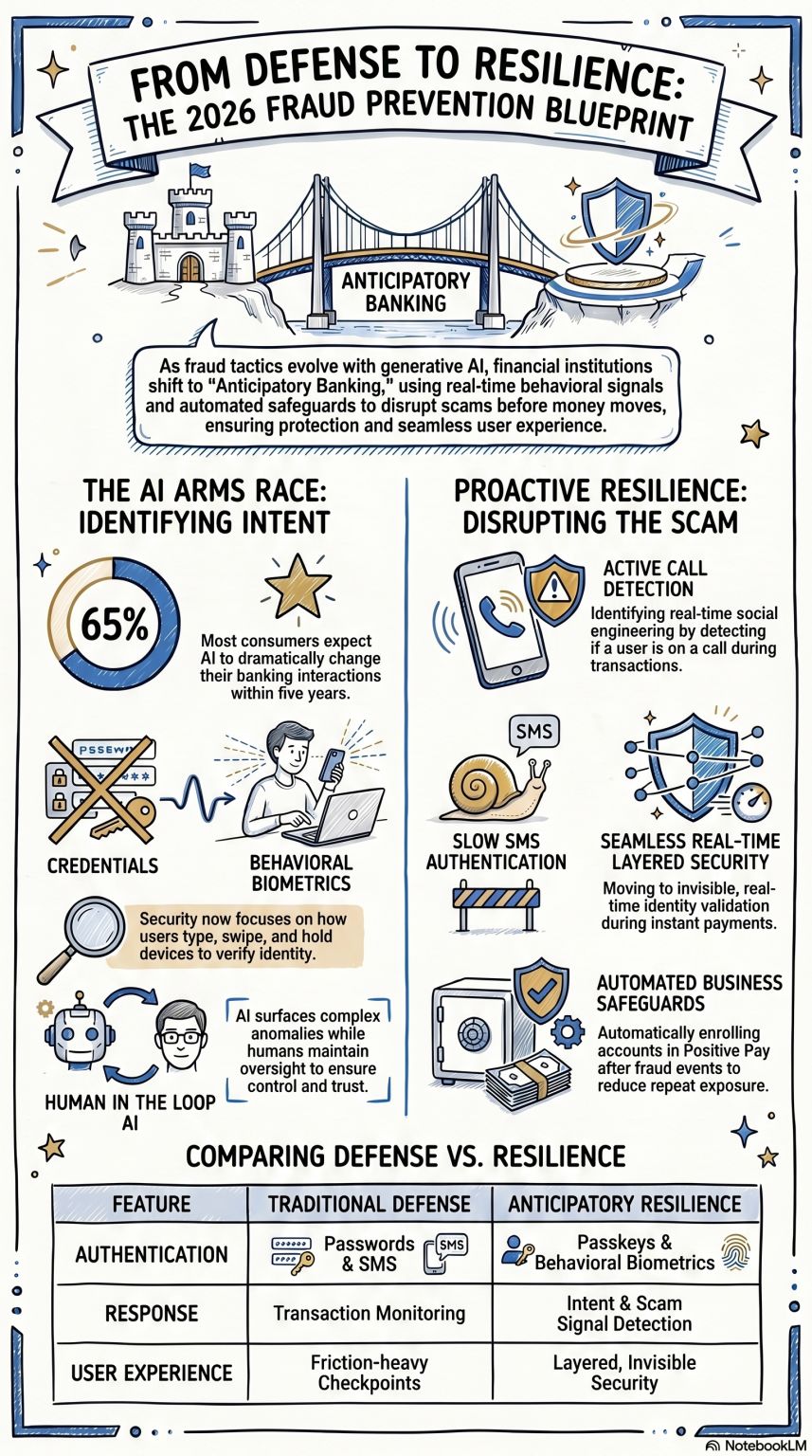
The above graphic was created by Theodora Lau and originally published on LinkedIn.
Click here to download.
My time at Alkami Co:lab wrapped up with a final industry trends panel alongside Tiffani Montez, Jennifer White, and Jim Perry. While our topics ranged across quite a bit of territory, the part that should keep us all up at night is the consumer AI sentiment data. Particularly, their increasing reliance on AI for financial advice, creating a relationship gap with their institutions that should be addressed.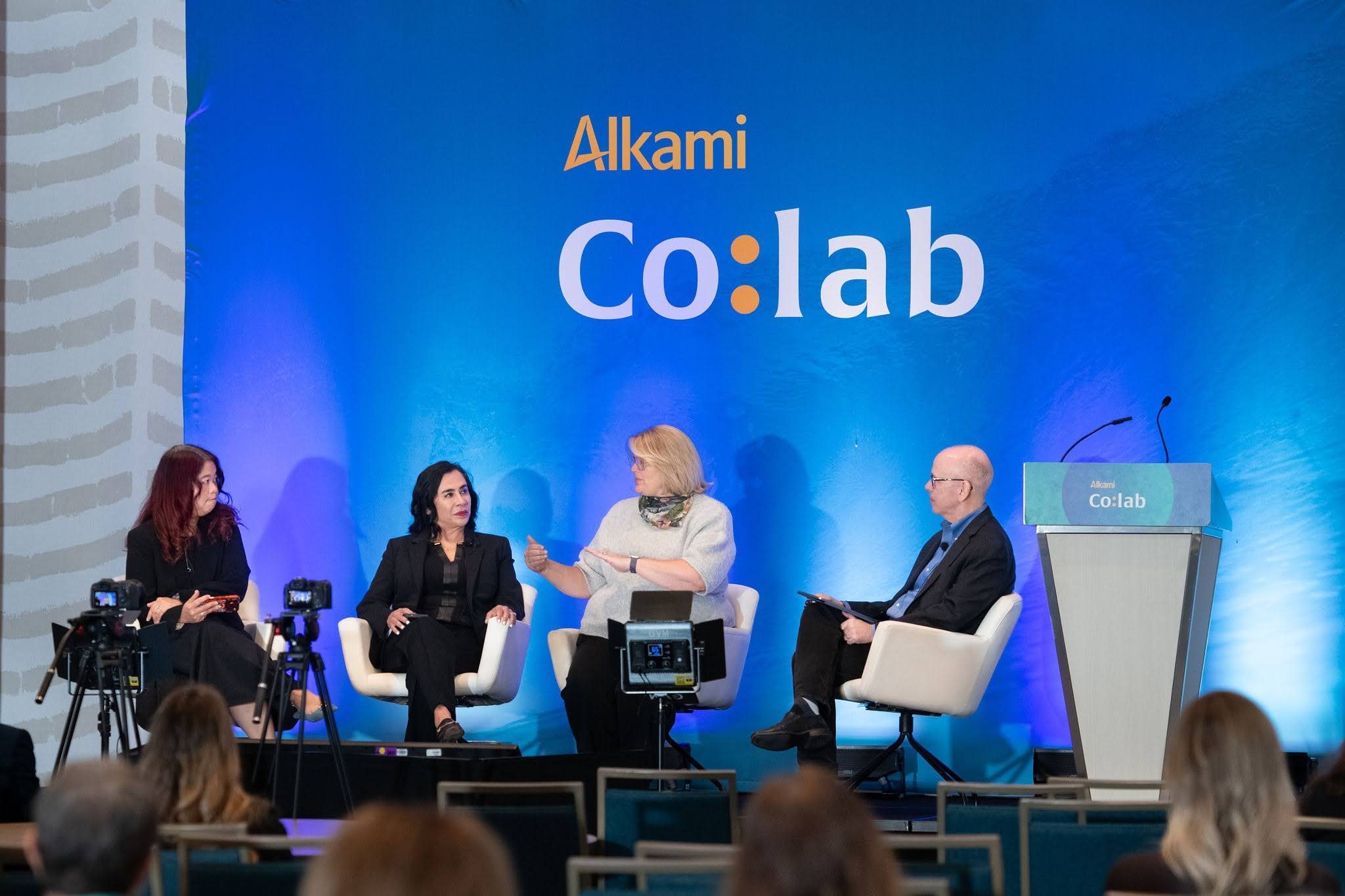
Think about how our habits have changed in the past few years, where we are adopting different AI tools daily, for both our work and personal lives, to varying degrees. In fact, according to a J.D. Power survey, “51% of consumers have used an AI tool to get financial advice or information”. This includes saving strategies, credit scores, investing and budgeting advice, as well as retirement planning and tax filing.
Let this sink in for a moment. These are conversations that consumers are having with AI. These were insights human bankers would have surfaced—if they were still part of the conversation.
The premise for Anticipatory Banking is to be able to go from reactive to predictive—to meet account holder needs before they are voiced. In the age of AI, being visible and authoritative is also a necessary step.
"Go to your favorite large language model—ChatGPT, Claude, whoever—and ask it to find the features of your checking account using only your bank or credit union's website. If it can't find you, you're invisible. And that's actually an opportunity for the smallest institutions to get a leg up."
— Jim Perry, during the Alkami Co:lab Industry Trends Panel
Much has been said about retention and the need to attract new deposits. But the way we bank and who we bank with has changed. Remember the days when the primary bank is the center of a consumer’s financial universe? That world is long gone. Today’s banking ecosystem looks more like a subway map—with banks and credit unions, fintechs, big techs, data providers, and AI companies occupying key interchange stations of the network. These are not just vendors; rather, they are co-creators of the new banking experience.
Even if your institution is the primary account where the paycheck is being deposited, it does not automatically guarantee that funds will stay—especially when you are not meeting the evolving needs of the account holder. They eventually leave—not with a goodbye note. But by silent attrition.
In an era where most savings and checking accounts look almost identical and with an affordability crisis top of mind for many, features that can help customers and members do more with their money and keep their assets safe will become critical differentiators.
The future of banking isn’t about being digital-first. It’s about being human-first at digital scale, with intelligence as the ultimate secret weapon.
It is about meeting customers where they are.
The technology to win in this new era is available and accessible. The question is whether you will lead—or whether you are still waiting for someone else to go first.
Get your copy of Theodora Lau’s book, “Banking on (Artificial) Intelligence: Navigating the Realities of AI in Financial Services”)