Blog, Strategies
October 9, 2026
How Behavioral Intelligence Brings Precision to Account Takeover Detection
How separating genuine intent from fraudulent behavior stops account takeover in the digital banking...
For many financial institutions, the conversation around open banking application programming interfaces (APIs) starts with excitement and quickly turns into operational questions.
As consumer expectations continue to rise, open banking APIs and modern banking APIs are becoming foundational to the digital banking experience. The challenge for banks and credit unions is not only simplifying connectivity, but also simplifying how those integrations are managed, maintained, and scaled over time. That’s where Alkami can help.
As a digital banking provider, Alkami enables financial institutions to reduce the operational complexity of open finance integrations through centralized API frameworks, managed connectivity, and infrastructure designed to evolve alongside the industry. Instead of requiring financial institutions to piece together and maintain integrations independently, Alkami provides a more streamlined approach so banks and credit unions can support modern digital experiences with greater confidence.
Whether consumers or businesses realize it or not, open banking is already embedded into their daily financial lives. Every time someone:
…there’s a good chance open banking APIs are working behind the scenes.
Users expect these experiences to feel seamless. When account linking fails or transaction syncing becomes unreliable, frustration builds quickly and often reflects back on the financial institution.
That’s why modern banking APIs matter. They help financial institutions securely share authorized financial data with third-party applications while improving reliability, transparency, and the seamless account connectivity consumers and businesses expect.
For financial institutions, the challenge is determining how to support a growing ecosystem of integrations without creating additional operational burden for teams.
Historically, many financial apps relied on “screen scraping” to collect account data. In this model, a third party used a consumer’s login credentials to mimic logging into online banking and retrieved information directly from the screen.
While functional, screen scraping introduced significant challenges:
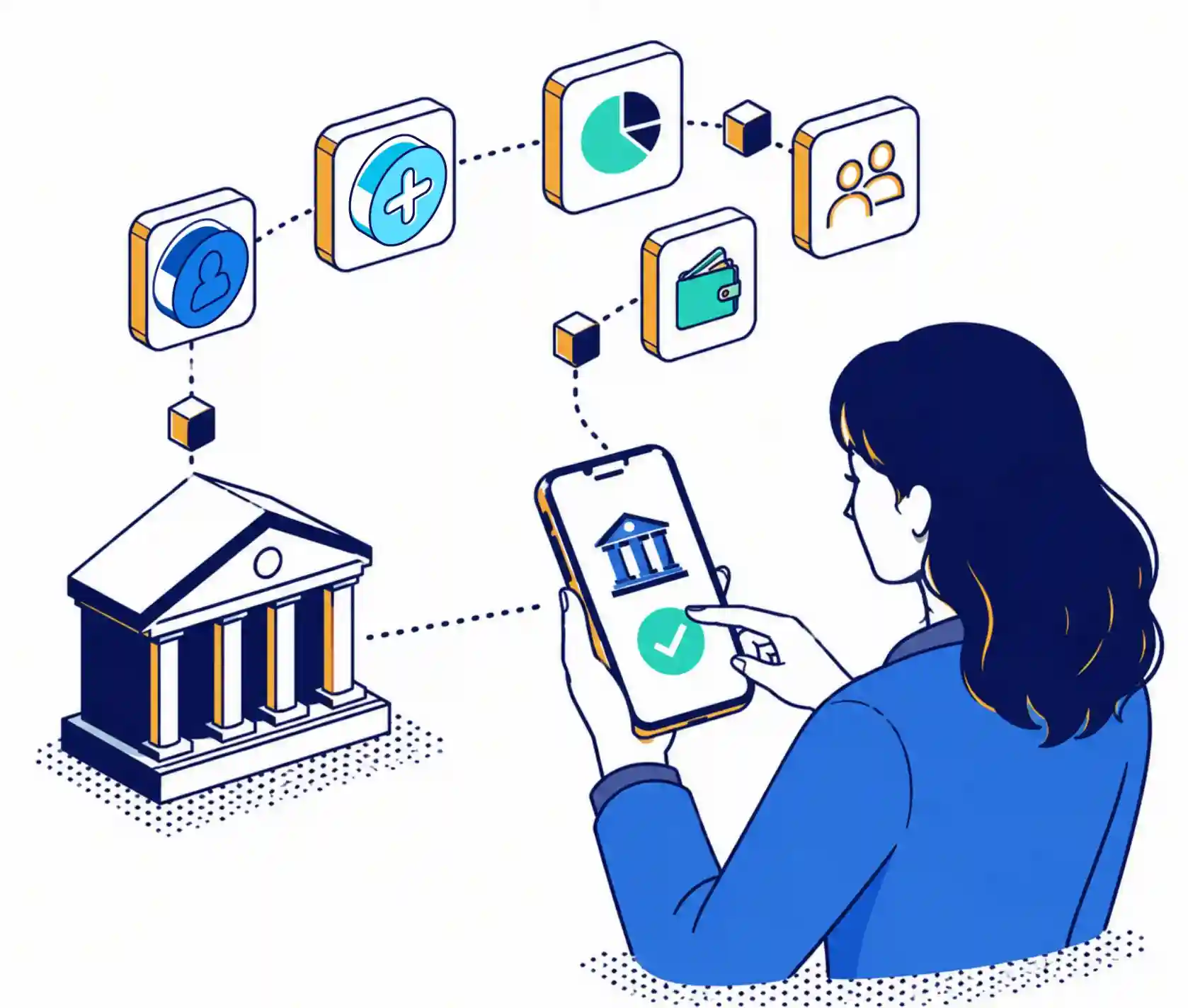
Modern open banking APIs are changing that model. Instead of scraping data from a user interface, APIs allow financial institutions to securely share authorized data directly between systems.
The results can be significant. Financial institutions transitioning from screen scraping to API-based integrations have reported connection success rates improving dramatically, in some cases from approximately 50% to nearly 99.9%.
For consumers and businesses, that means:
For financial institutions, it often means:
At first glance, open banking APIs can sound straightforward: connect to a data aggregator, enable data sharing, and move on. In reality, that’s only the beginning.
The real operational challenge comes from everything that happens after the initial integration, including:
This is where many financial institutions begin to feel overwhelmed. Consumers and businesses don’t all use the same fintech applications, which means banks and credit unions cannot rely on a single provider or ecosystem. Different apps often depend on different aggregators and banking APIs to facilitate connectivity. They also don’t necessarily care which provider powers the connection. They simply expect it to work.
That creates growing pressure on financial institutions to support a rapidly expanding ecosystem without turning every integration into a custom operational project.
One of the biggest misconceptions about open banking is that it’s a one-time implementation initiative, but in reality, open banking APIs are constantly evolving.
Standards continue to mature. Security expectations evolve. New fintech applications enter the market. Consumer expectations continue to rise. Financial institutions must also manage governance, compliance, monitoring, and operational support along the way.
This creates several important open banking questions for banks and credit unions:
These questions highlight why open banking strategy is about more than enabling access to data. Open banking requires a scalable infrastructure that can evolve with digital banking.
At Alkami, our team is focused on helping financial institutions simplify the operational side of open finance. Rather than requiring banks and credit unions to manage fragmented integrations independently, Alkami provides a more centralized approach to open banking connectivity within the digital banking experience.
That includes:
By embedding open finance connectivity into the digital banking platform, financial institutions can support the apps and services users expect, without managing every integration individually; creating a more scalable and future-ready approach to modern banking APIs.
Instead of rebuilding integrations every time standards evolve or new providers emerge, financial institutions can operate from a more consistent and maintainable foundation.
Alongside consistent API frameworks and operational oversight, banking leaders can also gain greater visibility into integration health and performance.
Modern API-based connectivity allows teams to:

For many banking leaders, open banking still feels like a massive industry shift filled with technical terminology, evolving standards, and growing operational demands. Consumers and businesses want secure, seamless ways to share their financial data with the apps and services they choose.
The challenge for financial institutions is delivering that experience without taking on unnecessary integration complexity. That’s where the right digital banking provider can make a meaningful difference.
Financial institutions don’t need to build and maintain everything from scratch. They need a true partner who can provide scalable infrastructure, standardized integrations, and a platform designed to evolve alongside consumer expectations.
Ultimately, the goal of open banking APIs extends beyond connectivity to deliver a digital banking experience where secure, reliable data sharing happens seamlessly.
1What are open banking APIs?
Open banking APIs are secure application programming interfaces that allow financial institutions to share authorized financial data with third-party applications and services. These APIs help banks and credit unions support digital experiences like budgeting apps, payment platforms, and account linking while improving security and reliability compared to older screen scraping methods.
2Why are open banking APIs important for banks and credit unions?
Open banking APIs are important because consumers expect seamless connectivity between their financial institution and the apps they use every day. Modern banking APIs help financial institutions improve member and customer experiences, reduce failed account connections, strengthen security, and support digital banking innovation without relying on outdated screen scraping technology.
3How do banking APIs simplify digital banking integrations?
Banking APIs simplify digital banking integrations by creating standardized, secure connections between financial institutions and third-party applications. Instead of managing custom integrations individually, banks and credit unions can use API-based frameworks to support multiple aggregators, improve scalability, monitor performance, and reduce operational complexity.