Alkami Data, Reports, Research
September 3, 2026
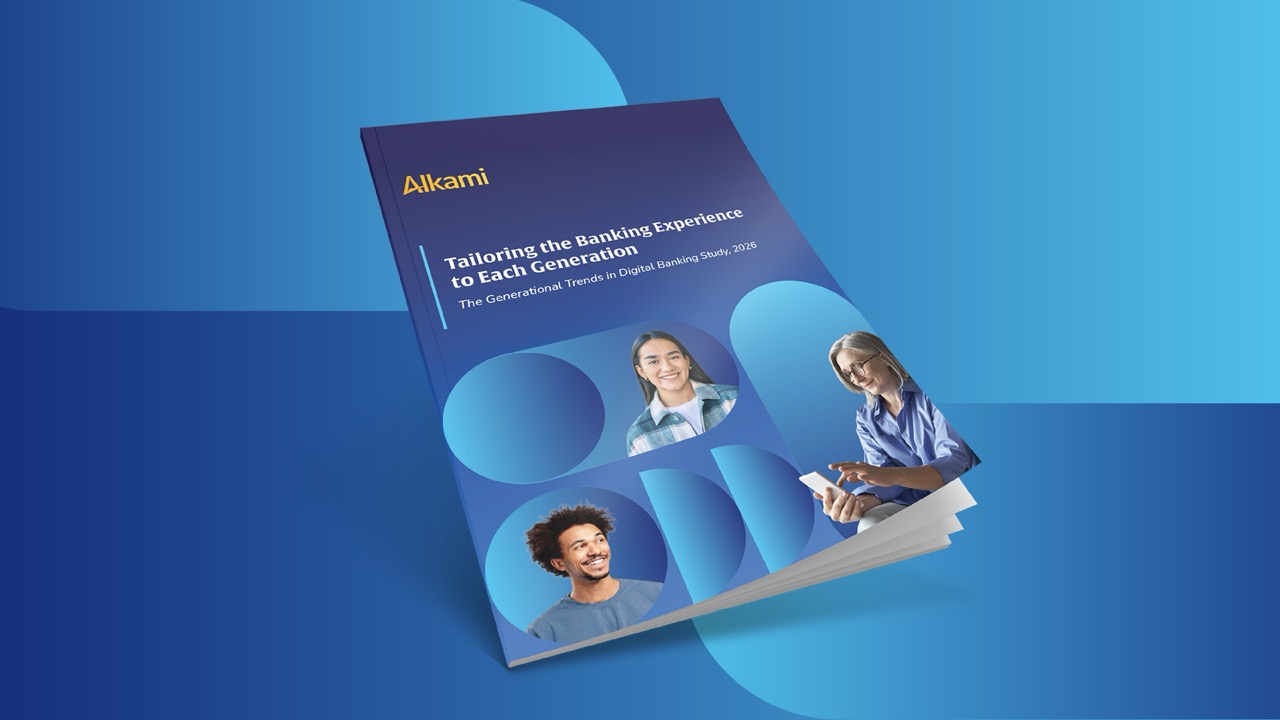
2026 Generational Trends in Digital Banking Report
Tailoring the Banking Experience to Each Generation Expectations are shifting. Today’s ...
00:01:00:13 – 00:01:27:05
Nick Weston
Hey! Welcome everyone. We are extremely excited to be here today. Thank you so much for joining us. As we unpack the 2026 Generational Trends report to explore what truly drives loyalty across your digital channels. At Alkami, we are very passionate about our research engine. It’s important for us to, within our function as strategic partners for your financial institutions that we serve, which include delivering thought leadership.
00:01:27:08 – 00:01:58:19
Nick Weston
Actionable insights for banking leaders to consider as they navigate the long-term growth plan. We first kicked off the Generational Research study in 2022, and are excited to have just released the 2026 edition. This latest study underscores how primacy has changed, repositioning digital as the relationship channel. Furthermore, it emphasizes that specific consumer preferences across generations at each stage of their banking journey.
00:01:58:21 – 00:02:04:09
Nick Weston
Now let’s get this generational trend party started.
00:02:04:11 – 00:02:16:05
Nick Weston
I’m Nick Weston. I’m senior manager in product management here at Alkami, leading the Digital Sales & Service Platform across the organization. We also have a very special guest with us and my co-host today, Jason.
00:02:16:07 – 00:02:30:06
Jason Dorsey
Thanks, Nick. Thrilled to be with you and thrilled to be with everyone. Thank you for joining. Today we’re going to have an awesome conversation. So much great data to share. It’s going to be wonderful. For those of you who don’t know me, because you haven’t heard me at one of the Alkami events, you need to go to those.
00:02:30:08 – 00:02:52:11
Jason Dorsey
I’m Jason Dorsey, I’m lead researcher at the Center for Generational Kinetics. We are research firm that specifically studies generations and behavioral trends to unearth new insights that leaders like yourself can take action on. And I’m thrilled to be a partner in this now many years of partnership with Alkami on the Generational research study, and thrilled to dive into that today, and especially with you, Nick, because you know the product so well.
00:02:52:11 – 00:02:55:07
Jason Dorsey
It’s going to be tons of fun. So be here.
00:02:55:09 – 00:03:05:15
Nick Weston
Thanks so much. Did want to know if you have any questions along the way? Please send them in the chat and we will respond in real time in the chat. Jason, I’ll let you get us kicked off.
00:03:05:17 – 00:03:31:18
Jason Dorsey
Thanks, Nick. Love to talk about the methodology because you really want to understand who’s represented in this study. How accurate is it? All those wonderful things. It’s so important as a leader. There’s tons of data floating around in the FI space. So it’s important to note when someone says study, what are they actually talking about? So in this particular study, what I love about it is we had 1500 participants that were weighted to the U.S. Census for age, gender, geography and ethnicity.
00:03:31:21 – 00:03:52:23
Jason Dorsey
We have this beautiful age range of 22 to 65. That way we can cover all these different generations we’ll be talking about today. And most importantly, every single person that participated in this study has a bank account and has engaged in digital banking. So this is exactly this is exactly who we want to study when it comes to generations intersecting with digital banking.
00:03:52:23 – 00:04:13:05
Jason Dorsey
And I just couldn’t be more excited about the study sample that we put together for this. So yay go partnership team. And now that we’ve covered the methodology, I want to talk about each of the different generations who are represented in this study. As you can see on this beautiful slide that we’ve put together in this particular study, we have generation Z and their ages roughly 22 to 30.
00:04:13:06 – 00:04:32:15
Jason Dorsey
You can see their birth year there. You have younger millennials and older millennials. It’s very intentional that Alkami wanted to look at this by younger millennials and older millennials. Because you do see differences because it’s such a long age range. When you look at millennials specifically then we have Gen X woop woop Gen X in the house. They’re about 47 to 60.
00:04:32:15 – 00:04:52:02
Jason Dorsey
And then of course we have baby boomers ages 61 to 65. What’s important when we think about generations or a few things. If you’ve ever heard me speak, you know, this is my soapbox. I’m going gonna do it here, just in case you haven’t. Generations are clues and not a box. They’re just behavioral insights. A head start to drive, connection, trust, and influence.
00:04:52:02 – 00:05:12:09
Jason Dorsey
We’re not putting people in boxes here. But what’s powerful about research by generation is you get these beautiful insights that you can put to use right away to get that head start. That’s what makes them powerful, predictive, constructive, and helpful. And when we have multiple generations, you can not only see the differences in the study, which we’ll talk about today, but also some of the similarities.
00:05:12:09 – 00:05:30:16
Jason Dorsey
And it’s important to recognize both. I also believe that every generation is equally valuable. Nick, I know you believe the same because we’ve talked about that quite a bit. And so when you look at this, I just want you to say we’re going to educate everybody today on what do you need to know about each generation in order to drive the results when it comes to digital banking and really even the future banking, which is super cool.
00:05:30:21 – 00:05:53:18
Jason Dorsey
So we’re going to look at each of these different generations. The key is and this is important. You stay in the same generation. You just get older. Sometimes people come up to me and they’re like, Jason, what do I do when I become a baby boomer? I’m like, you’re millennial. Not going to happen. So just know you stay in these and every generation is important.
00:05:53:19 – 00:06:14:14
Jason Dorsey
So when, when when I think about sort of our conversations we’ve had leading up to this, when you step back from all the generational findings, like what do you think is the the biggest message or insight that financial leaders should take away just to get us kicked off here? When it comes to generations and understanding generations as it relates to digital banking.
00:06:14:16 – 00:06:28:13
Nick Weston
Yeah, I think when I think about this, I think really the goal is not to create for rigid personas, right? It’s to really understand the needs behind the login and use those insights to make experiences more relevant for those users.
00:06:28:15 – 00:06:46:16
Jason Dorsey
Yeah. And you know I’ve talked about this a lot which is generations are really a great place to get another lens into the customers or the members that you’re serving. How else can we be looking at those sort of generations just as a concept when it comes to financial institutions?
00:06:46:18 – 00:07:02:12
Nick Weston
Yeah. I think, you know, using generational patterns as a starting point, layer in their life stage, financial behavior goals, maybe even their channel preference, like mobile, desktop, and their support needs I think is is crucial as well.
00:07:02:14 – 00:07:23:07
Jason Dorsey
Yeah. Here at CG we call that generational context, which is really this idea that you can see each of the generations and their preferences and behavioral drivers and blockers through the lens of your own generation. Right. You can actually acknowledge, hey, this is how I see the world. And that is different than others. So. And there are key things that really stood out in the study and its findings.
00:07:23:07 – 00:07:44:13
Jason Dorsey
And I’d love to jump into those just at a high level for us to be able to look at each one. So we’ll start with Gen Z, and what we see is that Gen Z really is about clarity. And I’m going to read these stats because I think they’re that good. 73% of all the Gen Zers in the study prefer using a mobile device when opening a checking or savings account online.
00:07:44:14 – 00:08:12:15
Jason Dorsey
Love it. So important. 57% of Gen Z look to their primary provider for financial education and 33% plan to increase the number of companies with which they have a financial relationship with the next year, which is, by the way, the highest of any generation. So what a huge opportunity for Gen Z. So so when you think about Gen Z, Nick, how do you view it through the lens of product and insights and technology and, and all the solutions that you have around that?
00:08:12:17 – 00:08:47:21
Nick Weston
Yeah, I think really to like best serve Gen Z FIs should focus on delivering a frictionless mobile-first experience, starting at the exact moment of account opening specifically. So because they’re actively looking for a provider for financial education, I think the key is really getting guidance directly into everyday banking for that banking journey. But it’s also about moving seamlessly from digital onboarding into intuitive tools to really build, like their financial guidance once they’re in online banking.
00:08:47:23 – 00:09:06:15
Jason Dorsey
I love that. And as somebody who’s the parent of a Gen Zer, I’m a big fan of those solutions and approaches, yes, we need the financial education especially. And then let’s let’s talk about millennials. My people go millennials. The key thing we find with millennials as relates to digital banking really is this this concept of coordination. And I love that Alkami picked that word.
00:09:06:18 – 00:09:29:13
Jason Dorsey
Few again stats to jump out and share 65%. Almost two thirds of all millennials felt comfortable. Now listen closely. This felt comfortable with AI-enabled experiences that help them navigate spending, security and everyday money management. So really through the roof in terms of that AI comfort, which we’ll talk more about, 71% say the provider’s pace in bringing new helpful products is important.
00:09:29:13 – 00:09:44:23
Jason Dorsey
So they they want those new features, the new things that are going to help make their life easier. And then 86%, which is a huge number, by the way, in the study, 86% say digital quality is important when choosing a new primary provider. Now, I love these because you can see already the context between what Gen Z is saying.
00:09:44:23 – 00:09:57:09
Jason Dorsey
They want what millennials say that they want. So you know, from your perspective, what is what is millennials comfort with, let’s say, AI. How does that flow into some of these other areas like financial confidence and so forth?
00:09:57:14 – 00:10:26:10
Nick Weston
Sure. I think this generation proves that really being digitally savvy doesn’t mean you have, your complex financial life figured out. You know what I mean? We’re we’re we’re juggling a lot of responsibilities. So looking for AI to do most of the heavy financial lifting, but also wanting a provider to use, like, smart data to transform things like daily transactions into actionable insights.
00:10:26:11 – 00:10:36:02
Nick Weston
Like, tell me from my data what I need to be doing. Right, and help our finances to really lighten that, that cognitive load.
00:10:36:04 – 00:10:44:01
Jason Dorsey
I love that. Yeah. It’s you know, sometimes people think, oh millennials are good with technology. So they’ve got it all figured out. No.
00:10:44:03 – 00:11:06:02
Jason Dorsey
We need help. We are looking for that easy button. And now on to generation X. What do we see with Gen X? Control. As somebody who’s married to a Gen Xer. I need to think about that. What do we find in the study? Some really great things, by the way. Control is super, super accurate there. Because, you know, Gen X is often taking care of their children or child.
00:11:06:04 – 00:11:22:12
Jason Dorsey
They’re trying to manage their work, their career, all the things going on. And they’re also taking care increasingly of their aging parents. So this control and the need to be able to help and solve is really, really, really important. So what did the study find? 63% of Gen X prefer using their mobile device on opening a checking or savings account online.
00:11:22:13 – 00:11:41:08
Jason Dorsey
I love that notice the consistency. We saw that earlier with some of the generations. 91% say support via phone is important to them, with 87% prioritizing online virtual assistants. I love that we say phone here because sometimes people just expect everything to be like, oh, I just want an agent to do that for me, or I just want this one approach.
00:11:41:08 – 00:12:02:06
Jason Dorsey
And the fact is, people still want to choose their own adventure. And then also again, actually found 78% would feel comfortable with their institution using AI. I love this. Now listen closely. This one using AI to alert them about suspected fraud, along with actionable next steps to mitigate it. The key to me is the nuance in that which is they don’t just want to know suspected fraud could be happening.
00:12:02:08 – 00:12:24:07
Jason Dorsey
They want to know what to do about it. And I think that that that linkage is really key. So when we think about Gen X, Nick, to throw another question to you. You know, they sort of stand out with their sort of digital efficiency and human support. And so tell us a little bit more when you think of omnichannel, I know that word gets around a lot, but what does that really mean when you think of Gen X and digital banking.
00:12:24:09 – 00:12:51:14
Nick Weston
Yeah, I think Gen X is in a high stakes life stage, managing a lot of complex responsibilities. So making their primary need control as shown in this slide is super important. So as you mentioned, they embrace digital efficiency for quick tasks like mobile account opening. But they really demand that safety net. And that’s what’s super important. So when they deal with financial issues or they get complicated, as you mentioned, they they want that that level of support there.
00:12:51:14 – 00:13:21:02
Nick Weston
But they also want to know what what they need to do. So because they heavily prioritize that phone and virtual support. As you mentioned, true omnichannel is a strict requirement, and I think it’s necessary to have a connected, seamless platform where user can begin digitally but potentially transition to a human representative without losing that context. Right. So we’re talking about like account opening, for instance, they can start an account opening process online, but maybe they get stuck and they don’t know what to do.
00:13:21:03 – 00:13:29:12
Nick Weston
They could pick up the phone and call. They could get in their car and drive to a branch, and they can pick up where they left off at any of those points.
00:13:29:13 – 00:13:50:18
Jason Dorsey
Yeah I love that. Which leads us right into baby boomers. Baby boomers I love my baby boomers. All you boomers watching right now. Promise me you’ll never retire. We need you have all kinds of skills and experience and wisdom. Please never retire. What do we see when it comes to boomers in this study? They’re all about protection, which makes total sense.
00:13:50:20 – 00:14:11:08
Jason Dorsey
81% of boomers say convenient branch locations are important, and 57%, which is obviously a good majority. Want access to knowledgeable staff during a branch visit. Oh, if you’ve ever gone to a branch that had the not knowledgeable staff, you know exactly why boomers want this. What else do we see? 42% prefer online banking through their institutions website. Boop boop.
00:14:11:10 – 00:14:31:20
Jason Dorsey
Significantly more likely than all other generations. So we really see them preferring that web. Now notice that may be different than mobile, which you talk about. And then 92% say that protecting their data from financial fraudsters or hackers is important to their digital banking experience. Remember, boomers tend to be in a place where they feel like they have a lot to lose, and maybe not a ton of runway to make it up.
00:14:31:21 – 00:15:01:23
Jason Dorsey
So there’s a real fear factor around that. We see this in so much of our work, and being able to understand that is incredibly, incredibly important. So, Nick, when you think about, you know, baby boomers and this concept of protection, because that was the last one we talked about, for like fraud protection and so forth. How do we make those interactions, you know, more verifiable, easier, familiar, the sort of things that like, like, what do boomers expect when it comes to things like that so that they can get their needs met?
00:15:01:23 – 00:15:06:16
Jason Dorsey
Because we know that it’s something that is definitely a concern for them.
00:15:06:18 – 00:15:40:20
Nick Weston
Yeah. Like you said, I mean, they’re their overarching goal is protection for accumulated wealth and their legacy. Right? So I think with data protection being an absolute priority, FIs should really ensure that their digital platforms prominently feature visible, visible security features. But alongside an easy bridge to trust human guidance like trusted human guidance. Right. So, potentially like, virtual assistance or calls to action to be able to, to call the branch or again, just back to that omnichannel to pick up where they left off.
00:15:40:22 – 00:15:45:21
Nick Weston
As they navigate through those various channels that they may experience.
00:15:45:23 – 00:16:04:01
Jason Dorsey
Yeah. And so we’ve covered all four generations now, which I love because we love to create generational context. So we covered Gen Z. We looked at millennials. We looked at Gen X and now we’ve talked about boomers. So where do you see through your lens that the generations are maybe differ maybe even some similarities. But sort of how do you see these all coming together?
00:16:04:01 – 00:16:07:00
Jason Dorsey
If you’re an FI leader, how should you start to think about this?
00:16:07:02 – 00:16:39:21
Nick Weston
Yeah, I think the biggest divergence across generations lies in specific interfaces and the channels that they value, ranging from Gen Z’s mobile-first demand to boomers’ reliance on traditional websites and branches. However, I, I think they completely converge on their core expectations. Right? So we’re seeing that regardless of age, all account holders, ultimately want that relevance, that confidence of protection and proactive help taking that next step, whatever channel they might be in.
00:16:39:23 – 00:17:03:13
Nick Weston
So delivering that universal standard of care across all of the platform and diverse channel preferences requires really breaking down those institutional silos and leveraging a unified platform where we have connected data, you have daily banking and then that targeted support that they can get to seamlessly across those channels that they’re again interacting in every day.
00:17:03:15 – 00:17:04:04
Nick Weston
00:17:04:10 – 00:17:25:00
Jason Dorsey
Yeah. I think as you were talking I was like it’s sort of like the the Y may be similar but the how might be very different. Exactly. And so I love that. Yeah. So good. Well let’s jump into the next phase here, which is as we think about these, banking preferences and sort of how they’re evolving and, and changing and so forth.
00:17:25:03 – 00:17:51:05
Jason Dorsey
Like, we see that digital banking isn’t just, you know, about, hey, I want a secure access or service channel, right? There’s a lot more that’s really turning it into this key, key leverage point for relationships, which I think is really exciting and seeing how that is coming together. So what do you think the research most challenges assumptions about as an example, like where do you think the research sort of challenges common assumptions around generations of making?
00:17:51:07 – 00:18:21:20
Nick Weston
Yeah, I think it really challenges the cliche that younger consumers just want mobile, while older account holders only want hands-on service, right? So the study actually reveals that the generational differences are driven by life stages, you know, financial complexity and their comfort with technology to some degree. But the biggest finding is that it cuts across every generation, is that digital banking has officially become that that relationship layer that we should really be thinking about.
00:18:21:22 – 00:18:46:07
Jason Dorsey
Yeah, it’s clear to me, you know, as you were saying, that it’s like it’s like digital banking is banking. Yeah. Like each generation thinks about it that way. And and it’s really core to the overall relationship. I love that such a such a good perspective. So Nick, we’ve we’ve looked at generational preferences and sort of dove deeply into Gen Z, millennials, Gen X and boomers and found a lot of differences and some some similarities.
00:18:46:07 – 00:19:13:11
Jason Dorsey
I think. Now let’s dive into like digital banking across all of the U.S. And really, what are we seeing among digital banking Americans? Because I like to zoom out and really have that picture. And what we found in the study that I love was 85%. And this is true for every single participant, all 1,585: the quality of a digital banking experience is essential or important, which are very strong words, essential or important when considering a new primary financial provider.
00:19:13:11 – 00:19:38:09
Jason Dorsey
So we know that that’s incredibly important. 31% have had such a bad experience with a financial provider that they opened an account at a different financial institution. Oh, with that one hurts me. And then 76%, more than three-quarters, think a financial institution’s digital banking experience reflects how much it cares. Now I’m going to speak slowly here because this is really magic.
00:19:38:09 – 00:20:19:13
Jason Dorsey
The financial institution cares about its customers or members. I want to hit that one one more time because I think it’s that important. 76% of all digital banking Americans think a financial institution’s digital banking experience reflects how much it cares about its customers or members. Strong. So, Nick, what is it in your perspective? What does it take for, let’s say, a digital banking experience to feel like a relationship rather than maybe just a collection of transactions, which I know sometimes it can feel like, so how do we go to relationship versus something that’s just a sort of a system of record?
00:20:19:15 – 00:20:46:07
Nick Weston
Yeah. Great question. I think the answer briefly is to elevate that digital experience. Right. So from that collection of transactions, like you mentioned, into more of a genuine relationship. So institutions have to connect to everyday interactions like checking balances or moving money directly into personalized guidance, support, protection that we were talking about. So instead of simply just displaying raw data, right.
00:20:46:09 – 00:21:21:11
Nick Weston
The platform should anticipate that users needs reduce that decision fatigue by highlighting clear and relevant next steps. Like like we mentioned earlier, somebody they said that they want to to know what to do next. Right. And so we need to use these daily and routine touchpoints to proactively nurture that financial health, right, and offer well-timed advice and create that anticipatory banking environment that we’ve been talking about for years, but we’re finally here and able to do that with with the data on the technology that we have, really.
00:21:21:11 – 00:21:32:17
Nick Weston
So the account holder, whether that be a customer or member, like, truly, feels known and seen and valued and that’s the relationship that they’re looking for.
00:21:32:19 – 00:21:57:15
Jason Dorsey
Yeah. I love how you mentioned decision fatigue because it definitely feels that way sometimes. Right. And being able to make it simpler easier and anticipatory anticipatory I love that. You know I speak at so many banking events and credit union events and just tons of financial institutions, summits and so forth. And one of the hot topics that I’m asked about a lot because, as you know, we study brand and how people emotionally connect with different organizations.
00:21:57:21 – 00:22:09:20
Jason Dorsey
So how how do you see the connection between, say, digital experience? We’ve been talking about a lot and let’s say brand experience, which I think is so incredibly important in in such a crowded and noisy time.
00:22:09:22 – 00:22:40:10
Nick Weston
Yeah. Great question. I think the digital channel has become that primary lens through which account holders evaluate whether their financial institution is attentive, relevant, trustworthy, all those things that they said they want, in their digital banking experience, it should directly reflect how much the FI actually cares about them. Right. So a clunky or frustrating interface, doesn’t just cause like momentary annoyance, right?
00:22:40:11 – 00:23:07:09
Nick Weston
It’s it’s going to, as we said, actively damage their brand and make that institution appear outdated and disconnected, which may lead to them opening an account at another financial institution, which is absolutely not what you want. So ultimately, banking leaders must realize that digital experience is the brand experience, and it is the deciding factor in whether the relationship grows or it’s lost, like we mentioned.
00:23:07:11 – 00:23:27:03
Jason Dorsey
Yeah, I love how you said that, that the digital experience really is that is that brand experience, because I think often we we forget that. But for so many customers and members like that is the interaction that is the experience they’re having with that institution, financial institution on a regular basis. And it really shapes the beliefs about that and that connection, the loyalty.
00:23:27:04 – 00:23:47:00
Jason Dorsey
So I love that, and I’m glad you brought those two together. Love it. And Nick, now I want to jump into primacy hot topic, hot topic in the banking space right now. And this idea that primacy is changing, maybe it doesn’t exist in the way that it used to. All these things are shifting, and I think you can really see that in the data from the national study.
00:23:47:02 – 00:24:11:04
Jason Dorsey
So check this out. When we look at that, the average length of banking relationships, what you can see is the younger you go by generation, the shorter the length of that relationship. So you’ll see, you know, Gen Z 5.5 years, millennials 7.3, Gen X 9.2 and then baby Boomers 11.6. What fascinates me as a generational researcher and somebody who’s all about understanding behaviors, you know, why we do something or why we don’t.
00:24:11:06 – 00:24:33:14
Jason Dorsey
What you see on the next side of the same slide is the average number of financial relationships is actually higher the younger you are. What is that? Not wild. So so now when we look at these younger generations, they have lower overall tenure with the bank. At the same time they have more financial relationships. So how should we be thinking about this?
00:24:33:15 – 00:24:38:04
Jason Dorsey
What does this mean for for trust. Like help me to put all this together.
00:24:38:06 – 00:25:06:00
Nick Weston
Yeah. I think while long-standing relationship is certainly valuable, it no longer guarantees that an FI remains central when account holders are actively fragmenting their lives across multiple financial providers. Right. So really, to earn trust and loyalty today, an institution has to shift their mindset, from simply providing, like the reactive service to acting as a proactive, trusted partner.
00:25:06:01 – 00:25:29:12
Nick Weston
Right. So back to that anticipatory banking a little bit. So this means utilizing the data you have to anticipate the user’s next financial need, deliver things that are highly relevant and the guidance necessary. And those product recommendations when they matter most. Right. Like I’ve seen in the past where, maybe I just purchased a vehicle and, and got an auto loan.
00:25:29:12 – 00:25:49:18
Nick Weston
Right. And then the next day I get a bunch of auto loan emails, like, why are we doing this? You know, so I think ultimately, like when your digital experience, consistently anticipates those needs before the user has to ask, you build a level of trust that secures your primary status. Perfect.
00:25:50:00 – 00:26:10:00
Jason Dorsey
Nick, we have covered a lot of insights so far. We’ve looked at it by generation. We’ve looked at digital banking across America. There’s just a lot of things going on here and probably can feel a little overwhelming for folks. So. So help us to think about what are the strategies that we should be thinking about as banking leaders that we can take from this and put this to use?
00:26:10:02 – 00:26:32:05
Nick Weston
Yeah. So first I want to start with just kind of some, some data that we have around the digital banking journey. And I want to start with account opening and onboarding. So those first digital moments make or break that entire relationship. I think we’ve talked about that a little bit today. Referrals are incredibly powerful at getting prospects to the front door.
00:26:32:07 – 00:27:01:06
Nick Weston
But as we see here, 43% of digital banking Americans choose their current provider because a friend or family member recommended them. However, that initial goodwill is immediately put to the test. The second they start the application. And we’re going to go through some other data here. So currently, the industry average time to open a new deposit account from application through funding to accessing the account online sits at 7.4 minutes.
00:27:01:07 – 00:27:32:00
Nick Weston
Right. So all that may not sound egregious on paper, feels like an eternity when you’re on your smartphone where everything’s at our fingertips. It’s instantaneous, right? And so with 68% of consumers preferring to open accounts on a mobile device rather than computer, every extra field click delay just introduces that friction and drives that abandonment. Right? So I think this data here really tells us that account opening truly sets the tone for everything that follows.
00:27:32:00 – 00:28:06:01
Nick Weston
It’s the front door. It’s their first interaction, right? So to convert these referrals into primary relationships, financial institutions really need to deliver an optimized omnichannel onboarding experience. And this is where a unified platform is critical, right. So by doing this, a prospect can seamlessly transition from fast mobile application directly into their new digital dashboard and online banking. And if an FI proves immediately that they can deliver that speed and digital quality, that the modern account holder really has grown to expect.
00:28:06:03 – 00:28:16:10
Nick Weston
So some questions for you, Jason. Like what does the research reveal about account opening preference and where there might be opportunities for improvement in your eyes?
00:28:16:12 – 00:28:37:16
Jason Dorsey
Yeah, I think the research shows that people want things fast, easy and secure. They don’t want to feel rushed, but they definitely want it to feel like it was efficient and valued their time, that they didn’t have to keep reentering things. Also, generally the younger you go, the lower the tolerance or threshold is for being able to wait in the queue to get that first step done.
00:28:37:17 – 00:28:56:11
Jason Dorsey
So there’s a lot going on there. And what I also see is that somebody who just studies trends in general is those expectations are only increasing across all the different generations. So they do expect it to be faster and easier. I like to say that that whatever Gen Z does now is what millennials, Gen X and boomers will eventually come to expect.
00:28:56:15 – 00:29:11:00
Jason Dorsey
And so if we want to really look at those trends, we want to be able to see that that this is happening right now and that those expectations are going up. And account opening to me, is is the greatest preview of what a banking relationship is going to be like. And consumers know that today for sure.
00:29:11:06 – 00:29:37:05
Nick Weston
You know, Jason, when I think about, account opening and that momentum, I think immediately after the account is open. So that experience should really actively guide them into the critical next action to anchor that relationship. So, downloading the mobile app, registering for online banking, getting their debit card, creating that stickiness within that financial institution to to really lock them in.
00:29:37:08 – 00:29:39:07
Nick Weston
How do you think about that?
00:29:39:09 – 00:30:01:04
Jason Dorsey
Yeah, absolutely. I mean, at the end of the day, what we see is that consumers today really expect their financial institution to behave more like the consumer tech that they’re used to, and they just expect that to happen everywhere, all the time, whenever they want it. And the joke is: higher expectations. And they also want to put forth less effort.
00:30:01:06 – 00:30:24:16
Jason Dorsey
Yeah. The better an FI can do that, I think the better we’re going to be. And you’re going to see that speed of continue that that expectation for speed to go up and the amount of time that it takes to do it to actually go down. And by the way, if they don’t finish, if they want to be able to pick up where they left off, I mean, there’s a lot of expectations that are coming in that we’re just that’s just the expectations they have.
00:30:24:18 – 00:30:43:02
Jason Dorsey
You know, it’s not to sidebar us for a second, Nick, but I do like to sidebar, you know, I hear a lot of times people, particularly when I speak for boards, like, you know, banks and credit unions, so forth. They’re like, oh, this young generation has such high expectations. And that’s not actually it. As much as they just have different expectations.
00:30:43:04 – 00:30:51:11
Jason Dorsey
And those expectations feel higher because they’re different, but they’re actually just different. And and they’re not going backwards. Yeah. So that’s what we have.
00:30:51:12 – 00:31:16:16
Nick Weston
Yeah I think that’s a challenge. We have, you know, both as a financial institution but also as a fintech provider. And being in product is how do you make one platform meet everybody where they’re at. And so hopefully these insights can really help all of us evolve and really kind of shift our mindset. So, speaking of that, I would like to transition to the next slide where we talk about really that engagement.
00:31:16:16 – 00:31:42:05
Nick Weston
So once that account holder gets through the door, it’s then on the FI’s team to nurture that relationship and hopefully expand it. Right. So during this engagement phase, digital is where your support becomes truly visible. So we’re seeing a high daily frequency in this channel with with 58% of Gen Z and millennials accessing their mobile banking app at least once a day.
00:31:42:07 – 00:32:09:16
Nick Weston
So however, we have to recognize the mindset behind those daily logins. So across all generations, we see 51% of consumers say managing finances takes an emotional toll, right? So they’re logging in potentially once a day. But they’re getting very emotional about doing so. So, we want to try to help alleviate that stress. And so, users are highly open to advanced tools.
00:32:09:16 – 00:32:36:19
Nick Weston
So we see 51% of digital banking Americans are okay with their financial data being processed by AI. Wow. What? As long as it gives me a better experience they’re okay with it. So I think delivering on that enhanced experience is critical because that retention, the retention stakes are high, right? So we see right here in the middle, 52% of consumers say, they would switch financial providers, right.
00:32:36:19 – 00:32:43:00
Nick Weston
Change financial providers for a much better digital experience like we talked about earlier.
00:32:43:02 – 00:33:00:13
Jason Dorsey
Yeah. I mean I think all of these speak to the idea that that digital really is becoming that sort of relationship moment or that relationship experience. And you know, if I have to decide how are they going to, to make the most out of that. To me, one of the things that jumps out is this idea of personalization.
00:33:00:13 – 00:33:21:23
Jason Dorsey
And, and sometimes people think it’s personalization just about getting closer to the customer. And I think it’s a lot more about just reducing friction, reducing effort, making things easier, making them more personalized and relevant. Not just like, oh, it’s customized to you. Like you should actually make my life better and easier and even introducing things I don’t know I want, I don’t even know I need.
00:33:22:02 – 00:33:42:17
Jason Dorsey
But suddenly, like now you’ve helped me. And that’s when I look at that AI thing. And I loved your little, you know, my mind is blown with the 51%. And you sort of underscored this, but I want to do it again. Like, people are willing to do that if it gives them a better experience. If you’re just doing it for the sake of doing it, you’re probably going to get a different answer.
00:33:42:17 – 00:33:58:20
Jason Dorsey
But if we’re making that trade off, you’re going to create a better digital banking experience for me, because you’re applying AI to my data that I’m in, that I think is really the key. And so when people look at success, that’s what we should be aiming for. And ultimately all of these things, they got to save time.
00:33:58:20 – 00:34:24:19
Jason Dorsey
They’ve got to they’ve got to solve a problem. They’ve got to make my life better, easier. Because when this one is one of my favorite stats in the study, 51% say that managing their finances takes an emotional toll. Like this is hard. This is exhausting. It can feel heavy. And so whatever, if I can do to make it easier, better, faster, more constructive, I just think it’s a huge win in terms of that actual relationship building.
00:34:24:21 – 00:34:48:07
Nick Weston
Absolutely. Absolutely. Yeah. Let’s move to the next one where we we really want to think about how we can grow this relationship and the relevance here. So as we look at the data in this slide and move into that growth phase of the account holder journey, the key differentiator really is relevance, right? So right now there’s a significant gap between what users expect and what they receive.
00:34:48:08 – 00:35:12:00
Nick Weston
So despite the massive amount of data institutions hold 44% of digital banking. Americans still wish their primary provider did a better job at anticipating their financial needs and goals. Just like we were talking about, the industry is making some progress with 40%. Excuse me, 47% of consumers. Noting that product recommendations have become more relevant over the past year.
00:35:12:05 – 00:35:36:16
Nick Weston
But that still leaves over half the market feeling like their FI doesn’t really understand them or their unique situation. So however, when institutions do crack that code on that personalization you’re just talking about, I think the payoff is absolutely huge. So an impressive 72% of consumers are likely to act on a personalized offer when it’s delivered directly through their mobile banking app.
00:35:36:16 – 00:36:07:06
Nick Weston
So this is huge. 72% of consumers are likely to act on a personalized offer. I think that’s that’s where we underscore it’s got to be a personalized offer when it’s delivered to them. So this proves that your digital channels are far more than just service utilities that are self-serve. They’re much more powerful engines for relationship expansion and providing the the leverage for data foundation to deliver exactly what that user needs right when they need it.
00:36:07:08 – 00:36:21:05
Nick Weston
We talked before about how primacy is shifting and how FIs need to be ready to anticipate that financial need. The data emphasize that urgency. Jason. What what really stands out most to you there?
00:36:21:07 – 00:36:41:19
Jason Dorsey
Yeah, I think, you know, we look at financial institutions trying to create these better relationships, being that, you know, the first top of mind, if you will, top of all, the top of all the things, right, the the one closest to the home screen on your phone. What what jumps out to me is that we’re on the right path, but there’s still room for improvement.
00:36:41:23 – 00:36:59:07
Jason Dorsey
It’s not on this slide, but I do want to point it out because it was something that came up in the data. I have it right here in front of me. So when you said 47% of digital banking, Americans say the products that their primary financial providers recommended became more relevant over the past 12 months. When you go deeper into that data, you have talked about this.
00:36:59:09 – 00:37:21:17
Jason Dorsey
What’s interesting to me is the people leading that charge, or really sort of the mega banks and the neo banks, right? Those are the ones pulling that number up. In fact, in both groups it was more than 50%. So they’re pulling that up. But what was dragging that down. And I’m going to say this with love was the result of those who bank with regional or community banks or credit unions.
00:37:21:19 – 00:37:44:14
Jason Dorsey
They those numbers were lower for them, meaningfully lower. And so I say that because when you look at averages, sometimes we can miss the storyline underneath. And at 47% that’s pretty positive. But again, that’s the mega banks and the neo banks pulling it up. When we look at those regional and community financial institutions and credit unions, there really is a big opportunity to better fill that gap.
00:37:44:16 – 00:38:04:06
Jason Dorsey
And I know a lot of people joining today are from those sorts of institutions. So I hope you hear me on this to say, there is massive, massive opportunity for you all to be able to better recommend solutions and tools and offers and so much more and really close that gap, which to me is a huge opportunity, right?
00:38:04:06 – 00:38:29:00
Jason Dorsey
I’m always trying to find like, where’s the opportunity? And that’s that’s one of the big ones. I also think that we’ll start to see that, that financial institutions really have to do continue to do an increasingly better job of figuring out people’s actual goals and what their ambitions are their financial goals, life goals, these sorts of things, so that then they can better provide education and services and tools and some of that stuff.
00:38:29:02 – 00:38:42:17
Jason Dorsey
If we can apply AI to a lot of these patterns, you’ll be able to service a lot of those. And then the other things you can surface is just building those relationships and then being able to use technology to serve them up. So there’s to me in my mind, a really big opportunity around that sort of anticipatory banking.
00:38:42:19 – 00:39:01:03
Jason Dorsey
I know you said that earlier. I love that phrase, by the way. Yeah, that’s really where this has to go. If we want to actually best serve people and create that loyalty. And I joke a lot of times about this, but like just because you have long tenure with your customers or members doesn’t mean they’re loyal to you.
00:39:01:05 – 00:39:16:01
Jason Dorsey
They might just be too. They don’t want to leave because it’s painful, but they’ve opened another account somewhere where they’re looking at other things or they’re they’re not using you to the fullest extent for whatever those reasons are. So we don’t want to become soft and, you know, just like take for granted that, oh, our tenure is high.
00:39:16:02 – 00:39:19:12
Jason Dorsey
So therefore people are loyal. That may not be the case at all.
00:39:19:14 – 00:39:46:06
Nick Weston
Yeah, that that is a great insight, Jason. I really appreciate that lens. So let’s transition into, taking these generational insights and turning them into an actionable strategy. So we’ve got a five step framework here that we recommend. So starting with one first you must segment by the need, not the generation alone. So as the research is highlighted, no generation is a monolith.
00:39:46:08 – 00:40:22:16
Nick Weston
So truly understand the account holder. FIs must consider their specific life stage, their financial behavior, recent activity, and that unique channel, that they that they prefer. Taking a step down into number two is to identify those high value moments. Right? So this means prioritizing meaningful one on one help during critical times when the user needs you the most, such as account opening, like we mentioned earlier, or when they show the signs of financial stress, which we touched on as well, or when they have a fraud concern.
00:40:22:17 – 00:40:50:00
Nick Weston
Right. Jason, you and I mentioned earlier, like I have a fraud concern. Tell me what I need to do. I, I don’t want to guess. I want to get my account secure as quickly as possible. Right. So, third is really connecting the experience, right? So to move towards true anticipatory banking institutions must bring together onboarding, digital banking data and marketing and service teams into one unified platform.
00:40:50:02 – 00:41:24:05
Nick Weston
And quick plug. That’s exactly what we’re doing within the Digital Sales & Service Platform here at Alkami. It accomplishes that by breaking down those institutional silos and to provide a really seamless journey, for those members and your customers. And then fourth, really empower those teams to act. So establish internal and cross-functional alignment by discussing who owns the next action, what tasks should be automated so that your service and your marketing teams are looking at the exact same account holder context?
00:41:24:06 – 00:41:47:22
Nick Weston
I think that’s that’s huge there. And then finally, you need to measure your success, right? You don’t know if you’re doing well, if you’re if you’re not measuring and looking at how you can potentially improve. So you have to track that relationship progress beyond just logins. And you have to monitor tangible metrics like account opening times, digital engagement frequency, your service resolution.
00:41:48:00 – 00:41:54:16
Nick Weston
And then I know most financial institutions are doing this, but tie that into your overall deposit growth. And how is it impacting that?
00:41:54:18 – 00:42:10:18
Jason Dorsey
Nick. There’s a ton on that slide. I want to print it out and start circling and writing all over it because there’s so much great information there. So if if an FI, let’s say they have limited resources and they can’t do it all at once, you know, there’s a lot of competing commitments and things going on right now.
00:42:10:20 – 00:42:17:07
Jason Dorsey
What would you suggest? Like where would you tell them to start or how would they even think about or approach finding that place to start?
00:42:17:09 – 00:42:50:09
Nick Weston
Yeah, I think when resources are super tight, if I have to start at the front door and that’s the digital account opening experience that I mentioned earlier, right? So the research clearly shows that that first digital moment makes or breaks the entire relationship. So if you’re losing the referral and the prospects, because they get to a clunky or high friction application process, downstream investments in advanced marketing and AI, it won’t matter because the user never makes it inside the front door to engage with your your financial institution.
00:42:50:09 – 00:43:16:22
Nick Weston
So again, that’s exactly where this unified Digital Sales & Service Platform becomes a force multiplier for the team. So instead of spending limited budget and IT hours trying to stitch together a standalone onboarding tool, separate banking app, or desktop experience, the Digital Sales & Service Platform natively connects account opening right into daily digital banking and gives you access to that data foundation.
00:43:16:22 – 00:43:24:19
Nick Weston
So starting with the platform, you immediately solve the most critical drop off point the onboarding friction right there.
00:43:24:21 – 00:43:37:19
Jason Dorsey
Love it. I like how you said start at the front door. I mean to make so much sense because if we don’t get them in the front door, it doesn’t matter what we do inside the house, but on bumps. Hey. See how that connected that that was strong. All right.
00:43:37:21 – 00:44:10:17
Nick Weston
Awesome. Well, I want everybody to think back to the last slide and what popped into your mind when you thought about one place to get started at your FI? So if you’re interested in learning how Alkami can help you elevate your tech stack, enable your team to reach your growth goals. Please complete the poll and indicate which Alkami product you’d like to learn about, whether that be the MANTL account opening and onboarding product, digital banking, specifically a Data & Marketing solution, or generally the Digital Sales & Service Platform as a whole.
00:44:10:19 – 00:44:31:21
Jason Dorsey
All right, Nick, we have covered a ton in our time together today. So much and love to keep the conversation going. As you know, I’m very passionate about this and I know obviously you are too. This is what you do every day. So two requests please. Everybody connect with Nick. Connect with myself. LinkedIn is best for both of us.
00:44:31:23 – 00:44:49:09
Jason Dorsey
You could see mine. I’m just at Jason Dorsey, so send me an invite. Follow whatever works for you. I share all our discoveries, our adventures, lots and lots of fun, cool things that I’m figuring out and sharing with the world. So we love for you to to be a part of that. So please reach out to connect with you and then same with Nick, I know you’re very active on LinkedIn.
00:44:49:10 – 00:45:16:13
Jason Dorsey
Tons there, so please reach out to him to stay in touch. And then most importantly, download the report. It is so good, so good. Tons of insights, strategies, beautiful charts. It’s the sort of when I think about this report, it’s exactly what a team or a board can use to spark conversation. So you can download it, everybody can read it and then you can use it essentially, almost like a discussion tool to talk about where you all are as it relates to the findings, and what are the types of steps you may want to take.
00:45:16:13 – 00:45:37:22
Jason Dorsey
So can’t recommend it strongly enough. It’s really, really good. And then last and most importantly, I know I want to say thank you. Nick and I have worked really hard on this presentation with the phenomenal team at Alkami, and we’re so excited to be able to provide all these resources, data, insights, trends and ideas so that you all can continue to help so many people.
00:45:38:02 – 00:45:50:23
Jason Dorsey
You know, this is a very complicated time right now, and being able to best serve your customers, your members, I think has never been more important. So it’s a real honor for us to be able to share these insights with you so that you and those you serve can benefit from them.
Account holder expectations are changing fast, and the opportunity for financial institutions is bigger than a generational divide.
In this on-demand webinar, Alkami and The Center for Generational Kinetics unpack the 2026 Generational Trends in Digital Banking Report findings to discover how Generation Z (Gen Z), millennials, Generation X (Gen X), and Baby Boomers approach banking differently and where their expectations converge. The findings offer a practical roadmap for leaders evaluating retail banking solutions and the role a modern digital banking platform can play in building stronger, more relevant relationships.
Across generations, digital banking has become the relationship channel. In the study, 85% of digital banking Americans said the quality of a digital banking experience is essential or important when considering a new primary financial provider. Another 76% said that experience reflects how much a financial institution cares about the people it serves.
While generational trends can be a useful starting point, life stage, financial behavior, channel preference and support needs create the fuller picture. Account holders increasingly judge their financial institution through the interactions they have every day. A slow account opening process, an irrelevant offer or a disconnected service experience can shape how they perceive the entire relationship.
That changes the job of the digital banking platform. Instead of its sole role being a place to check balances and move money, it can help financial institutions anticipate needs, surface relevant next steps and make complex financial decisions easier.
Anticipatory Banking becomes an actionable strategy when banking leaders use connected technology and data insights to recognize what an account holder may need next and help guide the best outcome 1:1.
The session closes with a practical five-step framework financial institution leaders can use to move from research to execution:
Watch the full conversation to see how generational insight can help your team build experiences that feel more relevant, connected and ready for what account holders expect next.
What do different generations expect from retail banking solutions?
Preferences vary by generation and life stage. Gen Z tends to favor mobile-first experiences and financial guidance, millennials show strong interest in AI-enabled assistance, Gen X values both digital efficiency and human support, and Baby Boomers place a high priority on security and trusted guidance. Across generations, relevance, protection and useful support remain important.
Why is a digital banking platform important to the banking relationship?
Digital banking is increasingly where account holders experience their financial institution most often. Research found that 76% of digital banking Americans believe a financial institution’s digital experience reflects how much it cares about the people it serves. That makes digital experience a meaningful part of both the relationship and the brand.
How can financial institutions improve their retail banking solutions for different generations?
Start with generational patterns, then layer in life stage, financial behavior, recent activity, channel preference and support needs. The webinar recommends focusing on high-value moments, connecting experiences across channels and using data to deliver more relevant guidance.