Commissioned by Alkami and conducted by Cornerstone Advisors, this annual study and report measures progress in digital banking solutions through the collection and analysis of bank and credit union operational data.
Now in its seventh edition, the premise of this report has always been simple: financial institutions need real benchmarking to measure their digital banking solutions’ performance. Not relying on anecdotes or aspirations, the study draws on the self-reported hard numbers from its annual participating banks and credit unions.
Their data-stories are illustrated across the report’s four sections:
- Digital investment metrics. This section analyzes what financial institutions are actually spending and supporting digital banking with internal resources.
- Digital banking operational metrics. This section identifies 10 performance areas that continue to separate high-performing institutions from the pack.
- Digital banking features and utilization. This section looks at the current adoption and planned use of digital technologies driving user engagement.
- Business digital banking. A new section benchmarking SMB and commercial digital capabilities — enrollment, usage, and the significant distance between where most FIs are and where business customers need them to be.
The story of digital banking is no longer about whether financial institutions have embraced the channel, because they clearly have. The question now is whether they’re getting the most out of it, and if they can build a compelling enough platform for users to want to adopt it and be active using it.
The competitive pressure on both sides of this report is real and accelerating. Institutions that will win the next decade of digital banking aren’t necessarily the ones spending the most, but; they’re the ones measuring the right metrics and behaviors and moving on what they find. That’s what this report is for.
What does the 2026 Digital Banking Performance Metrics report tell us about the current state of retail digital banking solutions?
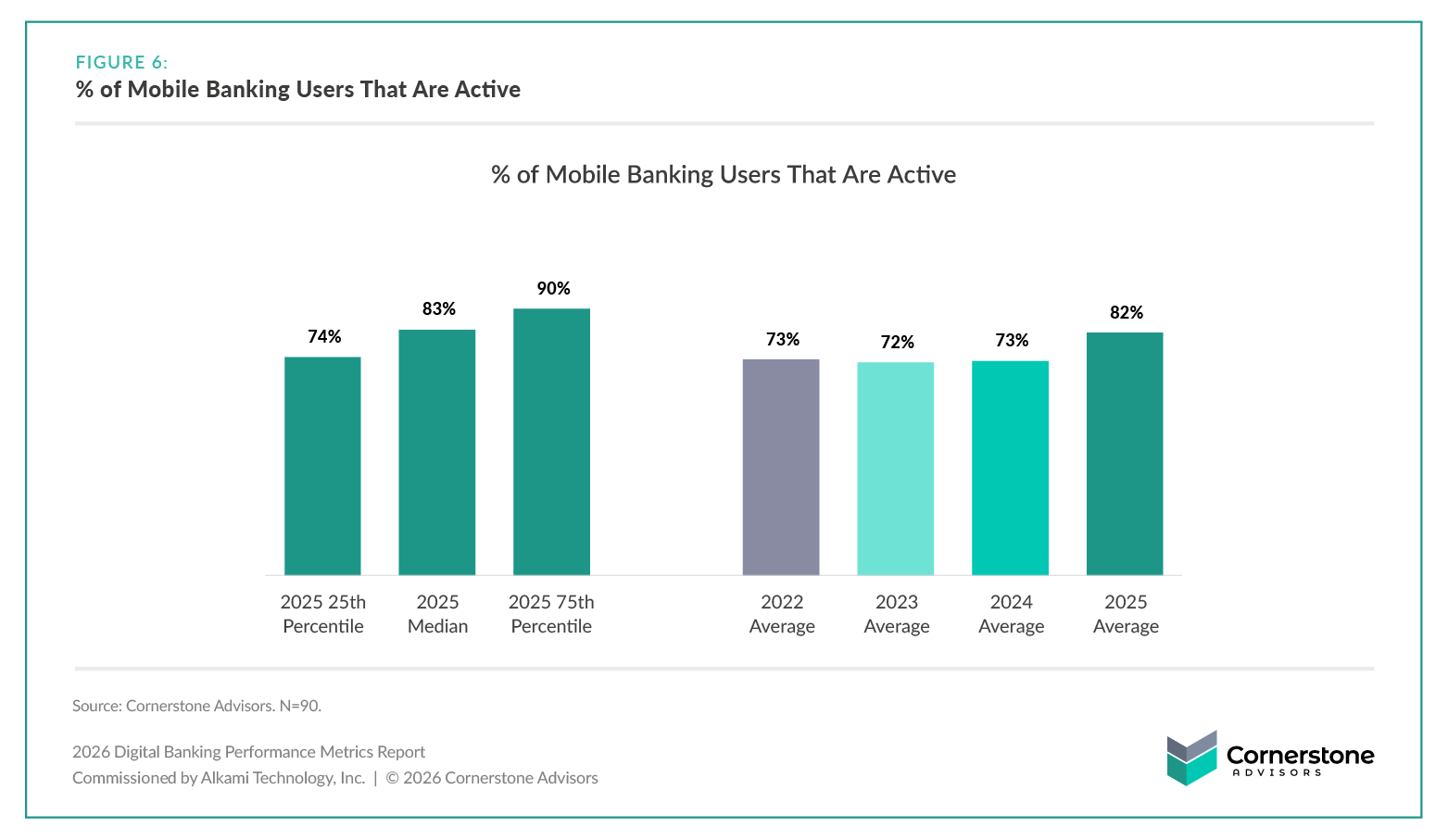
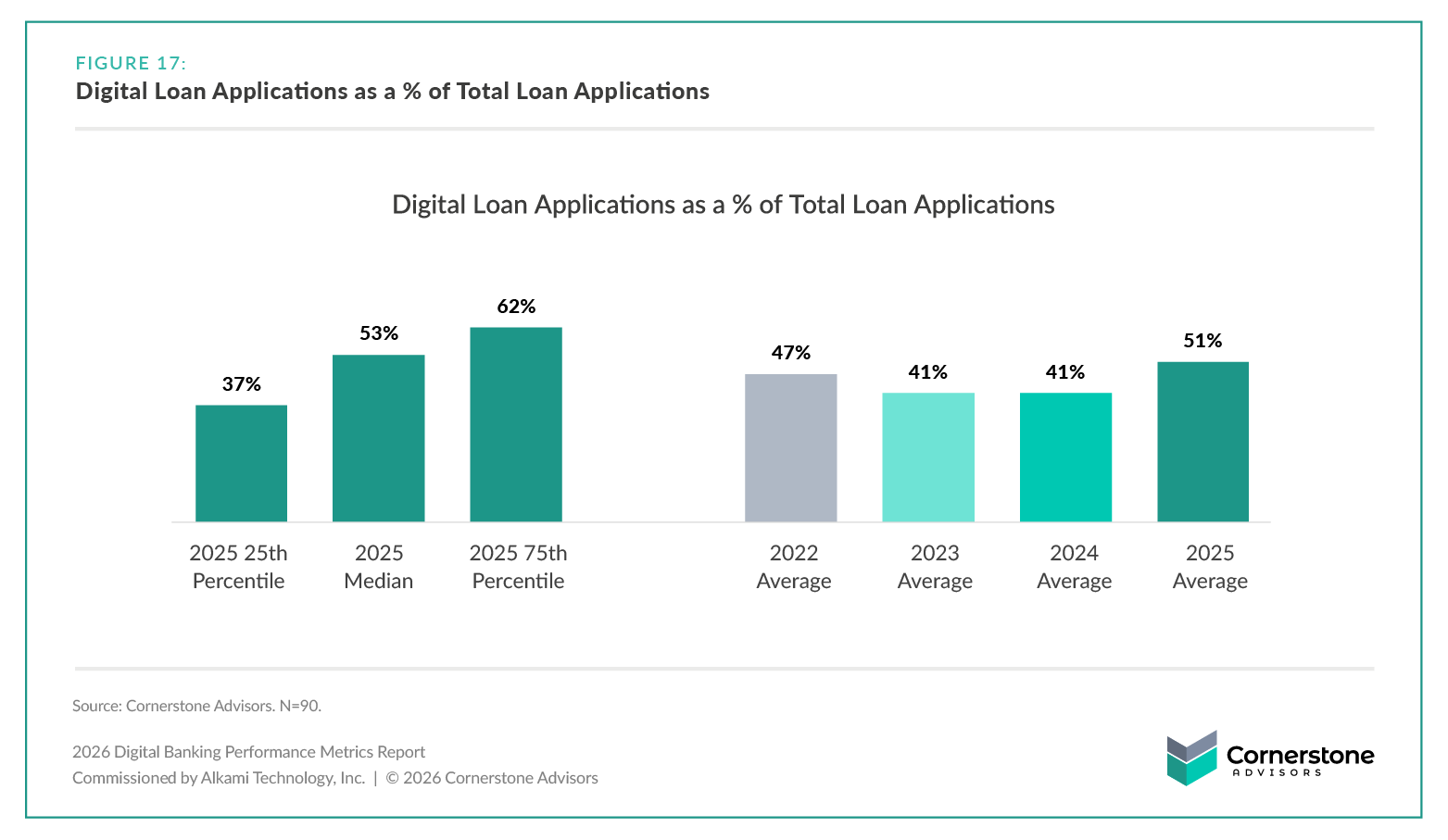
On the retail side, the indicators are broadly encouraging. Mobile activation rates hit a multi-year high, digital loan applications crossed the 50% threshold for the first time, and cross-sales through the digital channel jumped meaningfully. But the abandonment problem in account opening remains stubbornly unsolved, P2P continues to bleed to third-party applications (apps), and PFM utilization is declining even as availability grows.
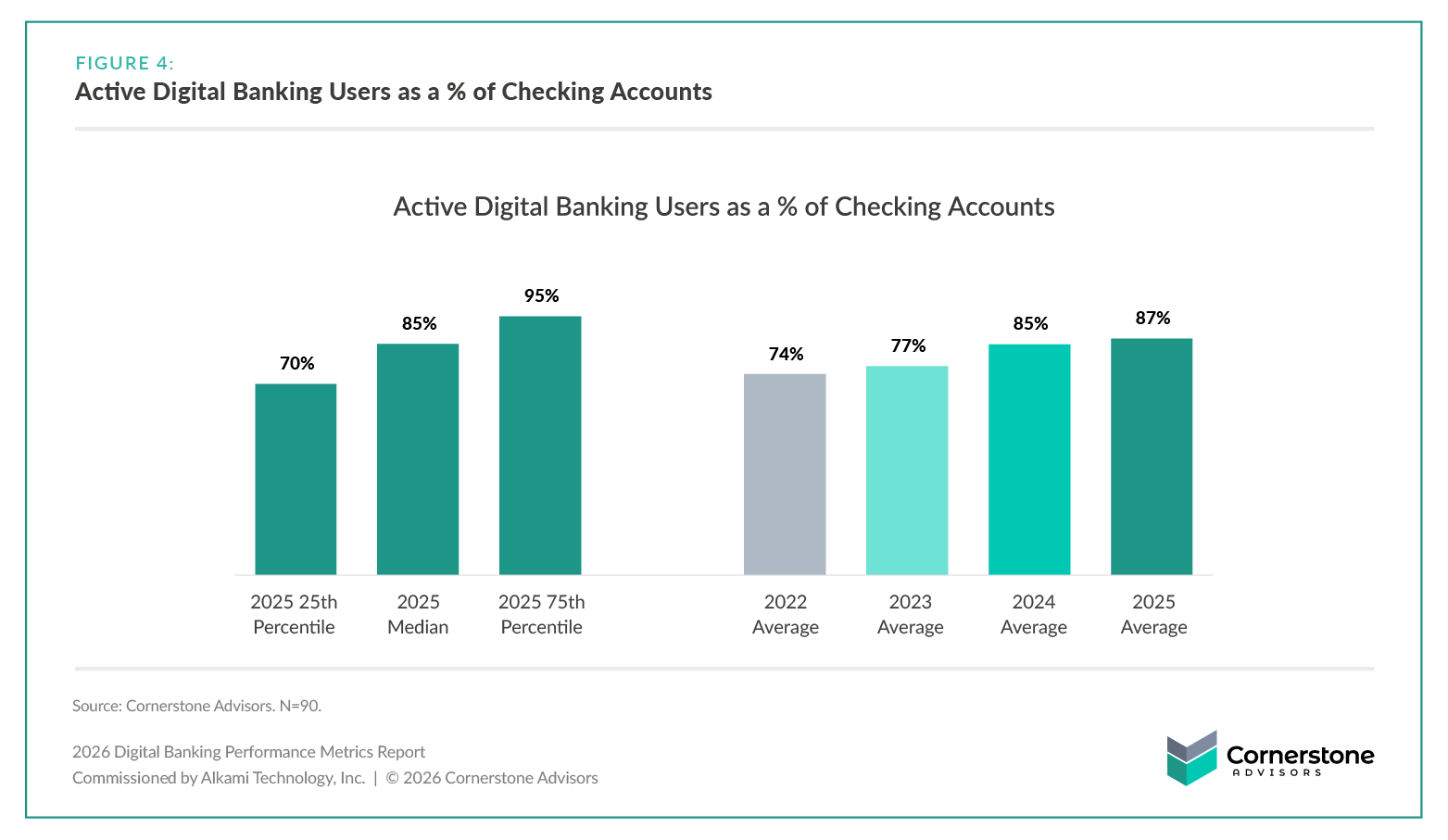
This is a reminder that building a feature and driving adoption are two very different challenges.
The investment data offers one more note of caution. Both banks and credit unions consistently underdelivered against their own platform investment plans. In 2025, actual conversions for consumer online and mobile banking platforms came in well below what institutions planned a year earlier.
- Although 14% of banks planned replacement activity for consumer digital platforms in 2025, in the end, only 9% followed-through.
- Credit unions told a similar story with 13% planning to replace the platform, yet only 8% fulfilled that goal.
- The 2026 plans are back up for credit unions with 15% planning a platform change. The expected implementation of a new platform lowered for banks to 9%.
What does the 2026 Digital Banking Performance Metrics report tell us about the current state of business digital banking solutions?
Enrollment is solid, and the businesses that use digital treasury services use them actively. But the capability gaps are significant revealing: business online account opening is rare, digital loan origination is nascent, and the higher order features that growing businesses increasingly expect, such as real-time payments, integrated payables and receivables, and cashflow forecasting.
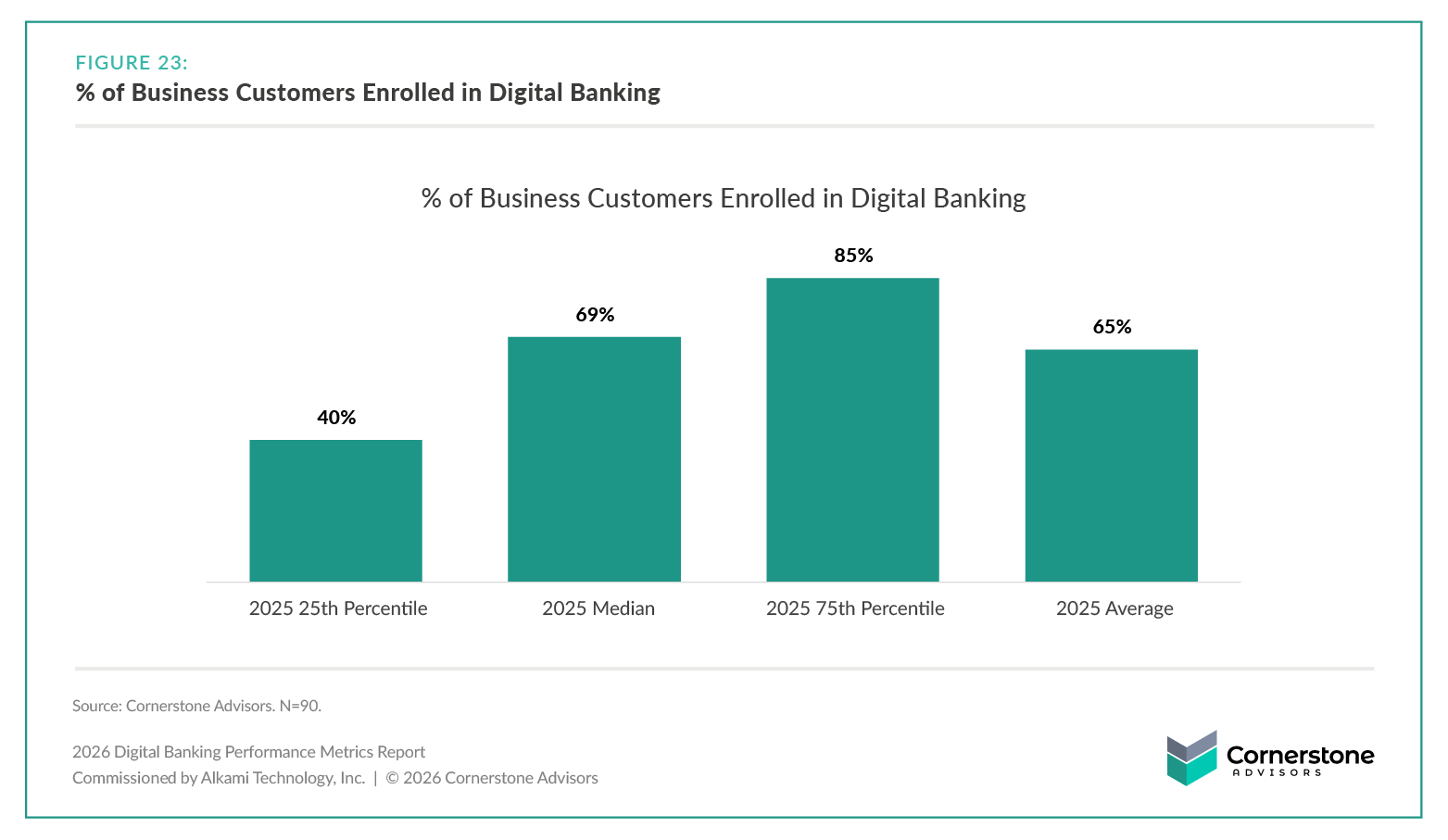
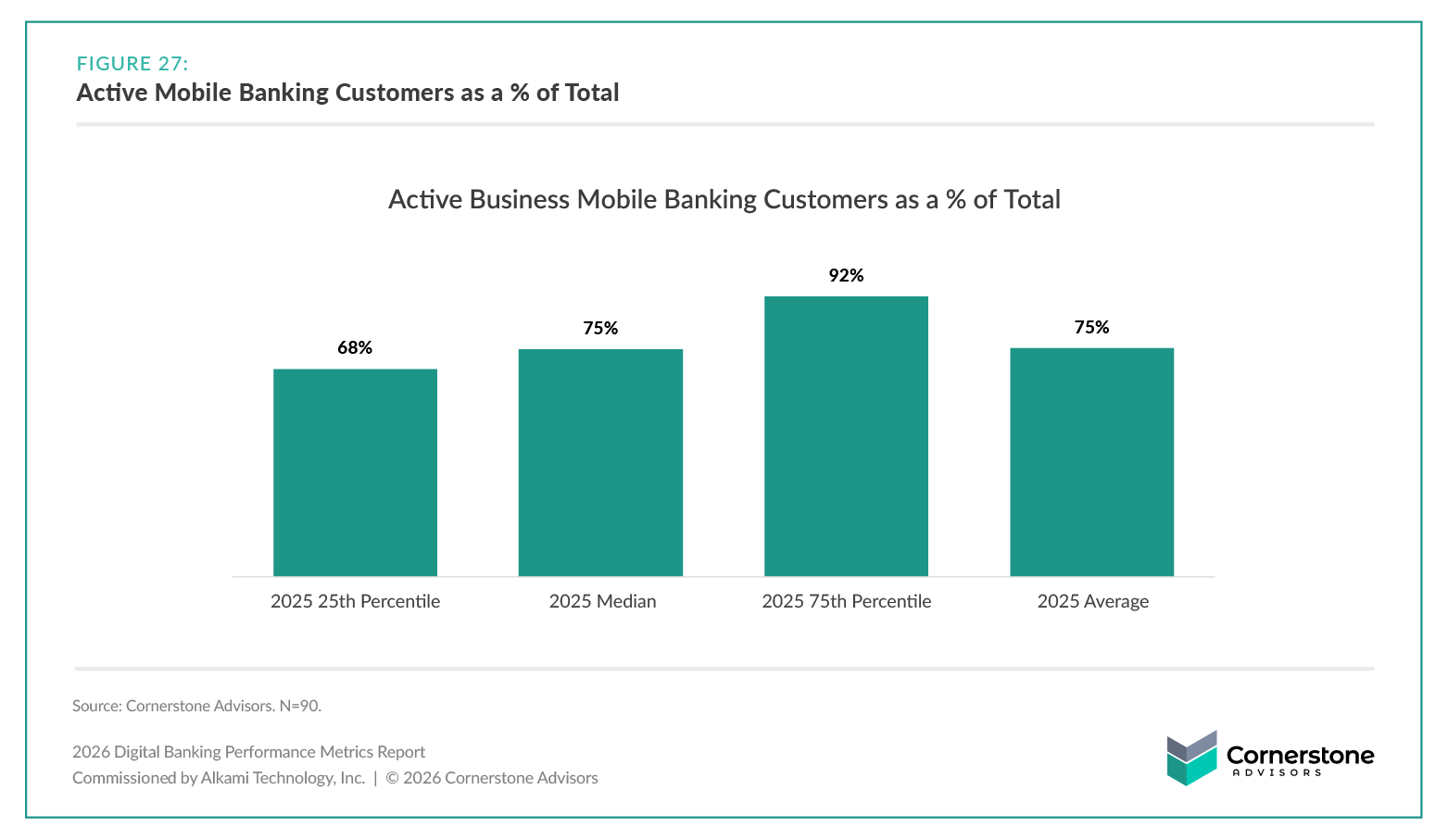
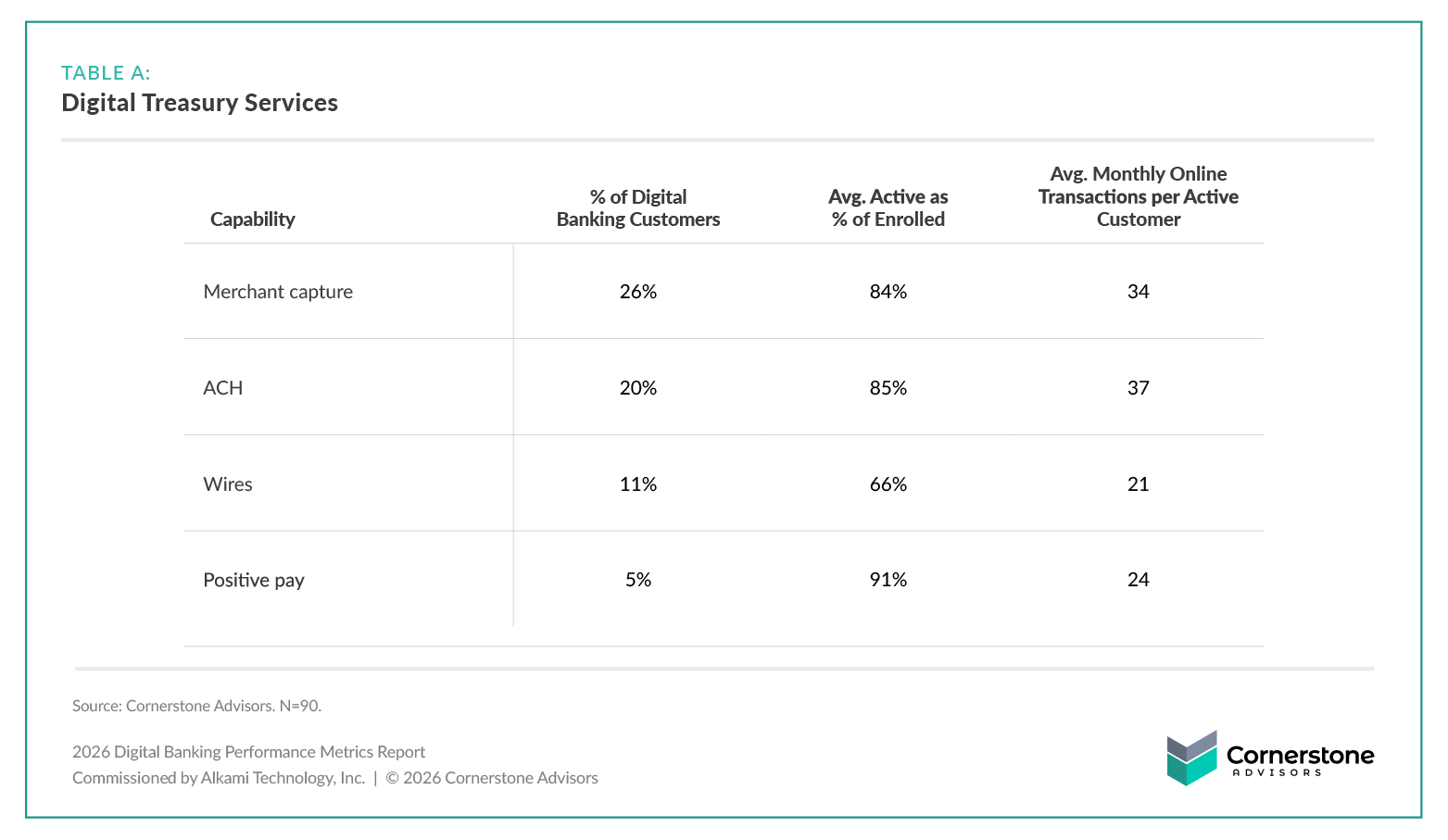
Perhaps most telling, the pain points that rank highest aren’t about what business clients can’t do; they’re about what financial institutions can’t see.
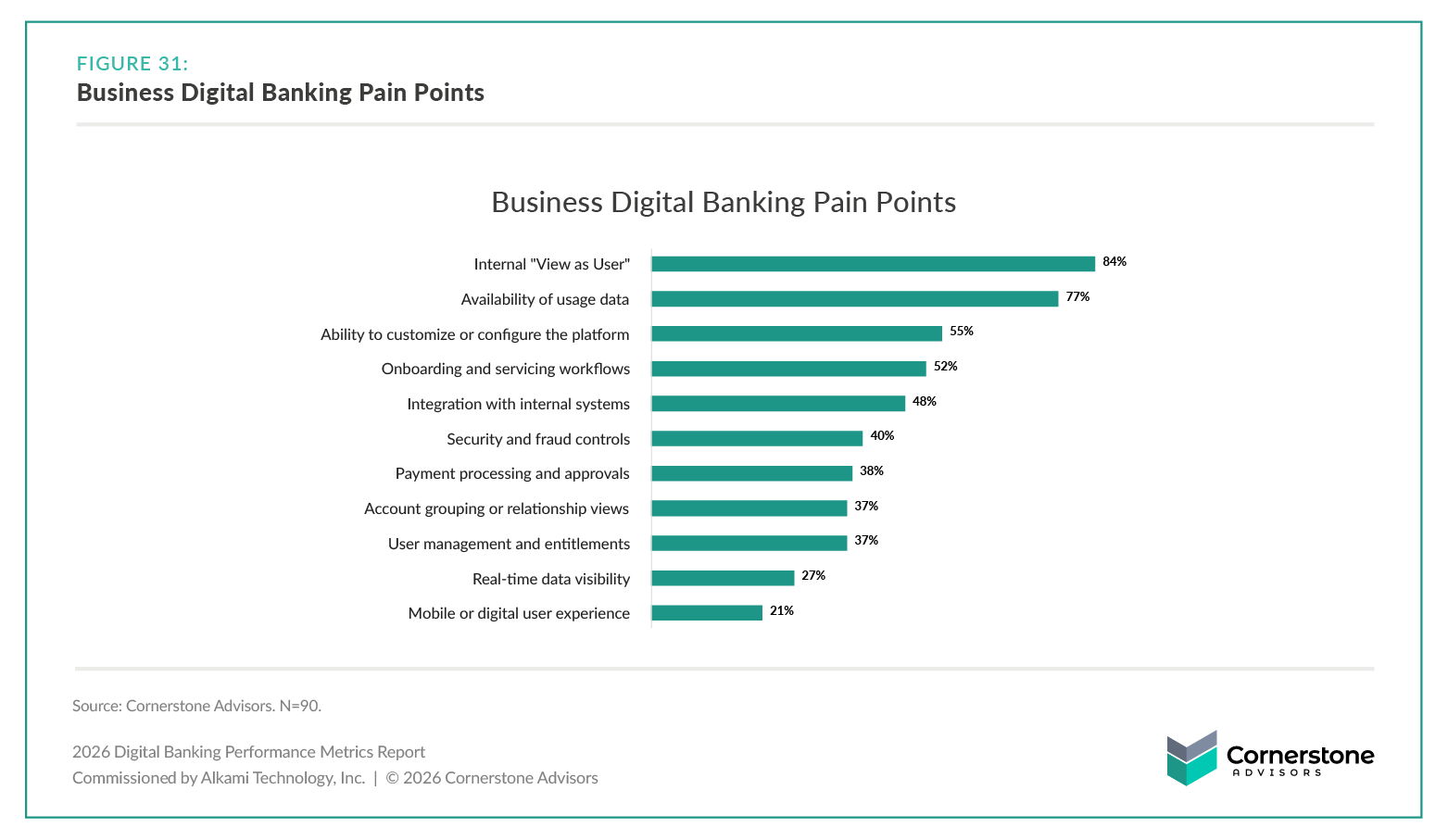
Without visibility into usage data and the ability to experience their own platforms through an account holder’s eyes, institutions are flying blind on a product they’re actively selling.
Why are these key metrics important?
Financial institutions need a digital banking metrics framework that does three things: focuses measurement on outcomes, not just activity; connects digital performance data to business goals; and distinguishes between metrics worth tracking and metrics worth managing to.
The operational data presented in this report are intended to give executives perspective on industry and institutional digital banking performance around the following categories:
- Retail Digital Investment Metrics
- Retail Digital Banking Operational Metrics
- Digital Banking Usage
- Mobile Deposit
- eStatements
- Bill Pay
- Person-to-Person (P2P) Payments
- Mobile Payments
- Digital Account Opening
- Digital Lending
- Digital Support
- Cross-Sales
- Business Digital Banking Operational Metrics
- Digital Banking Usage
- Business Account Opening
- Digital Treasury Services
- Digital Business Lending
- Digital Banking Features and Utilization
- Retail Digital Banking Features and Utilization
- Business Digital Banking Features
- Business Digital Banking Pain Points
Download a copy of the 2026 study
FAQs
1How many financial institutions participate in the 2026 Digital Banking Performance Metrics study?
A total of 89 American financial institutions participated on the retail banking side of the study, 32 banks and 57 credit unions. While a separate cohort of 60 institutions, 29 banks and 31 credit unions, participated in the business banking section.
2How was the study conducted?
Financial institutions were invited by Cornerstone Advisors to participate. Those who agreed were provided with a study workbook to complete. The end-of-year operational data self-reported into the workbook was then returned to Cornerstone Advisors for review and analysis.
3Who were the study’s authors?
Elizabeth Gujral, Emily Osburn, and Ron Shevlin of Cornerstone Advisors.
4Why is a digital banking metrics framework important for financial institutions?
A framework is necessary to focus measurement on outcomes rather than just activity, connect digital performance data to overall business goals, and distinguish between metrics that should be tracked versus those that should be actively managed to meet strategic goals.
5What are the key takeaways regarding the current state of retail digital banking solutions?
Indicators such as multi-year high mobile activation rates, digital loan applications crossing the 50% threshold, and a meaningful jump in cross-sales are encouraging. However, the report notes that the abandonment problem in account opening remains unsolved, P2P payments continue to bleed to third-party apps, and PFM utilization is declining.
6What does the 2026 report reveal about business digital banking operational metrics?
While enrollment is solid and businesses actively use digital treasury services, significant capability gaps exist. These gaps include rare business online account opening, nascent digital loan origination, and missing higher-order features that growing businesses expect, such as real-time payments and cashflow forecasting.

Access Related Resources
- Download Every Chart in the 2026 Report
- Earlier Reports: 2025 | 2024 | 2023 | 2022
- On-Demand Webinar: A Deep Dive Into Cornerstone’s 2025 Digital Banking Performance Metrics Study
- Blog: Key Insights from the 2024 Digital Banking Performance Metrics Report
- Blog: Mid-size Financial Institutions More Than Double Their Digital Transformation Investment, New Research Finds
- Upcoming Webinar: From Metrics to Momentum: Turning Digital Banking Data into Measurable Growth (June 10, 2026) Register for the webinar