Blog, Strategies
October 12, 2026
Generational Trends: A Playbook for Financial Institutions
How banks and credit unions can make digital experiences more relevant at every life stage The tradi...
Every financial institution knows this relationship. Your legacy digital banking platform has been around for decades. It knows your systems. Your teams know its quirks. You have history together. Sure, there are frustrations. The support tickets sit unresolved for too long. The roadmap keeps disappointing you. The user experience feels behind. Your employees have built workarounds around the workarounds, but leaving sounds hard so you stay because it is familiar.
You know what to expect, and the thought of starting over feels exhausting.
Even when the relationship is no longer serving your long-term goals, at least you know what to expect.
That is how legacy platforms keep financial institutions feeling stuck. They rarely make staying feel exciting. They make leaving feel risky. Comfort is not the same thing as alignment. Familiarity is not the same thing as future-ready. They keep you on the hook with larger discounts, but don’t have your long-term goals at heart.
At some point, you have to ask the question every overdue breakup demands… are we staying because this is working, or because leaving feels hard?
Fatigue from your legacy platform builds slowly over time. At first, the issues feel manageable. A delayed enhancement here. A support ticket there. A release that does not quite address what your team needs. An account holder complaint that sounds familiar because you have heard it before.
Then the patterns become harder to ignore.
Platform reliability concerns create frustration for account holders and drive support volume. Adding or upgrading services feels risky because implementation has become associated with disruption. Younger account holders expect digital banking experiences the platform cannot deliver fast enough, and your team’s goals of attracting Generation Z (Gen Z) customers and members feels like a distant reality. Operational burden spreads across departments. Manual workarounds become part of the daily routine. Vendor delays and long ticket backlogs consume time your team could be spending on higher-value work.
These are not isolated annoyances. They are signals.
In any relationship, a red flag is easy to rationalize once. When the same behavior keeps showing up, it becomes a pattern – and patterns shape what your financial institution can accomplish. Your gut feeling keeps bubbling up, and you wonder, “is our platform holding us back or propelling us forward?”
One of the most persuasive arguments for staying with an incumbent provider is history. We know the platform, the issues, and how to get around them.
That kind of familiarity can feel safe, especially when switching digital banking platforms requires planning, resources, and executive alignment. However, the cost of staying often hides inside the business as usual – staff time spent chasing tickets, delayed growth initiatives, clunky user experience.
It hides in digital projects that lose momentum because the platform cannot keep pace, causing teams to quietly accept “that’s just how it works.”
Things don’t have to be that way. Many times, people wonder what it would be like if they found another provider. They’ll toy with the what-ifs. Daydreaming of what their digital banking experience could look like. The goals they could achieve. How a platform decision could make them a hero and a true leader at their organization.
Stop viewing your incumbent as the low-risk option and start calculating the opportunity cost of staying.
It’s understandable that implementation risk is top of mind. Digital banking conversions require a detailed project plan.
Status quo risk is quieter. It rarely arrives with a project plan, but it still carries a heavy cost. A breakup becomes easier to justify when you realize staying is its own decision.
Fifty-five percent of financial institutions that switched digital banking providers said they made the change in pursuit of upward development — the need for new features and functionality, faster development cycles, or broader technology transformation.
Many financial institutions do not decide to leave because everything is broken. They leave because they know where they need to go, and their current platform is not built to get them there. A digital banking platform should empower your financial institution to onboard, engage, and grow relationships with less friction. It should help your teams move faster, make interactions feel intuitive and relevant, and support employees with better tools, clearer insights, and fewer avoidable burdens.
If your platform keeps asking your financial institution to shrink its ambition to fit its limitations, that is not partnership. That’s settling.
A true partner will prepare you for what is next.
That includes modern architecture, scalability, controlled updates, clear implementation guidance, a connected ecosystem, and a culture of partnership. It includes support before, during, and after go-live. It includes helping teams define success beyond launch: account holder satisfaction, employee efficiency, adoption, deposit growth, payments usage, retention, relationship expansion, and speed to market.
The right provider should help you answer the questions that matter most:
One of the biggest fall backs of a legacy platform is that teams eventually normalize the friction. Employees learn which features to avoid. They memorize which processes require extra steps and know which account holder questions will spike after an outage. They create spreadsheets, scripts, manual checks, and exception paths; becoming experts in making a difficult system survivable.
Over time, this forced resourcefulness changes the organization. Teams become more cautious. Innovation slows. New ideas are filtered through the lens of what the platform can tolerate. Employees start expecting friction before a project even begins. People leave for other opportunities.
The financial institutions that make successful conversions treat the process as a modernization effort. A vendor swap asks, “How do we replace what we have?” Modernization asks, “How should this work now and in the future?”
That mindset creates room to address data readiness, third-party dependencies, frontline training, support workflows, communications, account holder education, business and commercial user needs, and success measurement.
Leaving a legacy platform isn’t an impulsive decision; it’s likely been widely debated, thought over, and eventually, everyone came to a point of clarity. So how can financial institutions create internal alignment and gather stakeholder buy-in? Start with the questions that can open up new possibilities for your institution:
These questions change the conversation from “Should we switch?” to “What future are we choosing?”
The wrong provider makes go-live feel like the finish line: launch the platform, survive the conversion, move on. The right partner helps you build momentum after launch. By supporting your team as you measure adoption, review feature usage, improve conversions, analyze trends, identify untapped opportunities, drive growth with business and commercial relationships, and use data to inform targeted engagement.
Financial institutions that reported a positive conversion experience ranked account holder satisfaction as their number one measure of success, followed by operational efficiency and revenue growth.
Growth is not a single event. The right platform should help financial institutions recognize and act on the opportunity of everyday moments.
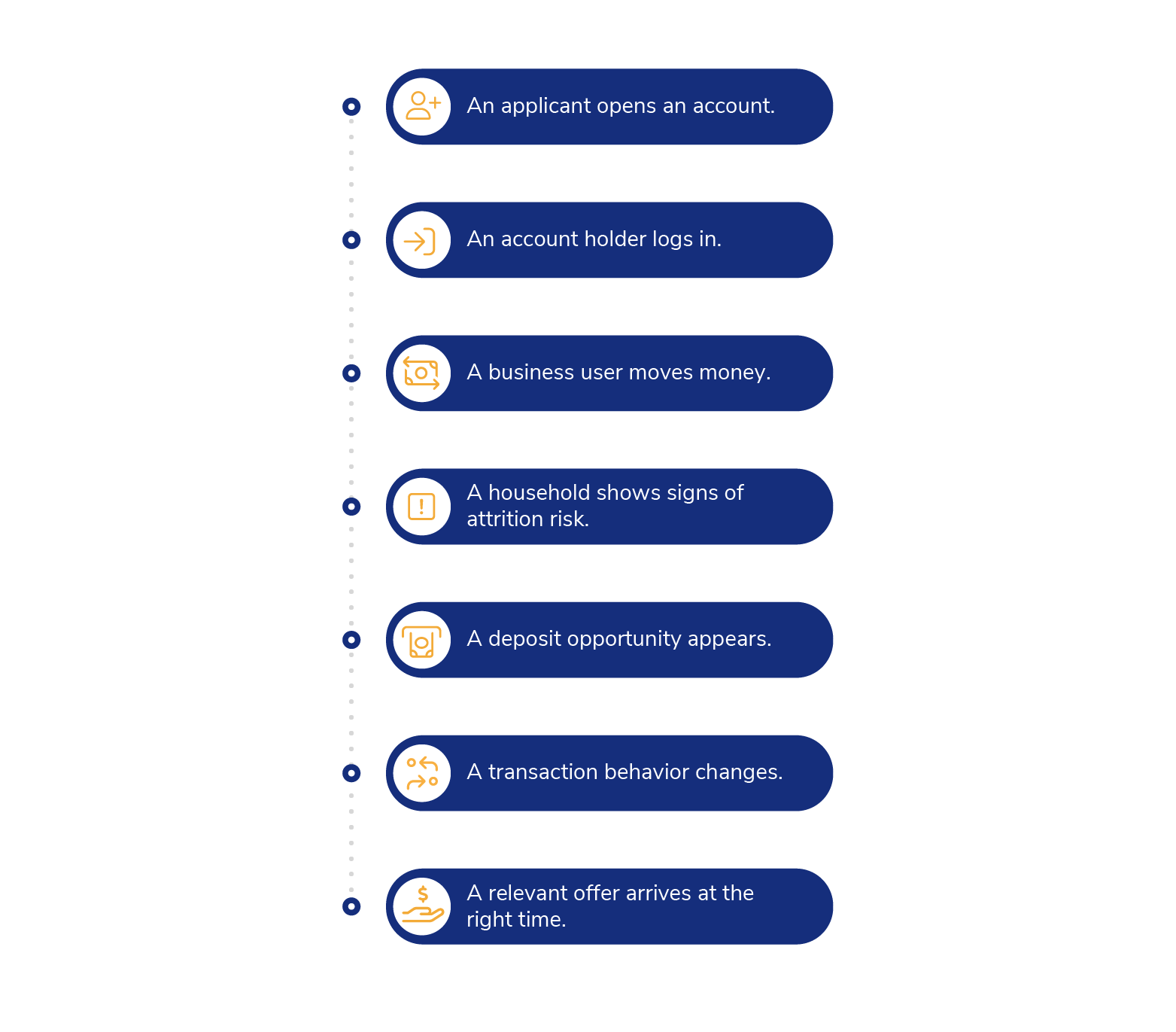
At some point, familiarity stops being a reason to stay and becomes the reason progress is stalling. Is your current platform helping your institution become the financial institution your account holders need next?
If the answer is no, it may be time for the breakup. Not a dramatic one. A clear-eyed, well-planned, future-focused one.
Your financial institution deserves a platform aligned to your long-term goals. Your employees deserve tools that help them do their best work. Your account holders deserve experiences that feel intuitive, timely, and worth coming back to.