
Blog, Perspectives, Podcast
October 21, 2026
Local Roots, Big-Bank Expectations: AuburnBank’s Digital Strategy
How AuburnBank is connecting account opening, digital banking, and marketing engagement while preser...
Payments fraud kept pressure on organizations in 2025. According to the 2026 AFP Payments Fraud and Control Survey, 76% of organizations reported attempted or actual fraud during the year. Check fraud remained one of the most significant sources of fraud exposure, with 58% reporting check-related fraud incidents. The challenge is clear: even as treasury operations become more digital, checks have not disappeared. In fact, 87% of organizations still use checks in treasury operations, underscoring the need for stronger payment controls and fraud prevention tools.
Payment fraud is a security issue and an operational challenge for treasury teams responsible for monitoring account activity, managing exception workflows, and responding to threats in real time. Treasury teams identified 83% of attempted fraud incidents in 2025, highlighting the growing importance of real-time visibility and payment controls.
As fraud tactics become more sophisticated and payment activity accelerates, Positive Pay and ACH Reporting is essential for businesses and financial institutions to reduce fraud exposure, strengthen payment controls, and protect account holders from unauthorized transactions.
Positive Pay is a business banking solution used by financial institutions to detect and prevent fraud across check and ACH transactions. As payment fraud continues to rise, Positive Pay has become an increasingly important tool for businesses managing high transaction volumes and treasury operations.
For checks, businesses provide their financial institution with a list of issued checks so incoming payments can be verified and discrepancies flagged for review. This helps businesses identify altered or counterfeit checks before funds leave an account. For stronger protection, Check Positive Pay solutions should validate check number, dollar amount, issue date, and payee.
ACH Positive Pay works similarly by helping businesses monitor ACH activity using transaction filters, payment rules, and approved trading partner lists. Suspicious or unauthorized transactions can be identified quickly so businesses can review actionable alerts and flagged activity, approve or reject exceptions, and take action fast.
Beyond fraud prevention, Positive Pay also helps businesses and financial institutions improve operational efficiency, reduce manual review processes, and maintain greater visibility into payment activity.
While Positive Pay enrollment tends to be smaller than other treasury services, businesses that use it are highly engaged, reflecting how critical fraud controls have become to day-to-day payment operations.
Financial institutions use Positive Pay as a competitive differentiator to help businesses monitor payment activity more closely, reduce fraud exposure, and reduce disconnected exception processes and create a more consistent approach to managing suspicious transactions.
Businesses increasingly expect stronger fraud controls built directly into their treasury management and business banking experience. Positive Pay helps financial institutions support those expectations while reducing reliance on manual review processes that can slow response times and create operational strain.
A $95B asset bank modernized its Positive Pay operations after outdated systems created processing delays, manual ACH workflows, and inefficiencies for both employees and business clients. Before implementing a modern Positive Pay solution, some ACH processes relied on paper forms, faxed instructions, and time-intensive manual review that required support from up to 12 full-time employees. Automating those workflows helped reduce operational burden, improve efficiency, and free up teams to focus on higher-value work.
In another example, a super-regional bank adopted Check Positive Pay with payee verification after increased mail theft, check washing, and fraud attempts exposed limitations in its disconnected systems. Adding payee verification helped the bank detect more fraudulent checks and reduce administrative burden and fraud-related costs. The bank also identified Positive Pay as one of its most in-demand treasury management services.
Businesses of all sizes increasingly need fraud controls that fit naturally into day-to-day treasury operations. Positive Pay helps automate exception review processes, improve visibility into account activity, and reduce reliance on manual monitoring.
Positive Pay helps businesses:
Speed also matters when responding to suspicious transactions. There is a very short window, often less than 24 hours, to review flagged activity before payments are processed, making timely action critical. Once that review window closes, responsibility for losses may shift to the business, highlighting the importance of fast exception review and decisioning.
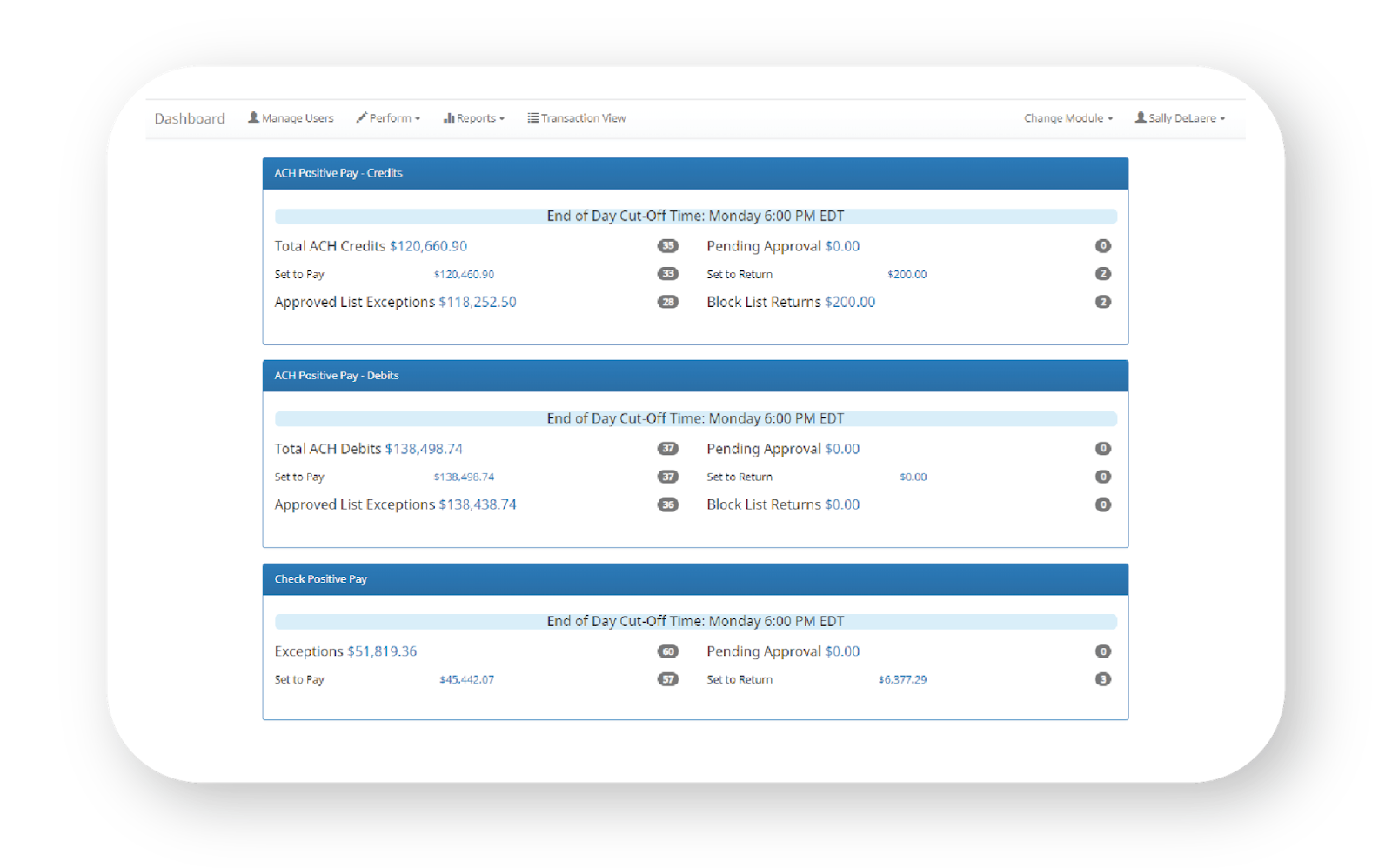
Positive Pay helps treasury teams respond more quickly through actionable alerts, approve or reject payment exceptions, and manage approved or blocked transaction lists more efficiently. With features like Payee Positive Pay, businesses can enhance their defenses against fraud involving altered or washed payee names, adding an additional layer of security.
Especially for businesses managing large transaction volumes, that visibility can help reduce administrative burden, improve reconciliation processes, and strengthen day-to-day treasury operations.
Businesses expect more than fraud alerts. They expect payment controls that help treasury teams respond quickly, review exceptions efficiently, and keep day-to-day operations moving without disruption.
That pressure is only growing as payment activity accelerates and fraud tactics become more sophisticated. Financial institutions that can deliver faster exception handling and more streamlined fraud workflows will be better positioned to support businesses managing increasingly complex treasury operations.