Blog, Strategies
October 15, 2026
Proactive Fraud Prevention in Digital Banking Solutions
Fraud prevention starts before the transaction October is Cybersecurity Awareness Month and we’re co...
This blog post was originally published in October 2024 and was updated in February 2026 to include the latest research.
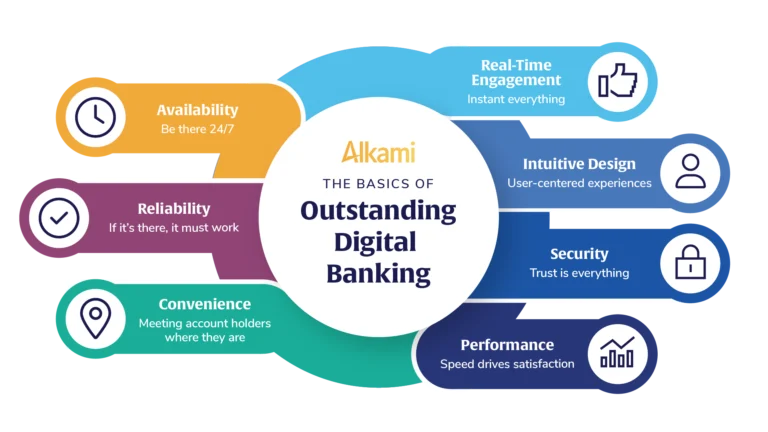
Also being called a virtual branch, financial institutions wanting to offer outstanding digital experiences, integrations, and functionality within their digital banking solutions must focus on these basics: availability, reliability, convenience, performance, real-time engagement, intuitive design, and security.
Cliche as it may be, our industry has gone through massive transformation, thanks in large part to technology advancements outside of the financial services industry. The basic pillars of outstanding financial service have remained steadfast; The key distinction now is that due to the changes in consumer habits, like the proliferation of smart phones, the long-practiced basics of serving retail and business account holders have evolved to require the availability of a safe and easy to use “digital twin“.
Mastering the Basics of Outstanding Digital Banking Solutions
For those reading this who have been in the banking industry since before every account holder carried supercomputers in their pockets, you’ll see those words are not unfamiliar at all: After all, branches, call centers, and ATMs have long been a showcase of availability and convenience. Access to money has always needed to be reliable, and the act of transacting or transferring funds should always be secure.
My point is, these aren’t buzzwords—they are the same foundational elements for delivering exceptional banking experiences that have attracted and retained account holders for eons. The key difference nowadays, is that these tenants are being delivered across digital channels.
Be there 24/7. In digital banking, availability is everything. Both consumer and business account holders expect uninterrupted access to their funds at any time, from anywhere. Institutions must ensure that their platforms have zero downtime, eliminating “scheduled maintenance” and minimizing disruptions. Account holders no longer tolerate downtime—they demand instant, 24/7 access. To meet these expectations, banks and credit unions must invest in scalable, resilient digital infrastructures capable of handling demand at all times.
If it’s there, it must work. Rolling out new services comes with the expectation that they will simply work. No bugs, no issues—just seamless functionality. High-performing financial institutions are defined by their ability to deliver reliable services, according to Cornerstone’s 2024 Digital Banking Performance Metrics Report. If your mobile and online banking platform can’t handle a new feature launch without glitches, trust erodes quickly. Our industry is at a turning point—financial institutions must prioritize reliability as much as innovation to avoid losing market trust.
Meeting account holders where they are. First impressions matter, whether a prospective account holder is on their computer, mobile device, or in a branch. Those first few interactions set the stage for what could happen next. The right account opening solution delivers a comprehensive experience regardless of the channel the application begins on. If a retail or business applicant has questions, it allows them to pause their application and get in touch with a call center representative who can offer them the 1:1 support they need and swiftly resume the process without starting from scratch. That’s true omnichannel.
Speed drives satisfaction. In our fast-paced world, speed is non-negotiable. Whether it’s opening an account, making a transaction or payment, or securing a loan approval, slow systems can frustrate users. High-performing institutions have invested heavily in optimizing digital performance, reducing load times and ensuring that actions like digital payments and transfers happen quickly and efficiently.
Account holders demand frictionless access to banking, whether they prefer in-branch services or the convenience of mobile banking. Providing a seamless experience—whether it’s digital account opening or loan funding—is vital. Research revealed that many consumers, particularly millennials, will abandon a process if it’s too difficult. One example of convenience in action is remote deposit capture. It’s an essential feature that 79% of consumer banking solution users see as critical or important. For banks and credit unions looking to improve, ensuring fast, reliable mobile deposit options should be a priority.
Instant everything. Today’s account holders expect real-time experiences—whether they’re checking a balance or making a payment. Money movement should feel instantaneous to users, even if the backend processes take a bit longer. Real-time engagement is where digital banking meets real-life expectations. Cornerstone’s 2025 Digital Banking Performance Metrics Report, and Alkami’s 2025 Generational Trends studies each shows that banks and credit unions that prioritize digital speed, especially in payments, see increased engagement and satisfaction, especially among younger users.
Real-time engagement also translates into leveraging daily transaction data to enable data insights, predictive artificial intelligence, and full funnel marketing automation. Allowing institutions to truly understand their account holders as individuals, empowers them to scale their human connection through Anticipatory Banking, transforming digital channels into personalized experiences for every account holder. This deep understanding empowers them to deliver timely, personalized cross-sell offers that resonate, fostering increased product penetration without resorting to intrusive “spammy” tactics.
User-centered experiences. An easy-to-use interface is a critical factor in digital banking success, especially as consumers grow more tech-savvy. For many, the digital experience defines the overall brand perception of a financial institution. Digital natives like Generation Z (Gen Z) and millennials are less likely to remain loyal if a digital experience is frustrating. The data-driven UX and UI that successful financial institutions implement are clean, intuitive, and user-friendly across generations, making navigation simple for tech-savvy Gen Zers and older generations alike.
Trust is everything. Security continues to top the list of priorities for financial institutions and their account holders alike. As digital engagement rises, so do threats from cybercriminals. Consumers want their financial institutions to be more proactive in protecting them by using data insights to monitor for signs of financial distress or fraud. Meanwhile, banks and credit unions that leverage multi-factor authentication, behavioral biometrics, and real-time fraud detection are leading the charge in building trust. For business and commercial accounts, this means staying one step ahead of fraudsters while maintaining regulatory compliance, through Positive Pay. With the rise of AI-driven fraud, financial institutions must adopt the strongest security measures possible to protect their account holders.
Excelling in the fundamentals of digital banking solutions—availability, reliability, convenience, performance, real-time engagement, intuitive design, and security—ensures that your financial institution is positioned not just for stability, but for growth.
As banks and credit unions continue to compete in the digital age, focusing on these basics will foster trust, improve engagement, and ultimately lead to long-term loyalty.
What are the primary pillars of outstanding digital banking solutions? To deliver an exceptional experience, financial institutions must prioritize seven core pillars: availability, reliability, convenience, performance, real-time engagement, intuitive design, and security. These fundamentals ensure that digital banking solutions meet the 24/7 demands of modern account holders while maintaining the trust and stability traditional banking was built upon.
How does reliability impact account holder retention in digital banking? Reliability is the foundation of trust; if a service is available, it must function flawlessly. According to the Cornerstone 2024 Digital Banking Performance Metrics Report, high-performing financial institutions are defined by their ability to deliver seamless, bug-free services. Glitches during feature launches erode trust quickly, making reliability as critical as innovation for retention.
Why is omnichannel convenience vital for digital account opening? Modern account holders expect to start an application on one channel and finish on another without friction. An effective account opening solution allows applicants to pause a mobile application and resume it with a call center representative’s help. This level of convenience is essential, as many consumers will abandon difficult processes.
What role does real-time engagement play in modern digital banking? Today’s account holders expect instantaneous results for tasks like checking balances or moving money. Research from Alkami’s 2025 Generational Trends study indicates that financial institutions prioritizing digital speed and real-time payments see significantly higher engagement and satisfaction levels, particularly among younger, tech-savvy generations like Gen Z and millennials. Real-time engagement also means turning daily transaction behavioral data into data insights to power full funnel marketing, rapid response marketing automation, and Anticipatory Banking.
How should financial institutions approach security in an AI-driven threat environment? Security remains the top priority for account holders who now expect proactive protection. Leading banks and credit unions use data insights, behavioral biometrics, Positive Pay, and multi-factor authentication to monitor for fraud. As AI-driven threats rise, institutions must adopt these advanced measures to secure account holder data and maintain their reputation as a trusted partner.