Blog, Perspectives, Podcast
October 21, 2026
Local Roots, Big-Bank Expectations: AuburnBank’s Digital Strategy
How AuburnBank is connecting account opening, digital banking, and marketing engagement while preser...
In a new episode of FIsionaries™, John Hutcherson, Senior Vice President of Operations at State Bank of Texas, joins Jim Marous to discuss their experience using Alkami’s Digital Banking Platform to pursue frictionless banking by improving workflows, strengthening digital capabilities, and helping employees spend less time navigating processes and more time serving customers.
State Bank of Texas is a highly-focused community bank serving distinct customer segments, including hoteliers, money service businesses, and relationship-driven commercial clients. With less than 100 employees and approximately $2.8 billion in assets, the bank has built its reputation on efficiency, service, and a deep understanding of the businesses it serves.
As customer expectations shift, even efficient financial institutions face an important question: how can a community bank modernize without losing the relationship focus that made it successful in the first place? For State Bank of Texas, the pursuit of frictionless banking is about making banking faster, simpler, and more valuable for both customers and employees.
Relationship banking is often thought of as a front-office experience: helpful bankers, personalized service, and strong customer relationships. In practice, the ability to deliver that kind of experience often depends on what happens behind the scenes.
The ability to effectively deliver true relationship banking depends on whether employees have the workflows, tools, and processes they need to serve customers quickly and effectively. The customer may only see the interaction at the branch, on the phone, or through the digital banking platform, but the quality of that interaction is often shaped by the operational work behind it. When teams are slowed down by manual tasks, disconnected systems, outdated processes, or internal friction, they have less time to focus on solving customer needs and strengthening relationships.
That matters especially for State Bank of Texas’ customer base, where speed, reliability, and ease of use are critical. Hoteliers need to move money efficiently, manage operating expenses, run payroll, and make quick decisions. Money service businesses may have cash and payment needs that do not always align neatly with traditional branch-based banking.
That is why Hutcherson views digital transformation as an operational priority. A digital banking platform is not a cure-all on its own. However, when implemented with intention, it creates an opportunity to evaluate workflows, rethink operational processes, and remove unnecessary complexity before it reaches the customer experience.
As Hutcherson explains in the episode, the goal is not to place new technology on top of old ways of working. It is to use digital transformation as a catalyst to examine how the bank operates, how employees serve customers, and how they can create a more meaningful banking experience for their high-value customers.
When Hutcherson joined State Bank of Texas, they focused first on listening and learning the bank’s culture, priorities, and processes. For them, improving operations started with understanding how work was actually getting done, which steps served a purpose, which ones created delays, and where employees were finding workarounds to keep things moving.
Friction is not always obvious from the outside. A process may exist because of a legacy system, a compliance requirement, a long-standing habit, or a past decision that no longer reflects how customers want to bank. Before changing a workflow, it helps to understand why it exists and whether it still supports the financial institution’s goals.
Hutcherson also recognized that employees are often the best source of insight into where friction lives. They know which processes slow down service, which tasks create duplicate work, and which internal steps keep them from spending more time with customers. By staying close to the teams doing the work, they were able to identify gaps and bring employees into the improvement process instead of making workflow changes from a distance.
For State Bank of Texas, that employee perspective is central to the pursuit of frictionless banking. Better tools and clearer workflows make internal processes more efficient and help employees serve customers more quickly, confidently, and personally. When teams spend less time navigating internal friction, they have more time to solve problems, answer questions, and build stronger relationships. In that sense, reducing friction for employees and customers are closely connected. The digital experience customers see is shaped by the operational experience behind it.
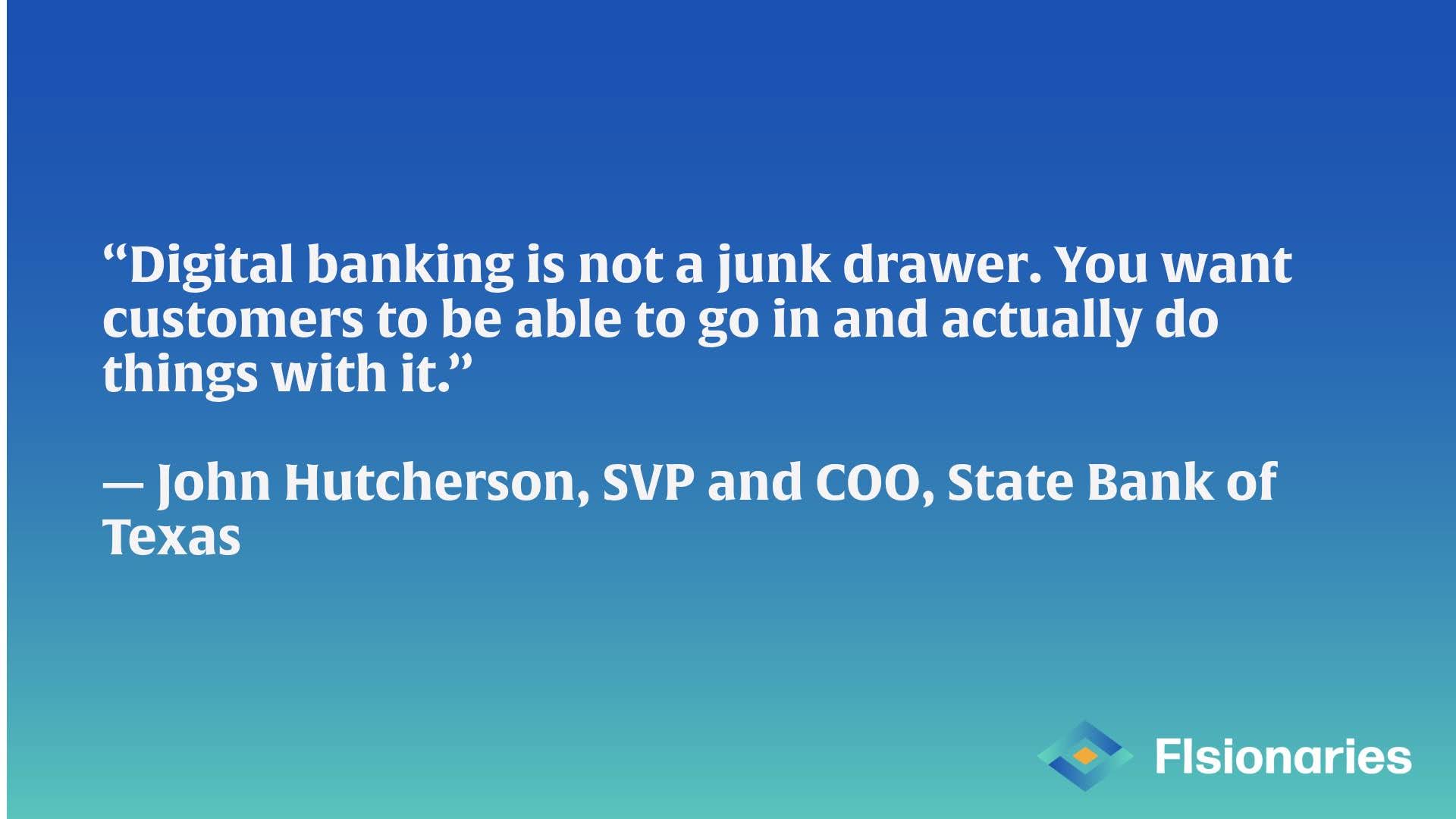
Financial institutions can accumulate digital features over time, but when those capabilities are not organized around what customers actually need to accomplish, the experience can become cluttered instead of intuitive. That is a key distinction in State Bank of Texas’ approach to digital banking. The goal is to make banking more practical for the commercial customers the bank knows best, including hoteliers, money service businesses, and relationship-driven business clients.
For those customers, the digital banking platform has to support real work. The most effective commercial banking solutions help businesses move money, manage operating funds, support payroll, resolve issues, connect with the bank, and complete transactions without unnecessary delays.
By focusing on practical value, State Bank of Texas is working to make digital banking a stronger extension of its relationship banking model. When customers can rely on digital channels to get important tasks done quickly and confidently, the bank becomes easier to work with and more valuable in their day-to-day financial lives.
For a relationship-driven financial institution, that is the difference between offering digital access and building a digital experience that helps customers do more with the bank.
For community banks, digital transformation can make the financial institution’s existing service model easier to deliver in a more digital, always-on environment.
State Bank of Texas is focused on becoming a faster, more effective, and more responsive version of the financial institution its customers already know. A strong digital banking platform should support that goal by helping employees serve customers more efficiently, giving customers easier ways to take action, and reinforcing the relationship-driven service model that already defines the bank.
Service remains central to that identity. In the episode, Hutcherson describes the bank’s service philosophy in a way that makes the goal clear.
The point is responsiveness, communication, and follow-through. If the bank does not have an answer immediately, the goal is to find one. If an answer is still in progress, customers should know the bank is working on it. That level of transparency helps preserve the personal connection that relationship-driven financial institutions work hard to build.
The same principle applies to digital banking. Customers want convenience, but they also want confidence. They want to move quickly, complete tasks easily, and know their bank is still paying attention to the relationship behind the transaction. For State Bank of Texas, modernization is about using technology to make that service easier to deliver and affirm customer confidence.
Digital transformation does not have to be solved entirely within the four walls of the financial institution. One of the advantages of working with the right partner is perspective. A digital banking partner that works across many financial institutions can help leaders recognize which challenges are unique to their bank and which ones are common across the industry.
That outside perspective matters because many banks are asking similar questions: How do we reduce operational friction? How do we improve digital banking adoption? How do we make digital banking more engaging? In the episode, Hutcherson points to shared challenges around platforms, workflows, and core processor connectivity. Those common pain points can become easier to address when a financial institution is not trying to solve them in isolation.
The right partner can also help connect strategy to execution. It is one thing to know that workflows need to improve; it is another to understand how those changes should show up in the digital experience, employee process, and customer journey. For State Bank of Texas, working with Alkami supports the bank’s broader goal of making digital banking more intuitive, easier to act on, and more aligned with the way its commercial customers operate.
Peer conversations add another layer of value. When financial institutions compare notes, they can pressure-test ideas, learn from what others have already tried, and avoid unnecessary trial and error. That kind of learning is especially important as customer expectations shift and digital banking becomes more central to how customers manage their financial lives.
For Hutcherson, the takeaway is adaptability. Financial institutions that listen, learn from partners and peers, and adjust their approach over time will be better positioned to serve customers in a changing market.
Ultimately, State Bank of Texas’ pursuit of frictionless banking is about making the banking experience more valuable for the customers and businesses it serves. For customers, that means being able to move money more easily, access services more conveniently, and complete important tasks with less friction. For employees, it means having workflows and tools that make it easier to respond quickly, solve problems, and support stronger relationships. For the bank as a whole, it means becoming a more valuable part of customers’ daily financial lives.
State Bank of Texas’ story is a reminder that digital transformation goes beyond adopting new technology to focus on using that technology with intention: reducing friction, improving service, empowering employees, and staying focused on the customers a financial institution knows best.
Watch the full FIsionaries™ episode with John Hutcherson, SVP and COO at State Bank of Texas, and Jim Marous to hear how the bank is pursuing frictionless banking with relationship management at the center.
What is frictionless banking?
Frictionless banking is designed to reduce unnecessary steps, delays, and complexity for both customers and employees. It can include easier digital money movement, more intuitive workflows, faster service, and clearer ways for customers to complete everyday banking tasks.
How do back office operations impact relationship banking?
The back office matters because internal workflows often shape the quality of the customer experience. When employees have efficient processes and better tools, they can respond faster, solve problems more effectively, and spend more time building relationships instead of navigating internal friction.
How can digital banking support relationship banking?
Digital banking can support relationship banking by making it easier for customers to take action while still preserving the personal service they expect from their financial institution. A strong digital experience helps customers move money, access services, resolve issues, and complete tasks more easily, which can deepen engagement with the bank.