
Blog, Perspectives
November 13, 2026
What Two Bank Leaders Learned From Successfully Switching Digital Banking Platforms
Five practical lessons for banks preparing to evaluate, implement, and launch a new digital banking ...
Jump to Alkami’s differentiators >>
Online banking technology is the software and infrastructure that lets account holders manage money, make payments, receive support, and access financial services through web and mobile channels. For a financial institution, the technology also connects digital experiences to core systems, payment providers, data, security controls, and partner services.
The best online banking platform gives banks and credit unions a dependable digital foundation for acquisition, activation, service, engagement, and relationship growth.
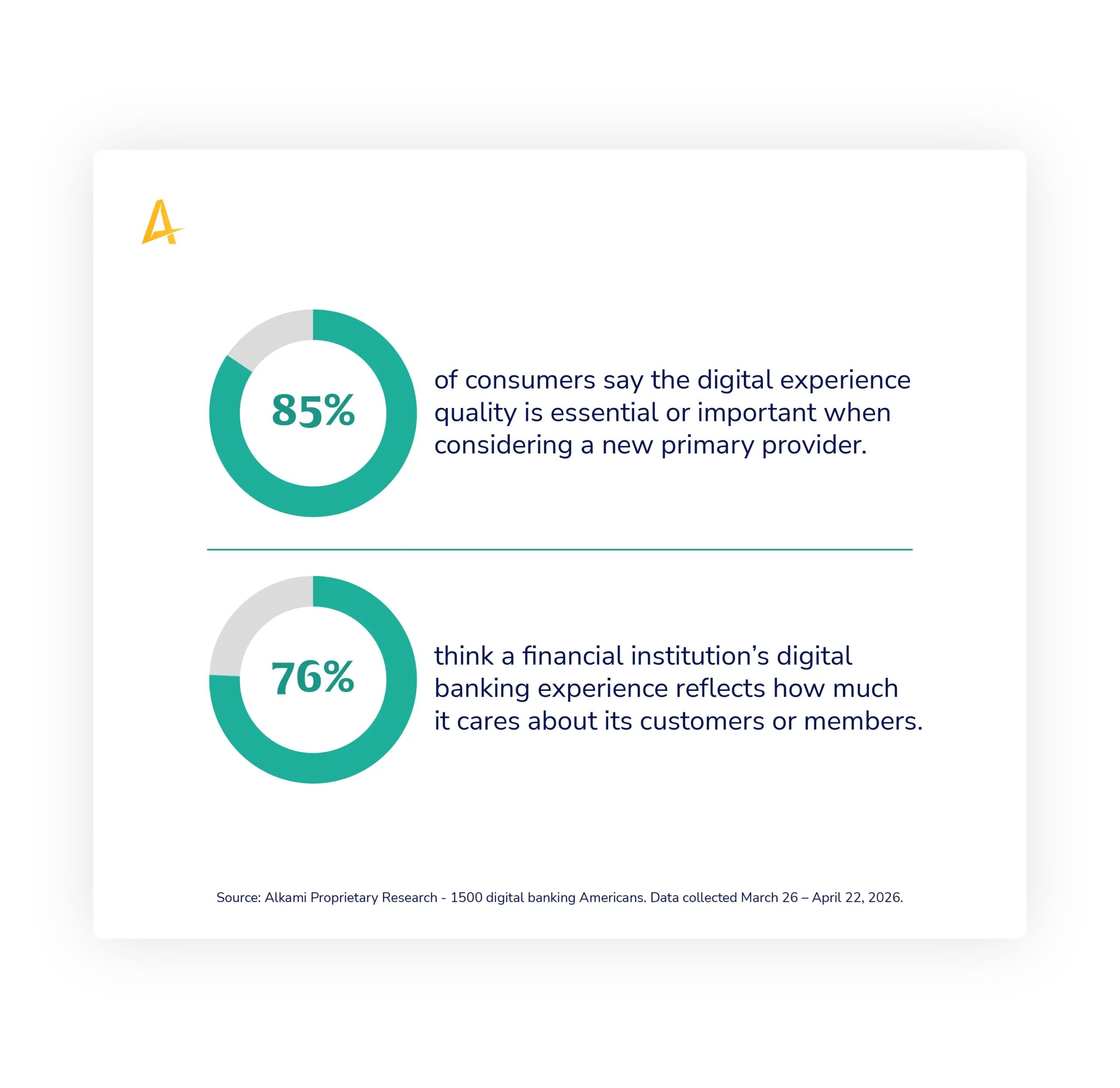
The online banking channel shapes how account holders experience the financial institution. According to Alkami research1 in partnership with the Center for Generational Kinetics, 76% of digital and online banking Americans say that the online banking experience reflects how much a financial institution cares about the account holder. The platform must make everyday banking easy while giving the financial institution enough flexibility to personalize experiences, integrate new capabilities, protect account holders, and measure business outcomes.
Online banking technology combines the digital channels, platform services, integrations, data, and security capabilities that allow account holders to access and use financial services remotely. It typically connects a financial institution’s core banking environment with web and mobile interfaces, payments, authentication, alerts, customer service, analytics, and third-party providers.
Modern online banking platforms are often described as the layer between the core and the experiences used by account holders and employees. That layer helps financial institutions create and manage digital journeys much more easily.
Online banking platforms can support activities such as:
The specific feature set varies by provider and financial institution.
Online banking technology matters because it is one of the most visible and frequently used parts of the modern account holder relationship. It can influence how quickly a new account holder becomes digitally engaged, how frequently existing account holders interact with the financial institution, and whether they view it as their primary financial partner.
A modern platform can help financial institutions:
A digital banking experience can help a financial institution guide account holders toward the next useful action, whether that means activating a card, setting up direct deposit, reviewing a financial insight, responding to a fraud alert, or exploring a relevant product.
A modern online banking platform should combine a strong user experience with extensibility, data connectivity, security, and operational control. Financial institutions should evaluate how the platform supports activation, ongoing engagement, service, retention, and relationship growth, as well as how it connects with account opening and other solutions across the broader account holder lifecycle.
Account holders move between devices and expect familiar functionality wherever they sign in. A platform should provide a coherent experience across web and mobile while allowing the financial institution to reflect its own brand, priorities, and service model. When assessing online banking platform providers, the evaluation should go beyond visual design. Consider how easily account holders can complete high-value tasks, find support, understand their financial position, and move from an insight to an action.
Online banking technology needs reliable connections to the core and to the broader financial technology ecosystem. Open APIs, integration frameworks, and partner connectivity can help financial institutions add capabilities.
Data becomes more valuable when it helps someone decide what to do next. Online banking technology should help financial institutions use behavioral and transactional signals to deliver relevant content, guided journeys, alerts, and service actions. For example, a signal may indicate that an account holder could benefit from an “add your card to digital wallet” prompt, a deposit retention journey, a financial insight, or a fraud remediation step. The value comes from connecting the signal to the right experience and measuring what happens afterward.
Security should be part of the online banking experience that operates behind the scenes. The platform should support layered authentication, appropriate controls, contextual alerts, and clear remediation paths. When account holders receive a security message in the channel they already trust, they may have a clearer path to taking action. Depending on the situation, that action could include locking a card, reporting a transaction, confirming activity, or completing an authentication step.
Financial institutions should evaluate how a provider balances protection with convenience. Controls that create unnecessary friction can make ordinary banking harder. Controls that lack context may also increase contact center demand.
Retail and business end users have different needs. A retail experience may emphasize everyday money movement, card controls, financial insights, and self-service. Business and commercial banking users may need payment approvals, ACH, wires, cash flow tools, reporting, user entitlements, and more complex workflows. A shared platform foundation can help financial institutions simplify vendor management while preserving the functionality each audience requires. This is especially important for financial institutions that want to grow relationships across retail, small business, and commercial segments.
A platform should help lean teams make meaningful changes without turning every improvement into a custom development project. Look for platform configurations, reusable components, audience controls, guided workflows, reporting, and governance. Measurement should connect digital activity to an outcome.
The Alkami Digital Sales & Service Platform connects the capabilities that help financial institutions onboard, engage, and grow relationships. It brings together the Onboarding & Account Opening Solution, Digital Banking Solution, and Data & Marketing Solution to support different stages of the account holder lifecycle.
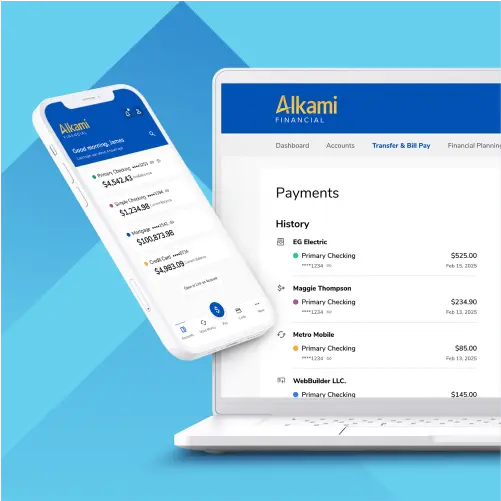
Within the broader Platform, Alkami’s Digital Banking Solution provides the digital experiences that support everyday banking, engagement, and ongoing relationship growth. When connected with Alkami’s other solutions, financial institutions can create more coordinated experiences across onboarding, activation, engagement, and expansion.
This creates more opportunities for a financial institution to guide account holders toward a useful next action. The experience can support everyday banking while also helping the bank or credit union build stronger relationships across deposits, cards, loans, service, and retention.
That could mean presenting a direct deposit journey after account opening, surfacing a prompt to add their new card to their digital wallet, helping an account holder respond to a fraud alert, or offering a relevant financial insight. Each use case should be governed by the financial institution and evaluated against a defined business or service outcome.
Alkami’s partner ecosystem gives banks and credit unions access to additional capabilities from third-party technology providers. Through partner integrations, financial institutions can expand their digital banking offerings, introduce specialized functionality, and deliver more connected experiences without having to build every capability themselves.
The Platform supports different paths for different teams. Financial institutions with developers can build custom widgets and microservices. Banks or credit unions with smaller technology teams can explore available partner integrations or work with certified system integrators to extend their online banking experience.
The right online banking technology should help your financial institution move with confidence. It should support the needs you have today while giving your teams room to adapt as account holder expectations, payment options, fraud risks, and growth priorities change. Alkami helps banks and credit unions build a branded online banking experience, extend it through APIs and SDKs, activate data-informed journeys, and connect online banking with onboarding and data and marketing capabilities.
The broader Alkami story is the Digital Sales & Service Platform. When onboarding, digital banking, and data and marketing capabilities are connected, the financial institution can create a more continuous relationship journey.
By connecting onboarding with digital banking, financial institutions can support a more connected experience as new account holders move from opening an account to engaging with digital banking. Existing account holders can receive relevant insights and guided actions, while business users can access digital tools that support daily operations. Marketing and product teams can use data to measure engagement and identify opportunities to strengthen relationships.
This is the foundation for Alkami’s vision of Anticipatory Banking: helping financial institutions use integrated technology and data insights to understand needs, surface the next best action, and deliver more helpful experiences at the right moment.
Financial institutions already have the trust of the communities they serve. The technology decision is about giving that trust a stronger digital foundation, and giving employees the tools to turn digital interactions into lasting relationships.
1 Alkami Technology. 2026 Generational Trends in Digital Banking Report. Alkami Technology, 2026, https://www.alkami.com/resources/research/2026-generational-trends-in-digital-banking-report/
What is online banking technology?
Online banking technology is the combination of digital channels, platform services, integrations, data, and security capabilities that allows account holders to access and use financial services through web and mobile experiences.
What should banks and credit unions look for in an online banking platform?
Banks and credit unions should evaluate user experience, core connectivity, APIs, data activation, security, retail and business capabilities, configurability, implementation requirements, and measurable business outcomes.
How do APIs improve online banking technology?
APIs allow a digital banking platform to connect with core systems, fintech providers, payment services, internal applications, and other parts of the technology ecosystem. They can help financial institutions add capabilities while preserving a more consistent digital experience.
How does Alkami approach online banking?
Alkami combines the Digital Banking Solution with the Onboarding & Account Opening Solution and Data & Marketing Solution through the Alkami Digital Sales & Service Platform. The approach connects digital experiences, data, integrations, and guided journeys to help financial institutions onboard, engage, and grow relationships.