Case Study, Client Success, Resources
September 30, 2026
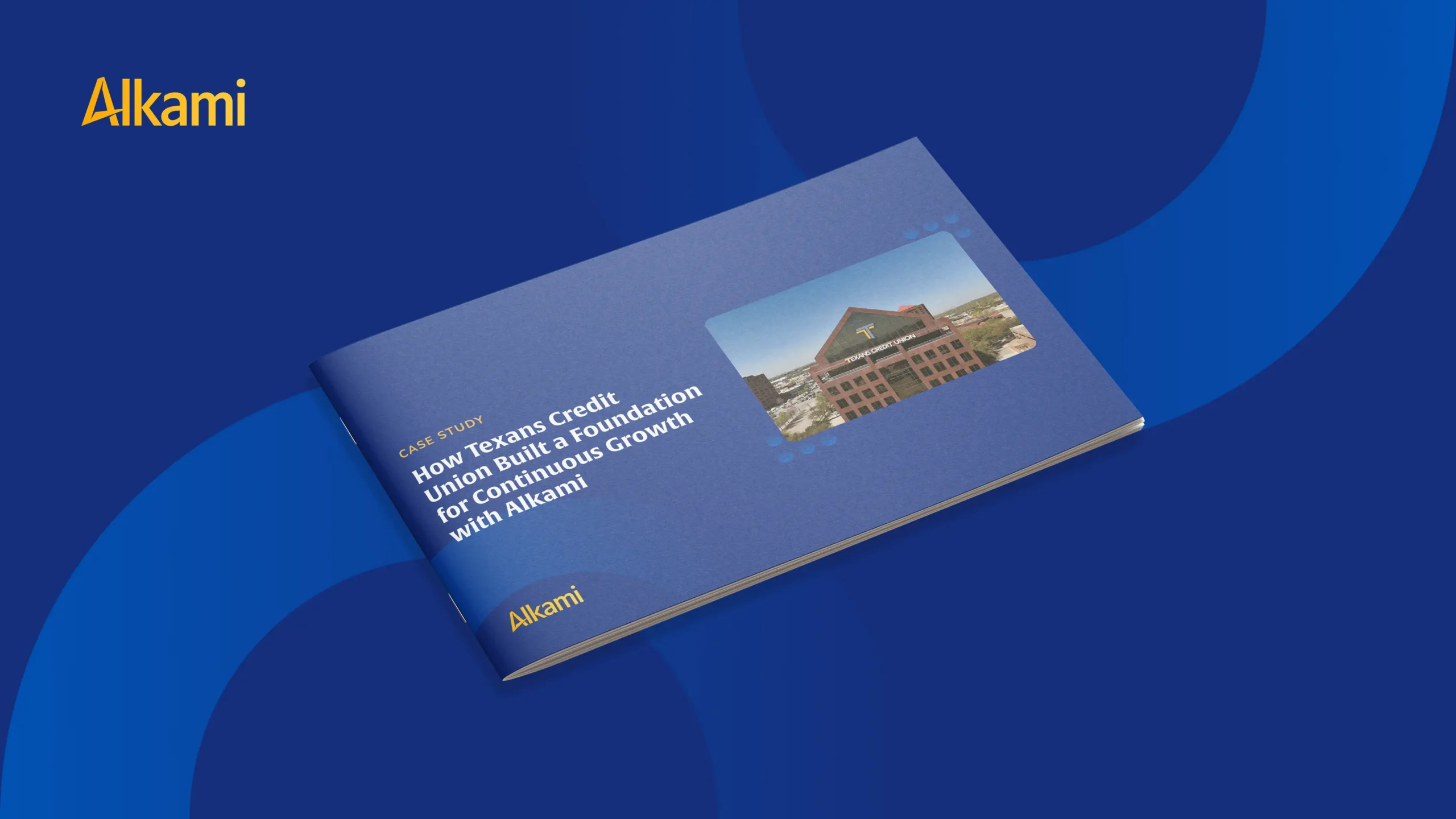
How Texans Credit Union Built a Foundation for Continuous Growth with Alkami
When standing still started to cost more than completing a digital banking conversion Texans Credit ...
00:00:00:00 – 00:00:28:23
Mike Bender
Hello. My name is Mike Bender. I’m a senior editor here at ProSight Financial Association. Welcome to today’s webinar. ProSight is a leading non-lobbying industry organization with deep expertise in fraud, risk, compliance and business growth. ProSight was formed in 2024 from the merger of BAI and RMA to trusted industry organizations that have been supporting financial services leaders for more than 100 years.
00:00:29:01 – 00:00:56:13
Mike Bender
Our purpose here at ProSight is to empower financial services leaders to advance our industry through training and insights, as well as tools and resources, like today’s webinar. If you’re experiencing technical difficulties during the session, don’t hesitate to reach out via the Technical Questions box. The ProSight staff member will be available to assist you. You’ll receive a recording of today’s webinar to review on demand following the presentation.
00:00:56:15 – 00:01:27:19
Mike Bender
This event is intended to be interactive, so I encourage you to participate with speakers and other attendees through the chat Q&A box. Okay, let’s get started with today’s webinar sponsored by Alkami called “Stay or Switch? A Practical Playbook for Digital Banking Platform Decisions and Implementation.” As financial institutions work to meet rising digital expectations. Many are evaluating whether the current platform can support future growth.
00:01:27:21 – 00:01:52:04
Mike Bender
Today, we’ll hear from Alkami experts and financial institution leaders who’ve been through the conversion process and will share practical insights on assessing risk planning for success, minimizing disruption, and delivering a seamless customer experience. With that, I hand it over to our speakers, starting with Katie Doll, Director of Services Operations at Alkami. Katie, over to you.
00:01:52:06 – 00:02:12:21
Katie Doll
Hello, everybody. Thank you, Mike, for that introduction. We appreciate you giving us some time and space today to have a conversation. Welcome, everybody to the webinar. We’re excited to talk with you about decisions around digital banking and how and when you know, to make a decision to stay on your existing platform or make a switch over to somewhere else.
00:02:12:23 – 00:02:33:11
Katie Doll
With that, I would love to introduce all of us and give everyone a few moments to introduce where you’ve come from and where your digital banking experience was with Alkami. I will start off. My name is Katie Doll. I am the Director of Services operations here. I handle all of our onboarding and implementation experience within our sales cycle.
00:02:33:12 – 00:02:38:08
Katie Doll
Robert, I’ll pivot over to you next just for a quick introduction and what you do at Alkami.
00:02:38:10 – 00:02:45:00
Robert Martinez-Harrison
Yeah. Thanks, Katie. Robert Martinez Harrison, senior director of New Logo Implementation Services.
00:02:45:02 – 00:02:47:22
Katie Doll
Perfect. Julie. Hi.
00:02:47:23 – 00:03:01:19
Julie Stigler
My name is Julie and I’m from National Exchange Bank. We are out of Wisconsin. I am the vice president of eBanking here at the bank. And we have been live at Alkami for the last year and a half.
00:03:01:21 – 00:03:04:16
Katie Doll
Perfect. Thank you. And, Nick.
00:03:04:18 – 00:03:16:21
Nick Bandoch
Hi. Nicholas Bandoch, chief brand officer, Tri-City National Bank. We are a $2 billion community bank in the greater Milwaukee area, not far from where Julie is. We’ve been on the Alkami platform for just shy of one year.
00:03:16:23 – 00:03:37:10
Katie Doll
Perfect. Well, I appreciate both of you giving us some time and space today. I know we’re all busy running 90 to nothing, so thanks for giving us just a little time and talking about your experiences so that we can learn, but also others can learn from your experience. Before we get into the data, we would love to do a quick poll with everybody here and just understand where you are in your journey.
00:03:37:12 – 00:03:58:06
Katie Doll
So as you’re evaluating either staying on your existing platform or moving over to Alkami or another provider, I would love to know where you stand. Like where? Where are you in your journey and what made you want to come to this webinar? So we’ll wait for the poll here for just a second. Thank you all so much. We’re going to look and evaluate that.
00:03:58:06 – 00:04:24:12
Katie Doll
And then from here we’re going to go ahead and jump into some of the data points. What is causing folks to look at a digital banking platform right now? Platform modernization often competes with more important priorities that you have within your institution. So you may recognize that there’s a digital experience need. However, that speed to market is just sometimes no longer where you need to be with your existing providers.
00:04:24:12 – 00:04:50:01
Katie Doll
But a platform replacement can often feel like it’s really hard to prioritize against many other things. So we find that that tension is often closely tied to how institutions think about risk and moving forward in another, you know, large project for your organization. You’ll see here that we often see that be the lowest of the priorities. As you think about where you’re moving forward and what you can do better.
00:04:50:03 – 00:05:09:06
Katie Doll
Let’s talk about the incumbent advantage. Right. It’s perceived as safe to stay. Actually, Nick gave a great analogy in conversation the other day around staying in a burning house. So, you know, think about that. I’m sure he’s going to bring it up again in a little bit, but staying in a burning house is often more scary than making that decision to move forward.
00:05:09:09 – 00:05:35:12
Katie Doll
And so, you know, staying with that current provider, becomes a risk. And also, what is the experience as you proceed and how you want to go forward with making a change? And leaders can immediately identify concerns around customer disruption, integrations, training, call center volume, the cost of doing something like this. So the risks of staying can oftentimes be perceived as more gradual.
00:05:35:13 – 00:05:59:20
Katie Doll
They may show up as slower innovation, weaker digital engagement, difficulty keeping pace. So as you’re thinking about things and what you want to do and moving forward, one of the clearest examples of perceived risk is the complexity of the conversion itself. So we want to make sure we address some of that with you today. And we’re going to talk about lessons learned and experiences directly here from a couple of our clients.
00:05:59:22 – 00:06:21:13
Katie Doll
Last but not least, I’ll leave you with this point. I love this one. I think it’s really important that in our research, with the data that we were able to collect amongst all of our partners, we found that about 23% of digital banking decision makers identified that the overall complexity of a conversion project is the single biggest barrier to switching providers.
00:06:21:15 – 00:06:49:20
Katie Doll
So it just feels like that fear of change becomes so overwhelming as you make a decision to move forward. That finding doesn’t mean that conversions are inherently unsuccessful. It just tells us that complexity is often perceived before the institution makes a final decision. So the answer to conversion complexity and anxiety is not to minimize the work, but it’s to understand the work and really have a good plan for it.
00:06:49:22 – 00:07:12:14
Katie Doll
And so while conversion complexity can definitely delay a decision, the cost of waiting may also be accumulating. So I would just encourage all of you to not get stuck too hard in that analysis paralysis phase. That tends to happen as you decide if you want to move forward or not. So in saying that, let’s jump right into our conversation here with our panelists.
00:07:12:16 – 00:07:25:04
Katie Doll
I would love to talk with both Nick and Julie about why they decided to make a change. So with you, Nick, I’ll start us out. What prompted your evaluation?
00:07:25:06 – 00:07:52:05
Nick Bandoch
Yeah, I think there was some general unhappiness with the provider that we were on, and we were identifying a couple of things that didn’t seem to be getting better. And so I think we were all pretty well aligned and going to find a new partner. The analogy that you had referenced, Katie, that I’ve often used is, you know, if you’re in a burning house, there is a risk that you might get hurt on the way out if you try to flee, but you’re probably for sure going to get hurt if you stay.
00:07:52:07 – 00:08:12:02
Nick Bandoch
And so as bankers, we always tend to avoid that risk. It feels like riskier to take something on. I think in our case, the risk was far greater if we stayed on a platform that wasn’t evolving and wasn’t meeting customers’ needs. And in most cases, the face of the brand that they’re logging into sometimes first thing every morning, you can’t afford to not do that well.
00:08:12:04 – 00:08:22:12
Nick Bandoch
So after some some of the feedback that we had in the accumulation of issues, we, you know, took on that search to find a new provider.
00:08:22:13 – 00:08:29:22
Katie Doll
Thank you. Julie, what concerns did your leadership team have about making a change, and what elevated those concerns?
00:08:29:23 – 00:08:50:07
Julie Stigler
Sure. That’s a really good question, Katie. So I would have to say I absolutely agree with Nick. For us, the risk really was significant. And we also had to take a look and say, okay, like we have to move thousands of customers over at one time. So what does that look like? At National Exchange Bank, we chose actually to only move the consumer platform.
00:08:50:07 – 00:09:12:23
Julie Stigler
We kept our business platform on the current provider. However, that still was a really big ask. And we really needed to work through all that. The other thing is, is that when we worked with Alkami, we knew that we were only the second financial institution utilizing the core that we were. So there was going to be some additional integration with Alkami that we’d really have to talk through.
00:09:13:00 – 00:09:36:06
Julie Stigler
And we knew there was going to be a couple of gaps or pitfalls along the way. But as long as we knew that, I think that we felt better going in and management felt better going in, that we would just have to work through some of those trials and tribulations along the way. And honestly, Alkami was really great about sitting down with us and making sure that the correct people were on the calls with us as we had to talk through some of those.
00:09:36:09 – 00:09:44:06
Julie Stigler
So those were really the biggest points that we had identified, and we were able to solve for them along the way.
00:09:44:08 – 00:10:11:01
Katie Doll
That’s awesome. Thank you for both of those. I think I’m curious from your perspectives, as you were building these teams and starting to go down this path of making decisions. How did you align all of those resources? Like everything from IT needs to be involved to your ops teams to marketing, to frontline staff and the branches call center, who needed to be involved early and how did you go ahead and facilitate all of that?
00:10:11:03 – 00:10:12:01
Katie Doll
I’ll start with you, Julie.
00:10:12:02 – 00:10:40:09
Julie Stigler
Sure, absolutely. So our initial review was done by a smaller team. When I talk about that, I mean, like the sales and the contracts and being able to sit down and talk to various platform providers. And we did all of that. So when we got to the point that we could kind of narrow it down a little bit, that’s when we brought in a larger team to really sit down and demo and make sure that every area of the bank was feeling good with it before we fully went forward.
00:10:40:11 – 00:11:02:13
Julie Stigler
From there, we made up our project team of knowledgeable people and subject matter experts from each and every single area of the bank. They were involved in the project. There were probably 19 or 20 people on our project team, and that came from various areas such as ops, deposits, loans, IT, compliance, marketing, treasury, just about any different department that you have.
00:11:02:13 – 00:11:20:02
Julie Stigler
That’s what made up our project team. And then throughout the entire process, we were really clear about our objectives, and we made sure to be as transparent as we possibly could with our internal project team. And then that flowed down to the other departments and our employees as well.
00:11:20:04 – 00:11:26:10
Katie Doll
That’s perfect. I love hearing that you were able to pull all of that together. What about you? Nick.
00:11:26:12 – 00:11:50:03
Nick Bandoch
Pretty similar to Julie. So we evaluated four partners in total. Our current one, plus three others. We didn’t have an RFP, but we had a team of 12 that represented kind of all the major stakeholders and departments in the bank. Some of them, you know, if if it came down to, like, voting, there’s certain people that maybe get a bigger vote or their opinion carries more weight.
00:11:50:03 – 00:12:06:02
Nick Bandoch
But I think having everybody in there to ask questions and understand it is almost like a future-excuse-eliminating exercise. You know, no one can say they weren’t brought in early. And no one doesn’t feel like or they don’t feel like their voice wasn’t heard. They all have the chance to ask the questions. Meet all the vendors.
00:12:06:04 – 00:12:26:18
Nick Bandoch
And so I think what we were really seeking, there was not so much a consensus, but a commitment. We’re probably not going to get a unanimous vote on who to go with, but, wanted to find the right provider that we were all committed to implementing. So we narrowed it from 4 to 2. We visited the final two locations in person to kind of do that last little, like, you know, culture check to feel like the right fit.
00:12:26:18 – 00:12:29:20
Nick Bandoch
And then we ultimately made our decision.
00:12:29:22 – 00:12:48:01
Katie Doll
That’s awesome. I love that. I love that you got to come to headquarters, too, because it’s such a fun space. All right. Robert, I’m going to pivot over to you. I would love to hear from you around what we’re doing within implementations at Alkami and how we’re approaching just successful implementations as a whole within the industry.
00:12:48:03 – 00:13:07:03
Robert Martinez-Harrison
Yeah. No. Great question, Katie. Yeah. Lots of changes happening here at Alkami. Great ones taking us in the right direction related to implementation. You know, we really approach this as many of you, like a three-legged stool, I think is the term that’s typically used. Right. Really focusing on the people, process, and technology that make up the implementation life cycle.
00:13:07:09 – 00:13:38:19
Robert Martinez-Harrison
What we do here at Alkami is we put teams together that bring vast amounts of knowledge from financial services as well as digital banking implementations. Building a strong team of program managers, right, that are really the quarterback and single point of contact throughout your implementation. And then they partner with strategic teams like our technology partners, technical implementations, technical consulting or conversion teams all coming together as one group to ensure that your project is as successful as it can be, and getting you to that on-time delivery.
00:13:38:21 – 00:13:58:23
Robert Martinez-Harrison
This is something that really sets us apart from some of our competitors. You know, we’re always scouring the markets to make sure that we’re, you know, offering the best services that we can. And we’re extremely confident that the organization that we have established here at Alkami really helps relieve some of that stress as you’re doing these conversions onto our platform and really set you up for success.
00:13:59:01 – 00:14:25:07
Katie Doll
That’s awesome, I love that. One thing that I have noticed throughout our implementation lifecycle is that I’ve seen you standardize what we can do based upon lessons from hundreds of these implementations, while also leaving some flexibility to cater to specific needs based upon each organization. So flexibility, but a standardized process I think, is really what’s selling these implementations to be successful.
00:14:25:08 – 00:14:27:15
Katie Doll
So I love—I just love watching you run.
00:14:27:20 – 00:14:38:12
Robert Martinez-Harrison
So that’s an excellent point, right. We’re always iterative with our design. Right. We’re confident that our standardized processes work. But we’re always flexible, right, to meet the needs of our clients. So thank you for calling that out.
00:14:38:13 – 00:14:59:08
Katie Doll
Awesome. All right. So let’s talk about preparation a little bit. We’ve talked about the upstream. What made you make these decisions? How do we do this? But let’s talk about prep because I know personally I don’t believe in a perfect project. I don’t think they exist out there. If anybody sells you a perfect project or says everything’s going to go swimmingly, just run now, run away.
00:14:59:10 – 00:15:18:02
Katie Doll
So let’s talk about preparation a little bit. Nick, I would love to know from you what work began earlier than you thought it would. And what do you wish you would have done in the process? So talk to me about a little bit of those lessons learned before we dig more into those in a few more slides.
00:15:18:04 – 00:15:40:22
Nick Bandoch
Thanks, Katie. A couple of things that I think we did well here. We get together every President’s Day and have an all employee meeting, and we were very transparent with everybody that we were working on this digital project. So when, you know, day to day jobs maybe took a small backseat on some smaller projects or you saw people holding conference rooms all the time, you knew what we were working on.
00:15:41:00 – 00:16:01:02
Nick Bandoch
We were fortunate to have done a big deposit product, clean up, in the same year, or I guess it was done when we started our search. So we cleaned up about 80-some miscellaneous deposit products. Excuse me, on the core, some of which had like 17 people in them, we got that down to 35.
00:16:01:02 – 00:16:23:02
Nick Bandoch
So that was a big help when we got into implementation that when we were looking at, you know, mapping and things and features, we were working with a much smaller subset of, of deposit products. Big win for us there. I think the thing that I wish we would have done a little bit better was some data cleanup. I don’t think we appreciated how noisy the data is in a core that you’ve been on for a couple of decades.
00:16:23:04 – 00:16:37:03
Nick Bandoch
I give you one example. So, you know, we have a primary phone number, a secondary phone number in a mobile field. Depending on the time you joined the bank, that mobile number could be in one of those three fields, right? If you are a long time customer, you might still have a landline in there as a primary.
00:16:37:03 – 00:16:53:22
Nick Bandoch
And we added it to the mobile field. If you’re like me, you only have one number. It’s in the primary field. Or maybe you were a child and now you’re an adult and there’s another phone number lingering in there. And so Alkami is going to map to one phone number. And that should be consistent across your data.
00:16:53:22 – 00:17:10:17
Nick Bandoch
I can tell you ours isn’t, wasn’t, and probably won’t be because there’s too much noise there. But we had some challenges because we we didn’t do that appropriate cleanup in advance that we wish we would have done. We overcame it, but we’ve certainly made a little bit of extra work for ourselves.
00:17:10:19 – 00:17:35:17
Katie Doll
Yeah, I appreciate that transparency. I will say for everybody here, I always like to talk about as a part of the sales cycle, and my involvement is, let me give you a free nugget of information. Regardless where you go, unless you stay on your legacy provider, you are going to have to have good contact information. So email and phone number are so critical to do a cleanup of that data while you have the time.
00:17:35:19 – 00:17:53:03
Katie Doll
And so even if you’re in an evaluation process start the cycle now like start cleaning up that data because one is just the business, but, two, it’s going to be so critical as a part of your conversion to have good email and phone number across the board for these folks. I’m sorry, Nick, that you had to go through that.
00:17:53:03 – 00:17:54:11
Katie Doll
That’s not fun.
00:17:54:12 – 00:18:01:12
Nick Bandoch
It’s hard to get people to update the contact information if you can’t reach them because you have bad contact information. It’s a bad spiral.
00:18:01:13 – 00:18:23:20
Katie Doll
And there’s that. I have seen some folks do, like if you have a branch or call center, any interaction you have with people, like just a quick let me, let me validate your contact information real fast. Well, I’ve got you on, on on my line. So yes, absolutely critical. Julie, I would love to talk with you a little bit about the external and internal components.
00:18:23:20 – 00:18:33:12
Katie Doll
So what did your institution do to prepare the staff. So overall, you know, this is coming now. What did you do to kind of align everybody internally?
00:18:33:14 – 00:18:59:16
Julie Stigler
Yeah, that’s a really great question. So for us, we really took the, point of view that we wanted to make sure that we were in constant communication with our teams from the very start. So we sent out emails to the organization. We made updates on our employee intranet and then the project team. Once we got down to those 19 or 20 people and somebody was coming in from each and every single department, we met weekly.
00:18:59:16 – 00:19:23:06
Julie Stigler
And then from there, those individuals took back information from that meeting back to their departments or discussed or figured out if there’s something that we needed to do differently. So they were always actively engaged with their departments as well. And then when we met the next week, we could discuss and talk through that something that was a little bit kind of fun and pretty awesome for us on our side is we developed what’s called a banking champions.
00:19:23:08 – 00:19:47:05
Julie Stigler
And so what we did is we identified a subject matter expert from each branch location. And then with them, we trained them above and beyond, with our online banking products. So the entire organization has a very good solid pulse or baseline on what the new product is. But these banking champions and individual was identified that could learn more to be able to help the customer.
00:19:47:05 – 00:20:07:10
Julie Stigler
So they they could be at any branch and somebody could come in and they would always be a subject matter expert there. We also included a separate phone number and a separate email for that group. So that way our customers were able to at any time, then call in once we went live or send in, you know, messaging, and they’d be able to get back to them right away.
00:20:07:12 – 00:20:25:17
Julie Stigler
So that was really helpful to be able to use that in our promotions. And people want right direct to the experts. They are actually still the first line of defense. So customers, if they have questions in regards to their online banking, they actually typically speak with our champions before they get back to our digital banking team.
00:20:25:17 – 00:20:56:01
Julie Stigler
So if somebody comes in and has a question, that frontline staff person is like, you know, I’m not sure they might tap their banking champion from that location on the shoulder. They’ll talk through a brainstorm, and if they can’t still figure it out for the customer, then they would call back to our digital banking team. And then the last thing I would say that we did for our engagement was we worked with our employees to have them be our testers before we went live, just to understand how it works in the platform and to be able to understand what our customers are going through as well.
00:20:56:03 – 00:21:14:21
Julie Stigler
So when we got into that really good space of like, hey, we know for sure this is our go-live date, the project team would have already been testing for months and months, but then we started gradually adding in additional team members from the entire organization. So everyone from our senior leadership team to our lenders to the frontline staff were on the new platform.
00:21:14:21 – 00:21:21:03
Julie Stigler
So that way when we went go live on that Monday, they were able to help any and all customers.
00:21:21:05 – 00:21:42:15
Katie Doll
I love that, I love that so much because when you have people that are in a facility and people that have been in testing as a part of the experience, you know, they they know what the user needs. And I think more than anything in an experience like this, it’s about communicating with empathy. I understand it’s not a lot of fun, right?
00:21:42:20 – 00:21:43:22
Katie Doll
I had I.
00:21:44:01 – 00:21:57:11
Julie Stigler
Same thing. I had to reenroll, and so that was a really good callout because that is exactly what was able to happen. You know, we were able to say from the side we we had to go through the same thing. We understand what you’re feeling and we hear you.
00:21:57:12 – 00:22:08:13
Katie Doll
Yeah, exactly. And I think as all as humans, when we feel heard and validated it, we tend to not get as upset. Right. It’s like, oh, okay, I understand that. Thanks.
00:22:08:14 – 00:22:10:09
Julie Stigler
Yeah, absolutely.
00:22:10:11 – 00:22:31:10
Katie Doll
Okay. So let’s say assuming I don’t think either one of you just do conversion projects for fun, that you have other jobs at your banks and credit unions. How did your team balance conversion work with normal business operations? So knowing you’re doing both of these, working it off the side of your desk. Nick, I’ll start with you.
00:22:31:11 – 00:22:33:12
Katie Doll
How did you balance all of that?
00:22:33:14 – 00:23:00:04
Nick Bandoch
Oh, certainly. The this project was one of our big company priorities. We had, 3 to 5 people pretty much working full time on this during our ten month implementation. So we had a project manager, an internal project manager, myself, we had a digital banking administrator. Those are the three core people. And then we had critical people who cared about using that core.
00:23:00:06 – 00:23:20:05
Nick Bandoch
We had our treasury management or business banking admin and then our internal core administrator. So those 3 to 5 people in any given day are spending the bulk of their time working on this project for context, about 350 employees. So we had five working on it almost full time. I think that core administrator, that internal person also is really key.
00:23:20:11 – 00:23:39:20
Nick Bandoch
There’s so much coordination. We were a same core as Julie, but one of those early banks, on this particular core to come over to Alkami. And so we really needed our core expert. There’s no project manager that’s going to have the institutional knowledge of all those core decisions you’ve made through the years. So she was really critical.
00:23:39:22 – 00:24:00:14
Nick Bandoch
And, you know, we occasionally had, you know, buy-in from other departments to fill holes or prioritize projects if, you know, other things were, overlapping with this, but this, you know, standing on stage telling everyone we’re going to do this, this was the North Star for us to make sure we kept implementation on track and met our deadline.
00:24:00:16 – 00:24:02:16
Katie Doll
Perfect. Perfect. Julie, how about for you?
00:24:02:17 – 00:24:31:22
Julie Stigler
So for on our side, we established two project managers for the project. One of them was myself. And then one of them was our vice president of projects. And the two of us really worked that on high level overview with the team. That was also comprised of another, you know, 20 people from each department. So by having the two of us being able to work hand in hand with each other, we really were able to keep each other accountable, organized.
00:24:32:00 – 00:25:01:08
Julie Stigler
And that’s both with the core and with Alkami. Right. Because there’s a lot of different moving pieces that go along with it. So that was really nice to be able to have somebody really to be bouncing ideas or brainstorming with at all times. You know, the other side of it, too, if one of us was on vacation, sick, pulled away for their everyday job, and that other individual was really able to respond to the emails questions and was able to make decisions, because you have that backup and you have that, you know, intimate knowledge with each other.
00:25:01:10 – 00:25:22:09
Julie Stigler
And we really found that there was a lot less bottleneck that way. The project could continue on and keep moving because you weren’t waiting just for one person to get back. And then from there to we also use a consultant from the core, and that very much helped along the way to as we had to start working through the process at a pretty granular level.
00:25:22:11 – 00:25:41:23
Katie Doll
Perfect. I’m curious, Julie, with the two resources that you had, did you guys split tasks with you? Use the word bottleneck. That’s what this in my little brain. Did you guys use one person that was more like testing focus? Like a test lead? Almost. And one was a PM? Or was it truly like we’re just going to divide and conquer the word?
00:25:42:01 – 00:26:00:19
Julie Stigler
It was divide and conquer. So like, we had an internal project meeting every single week, and then me and my counterpart, we met every week as well and we reviewed task list. Where’s outstanding. What’s going on? Whatever we heard back from. Yeah. What do we need to hear from the department. And then we created those agendas together every single week.
00:26:00:21 – 00:26:12:19
Julie Stigler
So that way. Seriously, throughout the entire thing, we were like one person and either one of us would be able to handle something and either one of us would be able to monitor that relationship.
00:26:12:21 – 00:26:14:17
Katie Doll
I love it. I hope you guys are still friends.
00:26:14:18 – 00:26:22:07
Julie Stigler
We are. We absolutely are. Yes. One of my favorite people. Okay.
00:26:22:09 – 00:26:41:10
Katie Doll
All right. Well, Robert, I would love to give some space and time for you to just talk about a couple of things in the implementation framework. For those of you that are joining us, take some time to kind of look over all of this. I know it’s a lot of words. However, Robert, point out a few things here around what Alkami is doing and how we’re collaborating with our clients.
00:26:41:15 – 00:27:08:21
Robert Martinez-Harrison
Yeah, no, thanks for calling out. There’s a lot of steps here, right? But a lot of good information that really plays out. Yeah, but I think it’s really important, especially, you know, just as we’re just discussing it, go with Nick and Julie in regards to preparation. Right. And getting that readiness and understanding your risks and your dependencies. And that definitely is a partnership that we do with our financial institutions as well, right, to make sure that we’re also monitoring those on our end, right across, sharing some of that information in in collaborating on those.
00:27:08:23 – 00:27:30:20
Robert Martinez-Harrison
But one thing, I mean, if you’ve been through implementations before, this is a pretty much you know, the steps are usually the same. But what really sets us apart, I feel, is related to solution design. You know, we really go above and beyond to ensure that we’re creating an environment that is easy to test, right, that has all of the items configured for you all and getting you ready in your own personalized environment.
00:27:30:20 – 00:27:50:21
Robert Martinez-Harrison
And that really sets us apart from our other folks, you know, ensure that where you’re actually operating and testing in is actually what the end result is going to look like. Oftentimes you can get a demo site, an innovation bank, or something else that is static information and not custom to your platform. But again, with solution design and how we go about doing that.
00:27:50:21 – 00:28:08:01
Robert Martinez-Harrison
Again, let me take a step back right how we go before we actually create your environment. We actually meet with you with our technical resources to look at what is your current provider providing you now. Right. What does it look like? What’s the look and feel? What are you used to. And then we take that information and then we create again this test environment for you.
00:28:08:03 – 00:28:28:00
Robert Martinez-Harrison
That’s Alkami right. And showing you where the differences are. What are those nuances? We have you focus on specific testing elements. Right. That may be new. Oftentimes our customers are coming from a certain platform and then they’re not only looking for parity but then also looking for enhancements as well. Right. So we make sure that we regularly test those end-to-end to ensure.
00:28:28:04 – 00:28:59:06
Robert Martinez-Harrison
Right. Once you go live, it’s successful. And your your members are clients are not impacted by the change. Yeah. And I think the other one is just really testing. We’re really heavy on testing. We want to ensure that we’re really getting in there. We have, again, as I mentioned, those technical resources that are there to to timely address those tickets that you’re submitting, writing the changes or any tweaks that you want to see changed again, leveraging that dedicated technical resource team to get those implemented as soon as possible for you all.
00:28:59:08 – 00:29:04:02
Robert Martinez-Harrison
Yeah. Any anything specific Katie or Nick or Julie that.
00:29:04:03 – 00:29:33:04
Katie Doll
No, I would say I think that you you hit the nail on the head with solution design. You know, if I was to say an example, I have seen, you know, because I work more upstream in the sales cycle, I’ve seen what that process is. And then I see how your team gets engaged. And I think the thing that is really beautiful that you guys do as a part of that solution design, is to say, let me see your existing platform and kind of to what Nick said earlier, like you forget the things that you’ve done on this core that you’ve been on for 20 years, right?
00:29:33:05 – 00:29:52:02
Katie Doll
So sometimes we see the same thing with the digital banking provider. So when we do a demo of your existing system, what our team is looking at is looking at that going what? Hold on a second. I don’t know what that is in that scope. And so I have an example where I was sitting in the room watching from a process perspective and somebody goes, yeah.
00:29:52:02 – 00:30:20:11
Katie Doll
And then we click here to do international bill pay. And we were like international bill pay. Where’s that at? But we were able to identify that missing item that everybody had just forgotten about. Right. Because it was a custom tool that they had built out in their existing platform and that we hadn’t gotten as a part of the scope, but we were able to avoid that by eight months and find that risk way upstream versus when you when the client got into testing.
00:30:20:11 – 00:30:49:15
Katie Doll
So to your point, again, we’re going to say test and then test some more. And when your hands hurt from testing some ibuprofen and keep testing testing. And so we were able to avoid that risk by eight months. And getting them into that environment by just doing the simple demo. And so that is always I know what your team is looking for, like how do we avoid it, mitigate risks earlier, and shift as much of that risk left in the project space, versus finding it later and potentially facing delays.
00:30:49:15 – 00:31:10:03
Katie Doll
So I think that solution design is just so critical to the overall process. And I, I love hearing that you’re you’re still doing that and that the teams are finding value in it too. If you all on the webinar have any questions about this slide, please pop them into the chat. We’re all here and happy to jump in and answer any of those questions that you may have.
00:31:10:05 – 00:31:32:03
Katie Doll
All right. So let’s talk about overall conversion. I have lots of opinions about the data. Nobody wants to hear from me I promise. So we’re going to talk to Nick and Julie again around what their experience was for the actual conversion. So Nick, I’m going to start with you. What part of the launch really felt like it required the most coordination across teams and call centers and vendors?
00:31:32:05 – 00:31:42:00
Katie Doll
And how did you go about making sure that that was in alignment? And then, Julie, I’m also going to pop over to you. So get your thinking cap on. So go ahead, Nick, we’ll start with you.
00:31:42:02 – 00:31:59:07
Nick Bandoch
Yeah. I mean, the thing that I think rightfully keeps most people up at night requires the most coordination is go-live date. I mean, that’s the time when your customers are going to experience a good or bad experience based on how you did. Right? That’s that’s the moment of truth. So that required a fair amount of coordination.
00:31:59:08 – 00:32:25:09
Nick Bandoch
So for us we have a primary customer care team. That’s our call center. We also doubled that by getting people from our branches and other departments around the bank to be a dedicated digital banking customer call center. Even a two-times call center, I will tell you, was not enough on day one. We also coordinated having both Alkami and our core representatives.
00:32:25:09 – 00:32:44:18
Nick Bandoch
We had two people like Julie from the core who were on the project with us, and we had them on site. And that’s really critical when they can hear directly from the customer, hear directly from our team, what’s going on? Or we’re all in the room together kind of march into the same beat. There’s no let’s set up a conference bridge or anything.
00:32:44:19 – 00:33:02:02
Nick Bandoch
Everyone’s together. And even little stuff like, you know, making sure food is ordered and the, the beverage cooler is stocked and everyone’s caffeinated. There are going to be some long days. Call center is going to be open later. There are going to be some early mornings. So a lot of coordination across quite a few teams to make that happen.
00:33:02:04 – 00:33:25:07
Nick Bandoch
The other thing that we did, kind of found during testing that there was a couple of commercial business functions that were a little bit more complex. And so we converted about 40,000 people on our main conversion, but we took 300 business customers and we did them at a later date. That really allowed us to do, call it white glove or concierge service.
00:33:25:07 – 00:33:45:10
Nick Bandoch
So we had a team of about 20 bankers. They each had about 15 to 20 customers. They reached out to them a couple days or weeks beforehand. ‘Hi, I’m Nick, and I’m going to help you with this conversion. No call center number. You just call me directly. And then when that group went live, you know, each banker just had to check in with those 15 businesses.
00:33:45:12 – 00:34:09:23
Nick Bandoch
That was a big win for us. I don’t think we could have given that service to those critical commercial customers. While it was only 300 of the 40,000 and change, with about 25% of the dollars in the bank, so that group needed some extra attention. Lastly, because of what we learned on launch day and maybe not having the full resource and the customer care that we anticipated, with enough people on phones.
00:34:10:01 – 00:34:37:12
Nick Bandoch
So other people had to jump in. We set up a triage team for that second wave. So there were six people who weren’t assigned to a customer. If any one of those concierge bankers had an issue, they could send an email to this dedicated team, and we could pick it up and take it, and they could stay on the phone working with those other customers and really make sure we were delivering on the promise that we wanted for those big commercial customers.
00:34:37:13 – 00:34:38:19
Julie Stigler
Sure. So I.
00:34:38:21 – 00:34:39:09
Julie Stigler
You know.
00:34:39:12 – 00:34:39:22
Julie Stigler
Go.
00:34:39:23 – 00:35:00:23
Julie Stigler
Live day is the day that you always focus on, right? But for us, I really feel that it was the coordination of bringing the files over from our core that weekend prior. So, you know, Friday, Saturday, Sunday, those are a long couple of days. And, what we did is we actually met on site and we just hunkered down.
00:35:00:23 – 00:35:18:08
Julie Stigler
There was a group of us; we all met at one location. And we really made it so that it was a fun it was a fun environment. Right? We knew it was going to be long days. We knew there was going to be a lot of files coming in from those files. We worked through exceptions, but we were all there.
00:35:18:08 – 00:35:32:06
Julie Stigler
We were able to give high fives, and when we did something really great and then be able to be like, oh my gosh, we need a brainstorm because we didn’t think through maybe this part of the process or how do we need to look at X, Y, and Z? But we had a lot of fun with it and we just kind of made it exciting.
00:35:32:07 – 00:36:00:17
Julie Stigler
You know, we did high fives here and there and just kept people animated and going because just like Nick said, you know, it gets really long and you, have to make sure that you keep that excitement up so you can kind of keep grinding through. So go live week for us to, you know, one of the things that we did there is we purchased shirts for the entire organization, and then the banking champs were able to wear pins to distinguish themselves as well, as they got different colored shirts too.
00:36:00:19 – 00:36:19:00
Julie Stigler
So that was really fun too. It was kind of a way to keep the entire organization engaged and just be able to say like, hey, this is something that is coming out. We know, but we’re making it fun for you along the way. And then lastly, for us, we work really hard with those eBanking champions again.
00:36:19:00 – 00:36:43:16
Julie Stigler
So on Monday, just like Nick mentioned, you know you’re ready to go. You’re there. We worked through those exceptions that weekend prior. And then our banking champs were the ones who are answering the calls and emails and providing the support for our customers. And we are so very thankful for them, because that allowed the project team and our digital banking team to focus on any outstanding items or surprises that may have shown up that first week.
00:36:43:18 – 00:36:54:09
Julie Stigler
So we could be on bridge calls, working with Alkami, talking through items. But they were really, a big part of our success during those first couple of weeks.
00:36:54:11 – 00:37:22:15
Katie Doll
I love that both of you focused on boosting morale. I think that’s something that we we see hit and miss on. Like we tell them. We tell clients like, here’s something that’s going to be really important. But that you heeded that advice and you brought it more upstream into the project cycle also. So, I know that both of you did stuff for your institutions, like shirts or bonuses or things like that, to make sure that they felt valued.
00:37:22:16 – 00:37:48:13
Katie Doll
And to your point, Nick, nobody’s ever mad at food and drinks being stashed, like, it’s it’s so critical because there’s times that the call center can barely get up to to get a snack. Right? And again, nobody’s calling them to say thank you. We really appreciate you putting us through all of this hard work. And so to have that the organization recognizing them and saying thank you, I think is so important.
00:37:48:15 – 00:37:55:15
Katie Doll
So I’m curious from you. We’ll do this just for you, Nick. What was harder than expected?
00:37:55:17 – 00:38:18:17
Nick Bandoch
We did not plan as well for the weekend before go live as Julie did. I think that one really took us by surprise. From Friday night at about, you know, 7:00 through Sunday night. Later than that. We were, you know, hands-on keyboards, almost nonstop, probably 5 to 10 people, depending on what file was coming over.
00:38:18:17 – 00:38:46:08
Nick Bandoch
An exception needed to be worked, or a discussion needed to be had. We had a teams meeting every three hours. We worked independently, usually from home. Or some people came to the office. We didn’t powwow or get together like Julie did. That was much smarter. So we were, you know, sharing files and coordinating. But I think what we, what I didn’t appreciate was how burned out everybody was the weekend before, right before what was probably the busiest week.
00:38:46:10 – 00:39:08:14
Nick Bandoch
with more late nights ahead. So I wish we would have coordinated that go live weekend work a little bit better, either by doing some things earlier in the project, or just accounting for the fact that we were going to have to do that in either, you know, have more people available, or make some other accommodations so that we didn’t burn people out right before a big week.
00:39:08:16 – 00:39:41:20
Katie Doll
I’m curious from both of you. How did you monitor business continuity keeping, keeping the the train on the tracks and also the account holder experience, because you and I both know you’re going to send out probably ten communications and nobody’s going to read any of those. So I’m curious, from your experience, how did you monitor both of those and making sure that that ROI in that first week and everybody being, you know, burned out, to your point, Nick, they worked the weekend before.
00:39:41:20 – 00:39:47:06
Katie Doll
How did you balance all of that? Let’s start with you, Nick.
00:39:47:08 – 00:40:06:04
Nick Bandoch
Yeah. I think one of the things we leaned on a lot from Alkami was the adoption rate. You know, you’ve implemented a couple hundred institutions. So seeing where we were, you know, after four hours live, eight hours live, two days live, etc., you know, were we getting enough people in? You know, that was our only real benchmark.
00:40:06:09 – 00:40:27:20
Nick Bandoch
Obviously, Alkami would have that data; we have not done this many times. We also monitored the app stores in real time. So especially with like a Google Play Store, it’s connect to your Google account. People are using their real names and submitting reviews. If there was a name that we knew and we would either post a comment or we’d just call them directly.
00:40:27:20 – 00:40:48:09
Nick Bandoch
Hey, sorry to hear you’re having trouble getting in. Let’s see if we can fix that. We certainly monitored call volume and wait times. That was probably less manageable in the moment. But there are some takeaways for us for that second wave of business customers that we did. And, you know, future projects that might have interruption is what kind of volume we might expect.
00:40:48:11 – 00:41:09:08
Nick Bandoch
And then going beyond that first week, we, you know, get a daily report, of dollars and accounts at the bank. And, you know, there’s people that might be upset or unhappy about what happened during the conversion. And they will often claim or threaten to, you know, leave or close their accounts. We saw very little of that.
00:41:09:10 – 00:41:25:09
Nick Bandoch
I think that’s a short term pain where they might have been unable to get in for an hour or two. And I think the there’s a lot more work to change your bank than it is to just, you know, be a little patient for two hours. So we didn’t see any material change in that number in the months ahead.
00:41:25:09 – 00:41:35:00
Nick Bandoch
But those are the big things we watched. Adoption rate, call data, and app stores. And then in the weeks after, the dollars and accounts at the bank.
00:41:35:02 – 00:41:37:00
Katie Doll
Okay. Perfect. How about for you, Julie?
00:41:37:01 – 00:41:55:19
Julie Stigler
So internally, just like Nick, we really focused on that adoption rate and made sure to share that with the project team as well as the banking champs. Excuse me. So the higher the rate and the more adoption, the more excitement really grew. And you could see, kind of like Nick said, that you guys have implemented so many other FIs.
00:41:55:19 – 00:42:14:18
Julie Stigler
So for us it was kind of like a competition. We’re like, well, so how are we doing against somebody else? Like, we’re doing really great, right? Our customers rock. They’re you know, they’re all getting in. So it was kind of something that you made into, it being fun. So that way you could really share with your employees as well to kind of be able to say like, hey, you guys, we’re like 50% adoption.
00:42:14:18 – 00:42:33:08
Julie Stigler
We’re halfway there and you’re doing great. Keep it up. You know, keep going because we are. So we’re so close. You know, during that first month, I would say we mostly heard from customers who could not get in and needed a bit more help. You know, and that came in, you know, via phone calls, emails, chats.
00:42:33:10 – 00:42:54:10
Julie Stigler
So our team really just made sure to stay empathetic and understanding. And honestly, our customers were very receptive to that. And they were able to come in and we were able to get them into the product just the way they needed to be. We also had our banking champs at each location, so customers were able to stop by in person if they were having issues as well.
00:42:54:10 – 00:43:29:22
Julie Stigler
And somebody was there right on site to be able to help walk them through. That was a really nice feature for us, and they did help a few customers that just came in person. And then the last thing that we did to really be able to have that communication and be able to help with that account holder experience or that customer experience, was really those first two weeks we created something called Digital Days, and we had certain locations that would have, people on site that would be able to help you.
00:43:29:22 – 00:43:45:08
Julie Stigler
So if you were really, truly struggling, you could go in during those digital days and there might be another banking champion there. But there was also the project team there. So even myself included, I went out to the digital days, met with people, what do you like? What don’t you like, and how can I help you get in?
00:43:45:12 – 00:44:03:14
Julie Stigler
And I think that was a really great thing to work with our customer on, because if they were frustrated, I could say, well, help me understand because I’m actually on the project team and I’d love to know what your you know, what you’re thinking right now. And during those digital days, then we also did giveaways. We had treats there for them.
00:44:03:16 – 00:44:08:22
Julie Stigler
But the biggest thing was really knowing that they could find us if they needed to find us.
00:44:09:00 – 00:44:38:12
Katie Doll
I love it. I love it so much. I wish I was a user for either one of you. One, I could have just gotten some swag. So. All right, my friends. Well. We are getting close to the end. Just a few minutes left, so I want to make sure we’re being very cautious of our time. I hope all of you have heard on the webinar today that overall, it’s really important to make sure from start to finish you’re in alignment, your teams are in alignment, you’re in alignment with your vendor and you’re staying in lockstep.
00:44:38:12 – 00:45:01:19
Katie Doll
So it’s so important to have a good partnership. But with Alkami, we’re here every step of the way, from the initial alignment with sales through the core all the way through data conversion configurations, testing, and getting ready for launch. So we’d love to be a part of that experience as we go forward. But I think that you hear overall here, it’s so important to be plugged in in every aspect of those and making sure that your teams are aligned.
00:45:01:19 – 00:45:24:04
Katie Doll
Also, as you talk about preparing your call center, it’s really important. I heard Nick say we had a secondary call center still wasn’t enough. We tried to prepare everyone that your experience is going to have between a 200% to 300% increase in call volume that first week of launch. You can do all the preparing you want, but nobody still is going to read that information.
00:45:24:04 – 00:45:39:23
Katie Doll
You’re still going to have folks that didn’t confirm their contact information. And so there’s just going to be some things you’re going to want to do. I would advise here a couple of things. Just in making sure that you’re in lockstep, it’s let’s load test that call system. You may not have done it in quite a while.
00:45:40:00 – 00:46:01:20
Katie Doll
The last thing you want is for people to have any kind of issue getting through, right? You don’t want to have them get a busy signal. And then also think about maybe adjusting your call routing, having folks press one right away if they’re calling for digital banking, instead of waiting to have the option be down in option seven, for example.
00:46:01:20 – 00:46:21:10
Katie Doll
Let’s have them right from the beginning. We know they’re going to be calling in for digital. Let’s have that be option one straight from the beginning. But having people ready for those calls is so important to make sure that you’re prepared. As we talk about the actual call center staff or the frontline staff and the branches, some of what Julie mentioned, making sure they’re prepared.
00:46:21:10 – 00:46:44:06
Katie Doll
Also, what are some basic things like supported browsers, supported devices? One of my favorite examples is still from being in a launch and having a gentleman call in and we said, what type of device are you on? And he said, I don’t know, it’s orange. Okay, well let’s start through some other steps then. And identifying if it’s an Apple device or a Samsung device or something else.
00:46:44:08 – 00:47:08:22
Katie Doll
But those call center teams are going to get all kinds of examples like that. And so making sure that you have a path that guides both a user experience, but also a call center and frontline experience, is just really important that everybody stays in lockstep. And then lastly, I would say, you know something? I know I heard both Julie and I said it’s it’s handling things with empathy, understanding that your users didn’t ask for this experience.
00:47:09:00 – 00:47:28:18
Katie Doll
So they may have been complaining for a while, but they didn’t say they wanted to go through a digital conversion. So understanding that if they’re coming to you, it’s probably because they’re frustrated. And so responding with empathy is just so important, and making sure that your, your teams as a whole stay in lockstep for that experience. All right.
00:47:28:20 – 00:47:47:15
Katie Doll
I would love to just hear from you that are still with us on the webinar. If you would like to get more information around what readiness for conversion looks like, what implementation looks like and where do you stand? Please respond here and we will have somebody reach out to you from Alkami if you want to hear more information.
00:47:47:17 – 00:48:01:10
Katie Doll
All right. 30 seconds each. I would love to hear from you. What is one lesson learned? So, Julie, I’m going to start with you. What do you wish you had known before beginning a project? What what would you have done differently? What would you love to know?
00:48:01:11 – 00:48:23:18
Julie Stigler
Sure. So you kind of actually touched on before, Katie, for us during the sales process or scoping Be specific in your questions and responses about integrations and processes. Go down to the minutiae and explain. Right. Not every core, not every FI is going to have the same exact process.
00:48:23:21 – 00:48:39:20
Julie Stigler
And it may not be as simple as an API. You really don’t want to get further along in your project, and then all of a sudden say, oh shoot, we have international bill pay, and what do we do with that? Because it may not have been something that cropped up before, because maybe another API doesn’t offer that.
00:48:39:22 – 00:49:04:22
Julie Stigler
And then the other thing is that just like Nick, and, as I mentioned, the core team that worked with us. We used professional services hours, and that person was a technical expert as well. So while I am now really well-versed in APIs and how that works, having that person from the core was really instrumental in helping us to talk through some of the processes between our core and Alkami.
00:49:05:00 – 00:49:10:07
Katie Doll
Perfect. I’m up to you, Nick. What would you absolutely do again?
00:49:10:09 – 00:49:38:06
Nick Bandoch
I think the deadlines worked out really well for me. I don’t know that we were smart enough to have picked these, but our go-live date was November 3rd. And so because of end of year freezes and other holiday things, it was kind of like November 3rd or sometime in January. And I think having that hard deadline really pushed us to say we’re not moving the date like it’s going to be a ten month implementation, and that’s going to be that, I’m not sure that we hit all of our early deadlines.
00:49:38:06 – 00:50:01:14
Nick Bandoch
Those came and came and went. Sometimes we’d hit one early. Sometimes it would be a little late. But that hard deadline, having it on a date that felt really immovable was something that I was happy for. The other thing, just from a morale perspective that I feel really good about is, the Friday before we went live, we gave everybody on the project team and the customer care team, everyone that was impacted a bonus before that week.
00:50:01:18 – 00:50:15:19
Nick Bandoch
I think that really helped with the morale heading into that week, that they knew that they were going to be well taken care of. And we acknowledged the extra work ahead of time. That was a big win for us to just keep spirits high going into a challenging week.
00:50:15:21 – 00:50:29:00
Katie Doll
I love it. I mean, I don’t know anybody that complains about more money before a hard week, so I think that’s a great, great idea. What about from you, Robert? What are you seeing and what would you recommend for anybody?
00:50:29:02 – 00:50:50:00
Robert Martinez-Harrison
Yeah, I think Julie and Nick did an excellent job of, of organically covering some of those best practices and lessons learned. But the key takeaway I always like to remind our clients of is really understanding your resources, right. You know, you heard from Julie and Nick on how they had dedicated alignment and delineation in these roles. You know, you know, ensuring their success going forward.
00:50:50:03 – 00:51:08:10
Robert Martinez-Harrison
We will do that from the Alkami side. Right. Providing you with our, you know, up front, what our framework looks like, what your project schedule looks like, and what your playbooks look like. So that you can already start kind of aligning the resources you have and having those honest conversations right with your leadership teams to say, hey, these are the people that we need and this is what they’re going to work on.
00:51:08:11 – 00:51:31:09
Robert Martinez-Harrison
So that’s number one there. And number two is again, what Julie and Nick talked about. Right. Just keeping it fun being flexible and keeping it fun. Overcommunicate with your clients internally and with Alkami and your third-party vendors. Right. Always keep that open communication. And again, as your trusted partner here at Alkami will help ensure that and drive some of those activities for you as well.
00:51:31:11 – 00:51:50:06
Katie Doll
Perfect. Thank you so much. All right, everybody here. If this sounded like something you want to be a part of again, want to get some more information? Scan the QR code. We would love to have a conversation around what’s next, and potentially even introduce you to Julie and Nick. If you have more questions. And we’d love to just help guide your path.
00:51:50:06 – 00:51:56:07
Katie Doll
So Mike, I’m going to give this back to you. Thank you for giving us time and space today to have a conversation.
00:51:56:09 – 00:52:21:03
Mike Bender
Thank you, Katie, Robert, Nicholas, and Julie for sharing your insights with us today. I’d like to ask our audience to take a moment to complete the survey that will appear on your screen. Your feedback is important as we strive to address the key issues impacting the industry, especially in today’s dynamic business environment. You can learn more about ProSight and find other relevant content and insights on our website.
00:52:21:05 – 00:52:28:02
Mike Bender
ProSight.org. This concludes our webinar. Thank you for joining us and have a wonderful day.
Learn how two financial institutions prepared their people, data, integrations, testing, and launch support to reduce risk and deliver a smoother digital banking conversion.
Switching digital banking providers is a major undertaking, but staying on a platform that no longer meets account holder needs can carry its own risk. In this on-demand webinar, Alkami leaders Katie Doll and Robert Martinez-Harrison join Julie Stigler of National Exchange Bank & Trust and Nick Bandoch of Tri City National Bank to share practical lessons from real digital banking conversions.
Watch the session to discover how to:
The conversation also covers go-live coordination, concierge support for commercial account holders, digital champions, and the small details that help teams stay resilient through a long implementation.
Whether you’re actively evaluating digital banking providers, considering a switch in the next few years, or simply questioning whether your current platform is holding your institution back, this session will provide practical guidance to help you make the decision and de-risk the journey.