
Blog, Perspectives
March 25, 2026
From Payments to Primacy: The Role of a Modern Digital Banking Platform in User Retention
Transforming bill pay and loan payments into loyalty-building moments through digital banking soluti...
Let’s go back 3,000 years to Egypt. Ancient Egyptians meticulously documented their lives, creating detailed hieroglyphic records that became unreadable for nearly 1,400 years. The data existed, but the meaning was lost. In 1799, everything changed with the discovery of the Rosetta Stone. One translation unlocked an entire civilization.
Now, financial services data analytics plays the same role for banks and credit unions. You already have the data. The question is whether you can translate it into real outcomes for your financial institution.
Transaction data is one of the most underused growth engines inside most financial institutions. It’s already there, capturing the everyday decisions, priorities, and patterns of the people you serve. The challenge is that raw transaction strings weren’t designed for humans. They’re filled with abbreviations, payment rails, and merchant noise. That’s why so many teams treat it like background data instead of the gold mine it truly is.
In our webinar, Turning Chaos into Clarity: Decoding the Language of Transactions, we came back to a simple idea: when you can translate transactions into clear signals, you can act sooner, personalize with confidence, and build lasting relationships.
Here are the three biggest questions the session answers for financial institutions that want to use the data they already have for growth.
Banks and credit unions can cleanse, enrich, and categorize raw transaction data into behavioral data tags. Once translated, transaction data reveals intent, like external relationships, life events, and changes in engagement. For example, if someone frequently pays Venmo and keeps balances there, that signals a peer-to-peer (P2P) opportunity, triggering a timely in-application message to use the financial institution’s service instead.
Think of raw transaction data like a language you can’t quite read. You can see it means something. You know it’s valuable. But it’s hard to translate into action, especially at scale.
With the Alkami Data & Marketing Solution, transaction data becomes clean, enriched, and categorized, and then mapped into behavioral data tags. Instead of a vague list of purchases, you can recognize real signals, such as:
Once transactions are decoded, you’re no longer staring at nonsense. You’re seeing a clear picture of what account holders need next and when they may be more receptive to your products and services.
Once transactions are cleansed and tagged, you can run targeted cross-sell (refinance high-interest cards, recapture auto loans), boost activation (increase debit, bill pay, or P2P usage), and strengthen retention (flag declining payroll or rising withdrawals). Each play supports timely engagement marketing that expands relationships and protects deposits.
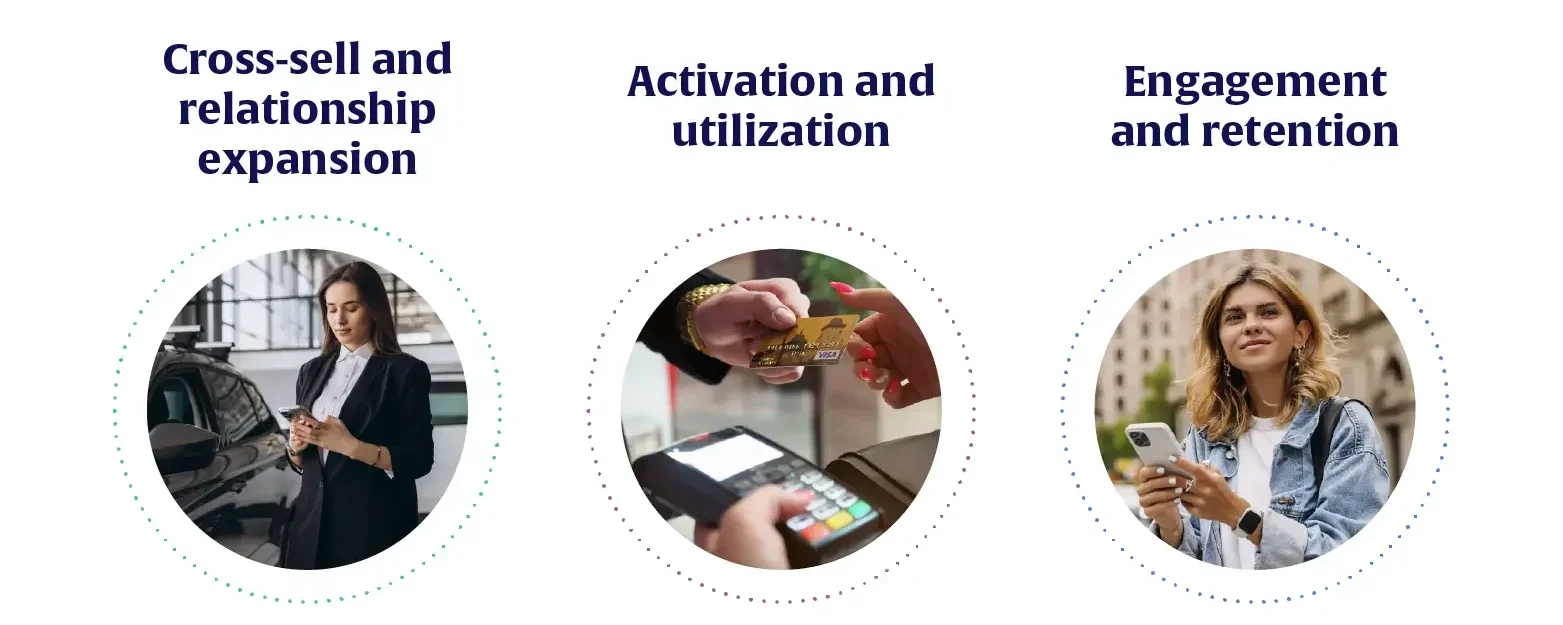
In the webinar, we walked through real use cases that map to these three crucial outcomes:
Transaction patterns reveal where account holders already have relationships outside your financial institution, such as credit cards, auto loans, insurance providers, and investment services. When you can see what’s happening, you can respond with relevance.
Example: If someone is paying a competitor for an auto loan, that can signal a refinance opportunity (or at least an insurance conversation).
Big product moments, like auto loans or mortgages, don’t happen every week. Day-to-day behaviors do. Transaction data helps you show up in between the major milestones.
Example: Identify account holders regularly using a P2P app and nudge them toward your financial institution’s P2P service.
Engagement usually changes before an account holder leaves. Transaction data can highlight early warning signs, like declining debit activity, changes in payroll deposits, or rising withdrawal trends. It can also reveal positive signals worth reinforcing. The goal is the same: stay present in ways that feel helpful, so the relationship deepens.
Banks and credit unions can scale analytics with always-on campaigns that refresh nightly, so the right people get timely messages without manual lift. That drives measurable results like deposit growth, product adoption, and stronger engagement. Transaction insights also guide product direction and strategy, shaping what to build, promote, and prioritize next.
The webinar emphasizes an approach built for real teams with real constraints: always-on campaigns, automated audience refresh, and delivery in high-attention channels like online and mobile banking.
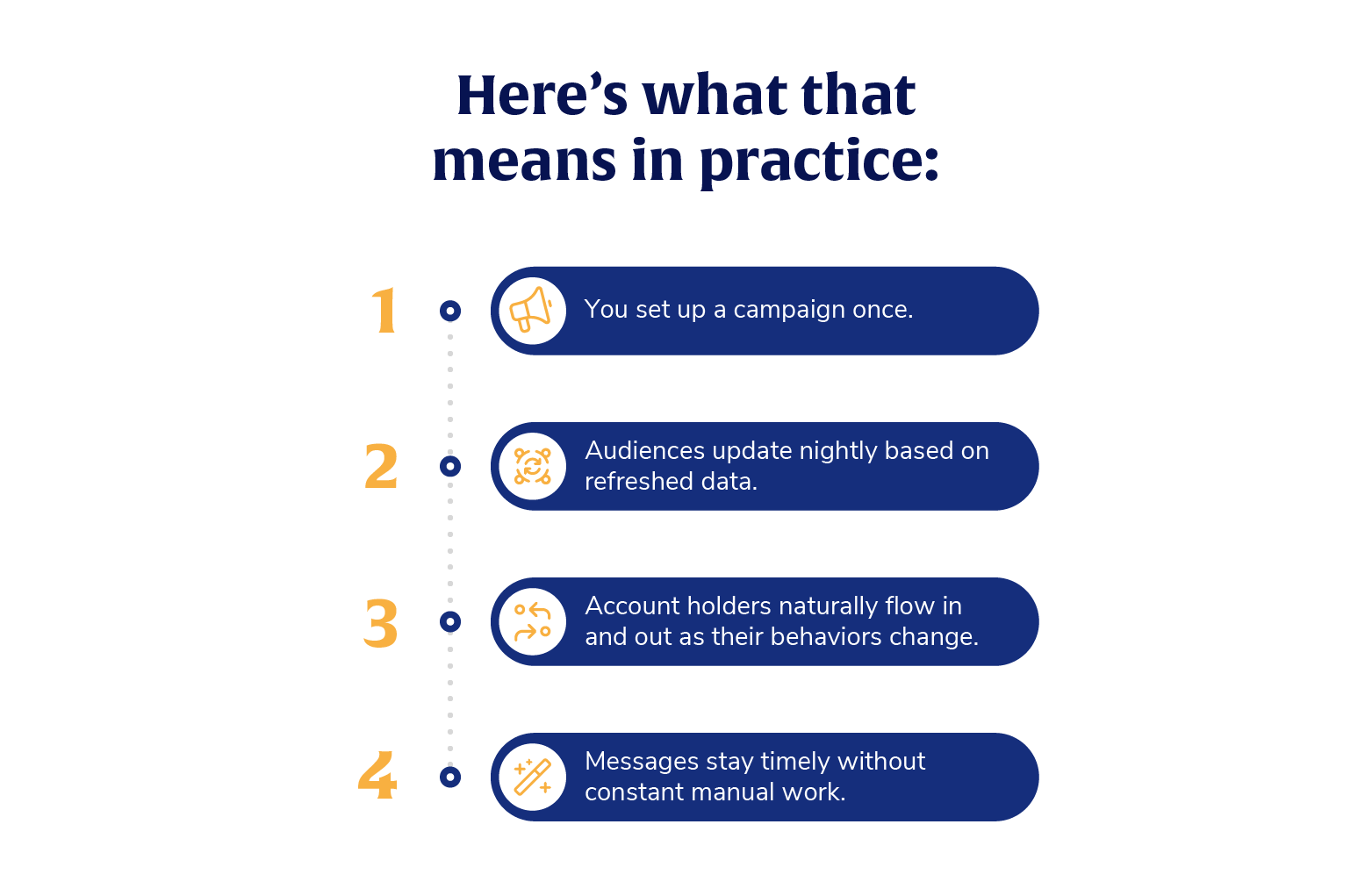
This makes personalization achievable for banks and credit unions of all sizes. You can run multiple engagement and growth programs at the same time without turning into a campaign traffic controller.
It also makes measurement clearer. Leadership cares about outcomes, like deposit growth, product adoption, engagement, retention, and efficiency. When data-driven programs run consistently, you can tie activity to results and report progress in terms executives understand.
But transaction insights don’t only fuel campaigns, they also help inform product direction. If you see account holders flocking to external savings apps, that can shape your roadmap and priorities. Data becomes a guide for what to build, what to promote, and where to invest next.
Your financial institution already has a growth story hiding inside transaction data. Once you translate that chaos into clarity, you can move from reactive to anticipatory.